




 |
SPECIAL COMMENT: What if the IMF Head was a Muslim, such as PIMCO’s El-Erian?(1)By Rushdi Siddiqui, Head Of Islamic Finance At Thomson ReutersThe inflation adjusted billion dollar question has become, ‘what nationality should lead the International Monetary Fund (IMF)?’ It used to be the $64,000 question, and then became the million dollar question. This says something about the ‘naked’ dollar or US influence or both. The tradition has been the Managing Director of the IMF was European. The traditional thinking has gotten us to where we are in today’s inter-connected, borderless, flat-wired world in real time, resulting in credit crisis induced systemic risks, corporate and government bailouts at the expense of hard working tax payers. |
|
The U.S. Dollar Could Collapse, Says U.N. As It Climbs Wall Of Worries(0) The United Nations updated its World Economic Situation and Prospects 2011 in late May and offered more grim warnings about the state of the global economy and especially the United States dollar. Here are the key points from the updated report: |
|
Middle East Countries Fall In Peace Index(0) Qatar, which has been beating its regional rival on economic performance, has also won the title of the most peaceful country in the Middle East North Africa region. The Institute of Economics & Peace, bestowed the number one regional ranking to Qatar in its annual Global Peace Index (GPI) 2011. READ MORE HERE |
|
Dubai Debt Burden Is ‘Unsustainable’: IMF(0) Dubai’s debt problems refuse to go away, as the IMF warns that the emirate’s debt will rise to 53% of GDP by 2016 if it does not act. Plus, sanctions on Iran could shave as much as 0.7% of UAE’s GDP. Dubai’s debt may become unsustainable in the absence of policy change, according to the International Monetary Fund (IMF) in its periodic report on the UAE. READ MORE HERE
|
|
SPECIAL COMMENT: Questions For Islamic Finance(3) By Rushdi Siddiqui, Global Head, Islamic Finance & OIC Countries, Thomson Reuters Questions for Islamic Finance “We don’t see things as they are, we see them as we are” - Anais Nin I used this quote as I wanted to share with the readers a sample of questions posed to me during the last few years of travel in Europe, GCC and ASEAN countries. These questions originate from people from all walks of life, whom in one way or another form opinions of their own and see Islamic finance from their own lenses. |
|
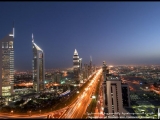
How the UAE Economic Is Recovering (In Six Helpful IMF Charts)(1) The UAE economy started to recover in 2010, though more modestly than in neighboring GCC countries. Benefiting from higher oil prices and strong demand from traditional trading partners in Asia, real GDP grew by an estimated 3.2 percent in 2010. Nevertheless, because of the real estate overhang and continued uncertainties about the solvency of GREs, growth remained below the regional average of 5 percent. The 12-month consumer price (CPI) inflation rate was subdued at 1.7 percent in December 2010, up from -0.3 percent at end-2009. |
 |
How the UAE Economy Imploded - Explained In 6 IMF Charts(0)
The global financial crisis brought an end to a decade of high growth. The U.A.E. has had remarkable achievements over the last decade with its open and outward orientation, which led to a diversified and steadily growing economy. The decline in oil prices, the post-Lehman shut down of international capital markets, and the price correction in the property market in Dubai have put significant strains on the economy. The UAE authorities supported the banking sector through liquidity injection, recapitalization, and deposit guarantees, and the Emirate of Abu Dhabi provided financial support to the Emirate of Dubai. Nevertheless, the combination of substantial short-term borrowing of the highly-leveraged GREs in Dubai, the price correction in the real estate market, and maturity mismatches forced Dubai World (DW), a major Dubai GRE, to seek a debt standstill. Real GDP is estimated to have contracted by 3¼ percent in 2009. Here is how the drama unfolded in those dark days of Dubai. Click on the charts below to continue:
And then read How The UAE Economy Is Recovering |
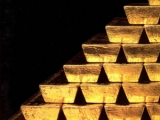 |
Central Banks Buying To Boost Gold: HSBC(2) Central banks are buying gold, says HSBC. That mean that the metal’s stratospheric rise may not be over yet. And with Goldman Sachs spelling doom for the dollar, gold fundamentals look strong The price of gold is normally determined by a combination of global real interest rates, the value of the U.S. dollar and risk aversion (so-called ‘safe haven’ demand) plus net supply from new production and changes in stocks held by central banks. Calculate them and you get a two-year chart of gold which looks like this: While retail demand from China and India are strong drivers of gold prices, HSBC believes that the arrival of central banks into the fray will mark a new chapter for growth in gold prices. “The change in central bank demand is an important structural difference in net supply and demand conditions relative to the past and it seems set to continue. Central banks in the emerging world remain keen to diversify away from the US dollar and the attraction of precious metals, including gold is unlikely to fade anytime soon.” “Changes in central bank stocks of gold can make a bigger difference to net supply than changes in production because of the huge size of stocks relative to annual production. Central banks are the holders of the largest stock piles of gold. For many years they were net sellers of gold. They preferred to own assets that generated a running yield because the focus was on improving the rate of return on their assets,” says HSBC. Concern about dollar weakness and debasement from ultra loose monetary policy has turned central banks into a source of net demand for gold not net supply. Central banks in India, China, Russia and Mexico have recently been buyers of gold in an effort to diversify their foreign exchange reserves away from excessive dependence on US treasuries and other US dollar-denominated assets. The figures from World Gold Council confirm that trend. “Significant purchases by central banks across a number of regions in the first quarter reinforced gold’s vital role as a reserve asset. Purchases by central banks jumped to 129.0 tonnes (US$5.7-billion), more than the total for 2010 as a whole,” says WGC, which believes 2011 will see more central banks turn to gold purchasing programmes as a means of diversifying their reserves. Central banks of emerging economies remain under weight in their gold hoardings and WGC expects the rebalancing to continue. The growth will be largely driven by the People’s Bank of China (PBOC), the country’s central bank, which is already the sixth largest official holder of gold. Still, gold is a mere 1.6% of its overall reserves and the statements coming out of the PBOC suggest that it views gold as a strong investment alternative to offset rising inflation and global instability. Apart from central banks, investors are also piling in. Despite the high prices, demand for gold in the first quarter rose by 100tonnes, to reach 981.3 tonnes, worth $43.7-billion. “Much of the 100-tonne increase in demand was due to strong growth in the investment sector. We believe that suitable conditions remain in place to ensure that investment demand will maintain its solid growth in the coming quarters.” GOLD VS DOLLAR Here are Goldman Sachs’ two reasons why the dollar will sink again: U.S. trade and investment balances with the rest of the world remain negative. “The U.S. trade deficit is still widening and we expect it to continue to widen,” Goldman analysts said in its note. “Ultimately, it is difficult to envisage a dollar-bullish scenario without a notably stronger U.S tradable goods sector.” The bank says continued deterioration in the trade balance will pass through into a continued deterioration of the U.S. current account deficit. For the dollar to strengthen in this scenario, foreign appetite for U.S. assets need to pick up substantially to have the deficit financed through foreign direct investment and portfolio inflows, Goldman says. But data shows that is not happening. The Fed will be the last among major economies to raise interest rates, and the U.S. Federal Reserve will leave interest rates on hold this year and next. The bank now sees EUR/USD at 1.45, 1.50 and 1.55 in three, six and 12 months vs 1.40, 1.45 and 1.50 previously. It projects $/JPY at 82, 82 and 86 over three, six and 12 months from 86, 86 and 90, previously. With such structural forces driving gold, the fundamentals for the yellow metal look solid. But fundamentals don’t always drive markets. © alifarabia.com |
 |
$1.6T Middle East Projects Are Delayed Or Cancelled: Citibank(0) Close to $1.6-trillion worth of projects are cancelled or are on hold in the Middle East and East North African market, with $800-billion in the UAE alone, according to Citibank. The statistics are a reflection of the hangover of the leveraged days in the region when billion dollar projects were announced virtually every other day. Read More Here |
Contacts and informationAlifArabia’s aim is to offer a brutally frank but sincere analysis on the Middle East region’s business and political issues. It wants to see a thriving and dynamic Middle East that encourages corporate and government transparency, investments and policies that allow the economies to grow.
|
Social networks |
Most popular categories |


