More Bad News For Egypt As Moody’s Downgrades Five Banks
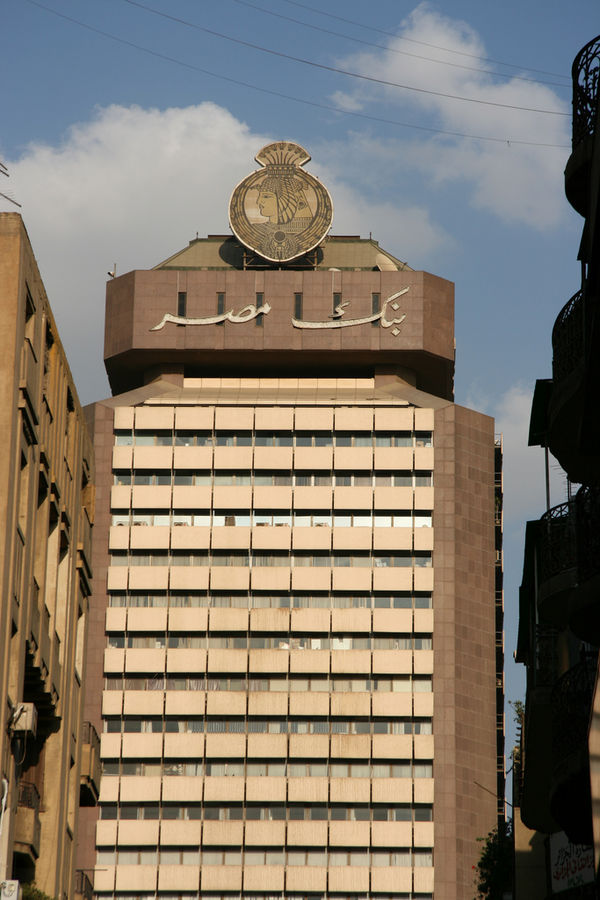
Moody’s Investors Service has today downgraded the local-currency (LC) deposit ratings of the following five Egyptian banks:
— National Bank of Egypt (NBE) to B1 from Ba3
— Banque Misr (BM) to B1 from Ba3
— Banque du Caire (BdC) to B1 from Ba3
— Commercial International Bank (Egypt) SAE (CIB) to Ba3 from Ba2
— Bank of Alexandria SAE (BoA) to Ba2 from Ba1.
The foreign-currency (FC) deposit ratings of all these banks were also downgraded to B2 from B1, capped by Egypt’s FC bank deposit ceiling.
The rating actions follow Moody’s decision to downgrade Egypt’s government bond ratings to B1 from Ba3, and the downgrade of the country ceiling on FC bank deposits to B2 from B1 (see “Moody’s downgrades Egypt’s debt rating to B1, negative outlook”, published on 27 October 2011).
All of the banks’ deposit ratings carry a negative outlook. For a full list of affected ratings, please refer to the end of this press release.
RATINGS RATIONALE
(1) The banks’ high exposures to (B1 rated) Egyptian government securities and related instruments, which raises the banking system’s susceptibility to event risk.
(2) The weakening operating/macroeconomic environment, which will likely exert additional pressure on banks’ asset quality metrics and earnings generating capabilities.
(3) Egypt’s reduced capacity to provide systemic support in case of need, implying that none of the rated banks benefit from systemic support uplift.
Moody’s notes that Egyptian banks maintain very high exposures to government securities. Specifically for the state-owned banks (NBE, BM, and BdC), Moody’s estimates that these are between 4x-7x of the banks’ equity bases. They therefore represent a material credit-exposure concentration. This factor raises the banking system’s susceptibility to event risk in the context of Egypt’s eroding credit fundamentals, signaling the increasing convergence of default risks between Egypt’s government rating and bank ratings. As a result, Moody’s has lowered the state-owned banks’ standalone and LC deposit ratings to the B1 sovereign rating level.
The sustained weak economic activity is also affecting the banking sector’s financial fundamentals. GDP contracted by 4.2% in Q1 2011, foreign direct investment (FDI) shrank dramatically in H1 2011 and tourist arrivals fell by 42% in the March-June period. The weak operating environment will likely result in tightening market liquidity, which will be further exacerbated by the allocation of banks’ funds to finance the budget deficit, thereby increasing their exposure to government securities. Furthermore, we expect a deterioration of Egyptian banks’ asset quality and profitability through higher provisioning costs and lower revenues due to weaker loan generation volumes. Although banking system data published by the Central Bank of Egypt (CBE) point to lower non-performing loans (NPLs) for the system as of June 2011, Moody’s notes that these figures benefit from the CBE’s directive allowing different NPL classification rules for retail and tourism loans for three and six months, respectively, after the January 2011 revolution. We expect that the full extent of asset-quality issues will begin to emerge in the next few quarters, impacting bank profitability.
For CIB, Moody’s notes (i) its lower exposure to government securities compared with its peers, at around 100% of equity; (ii) its comparatively stronger financial fundamentals, with NPLs consistently below the industry levels, and solid capitalisation and earning power; and (iii) its proactive risk management and embedded credit culture. In the first half of 2011, CIB decreased its exposure to government T-bills and increased its interbank lending to foreign banks, making it less vulnerable to domestic banking-system credit risks. For these reasons, Moody’s has placed the standalone rating of CIB at Ba3 on the long-term scale, one notch higher than the B1 sovereign rating.
The LC deposit ratings of Bank of Alexandria benefit from parental support from Intesa Sanpaolo (A2/P-1/C+, negative), which results in a two-notch uplift to Ba2. Bank of Alexandria’s standalone credit profile has been downgraded to E+ — mapping to B1 on the long-term scale — mainly due to its high exposure to the sovereign, at around 244% of Tier 1. Its standalone credit strength also captures the weak operating environment and the likely deterioration in its financial fundamentals, mainly asset quality and profitability.
NEGATIVE OUTLOOK MAINTAINED
Moody’s maintains the negative outlook assigned to Egyptian banks’ ratings to reflect the considerable downside risks facing the operating environment. Moody’s notes that the current period of political uncertainty in Egypt — and in the wider Middle East and North Africa (MENA) region — has negatively affected FDI flows into the country and has disrupted economic activity. The outlook remains highly uncertain for the tourism sector and the inflow of remittances from Egyptian workers abroad, both of which are key sources of foreign exchange for the country.
BANK RATINGS AFFECTED BY RATING ACTION
- National Bank of Egypt: The BFSR was downgraded to E+ from D-; the long-term LC deposit rating was downgraded to B1 from Ba3. Its long-term FC deposit rating was downgraded to B2 from B1, constrained by the respective sovereign ceiling. The bank’s senior unsecured FC debt, issued through its Nile Finance Ltd special-purpose vehicle, was also downgraded to B1 from Ba3. All the ratings have a negative outlook, with the exception of its BFSR of E+ (mapping to B1 on the long-term scale), which has a stable outlook. All short-term deposit ratings remain unchanged at Not-Prime (NP).
- Banque Misr: The BFSR was affirmed at E+; the long-term LC deposit rating was downgraded to B1 from Ba3, and its long-term FC deposit rating was downgraded to B2 from B1, constrained by the respective sovereign ceiling. All the ratings have a negative outlook, with the exception of its BFSR of E+ (mapping to B1 on the long-term scale) that has a stable outlook. All short-term deposit ratings remain unchanged at NP.
- Banque du Caire: The BFSR was downgraded to E+ from D-; the long-term LC deposit rating was downgraded to B1 from Ba3 and its long-term FC deposit rating was downgraded to B2 from B1, constrained by the respective sovereign ceiling. All the ratings have a negative outlook, with the exception of its BFSR of E+ (mapping to B1 on the long-term scale) that has a stable outlook. All short-term deposit ratings remain unchanged at NP.
- Commercial International Bank: The BFSR was downgraded to D- from D, mapping to a BCA of Ba3; the long-term LC deposit rating was downgraded to Ba3 from Ba2 and its long-term FC deposit rating was downgraded to B2 from B1, constrained by the respective sovereign ceiling. All the ratings, including its BFSR, have a negative outlook. All short-term deposit ratings remain unchanged at NP.
- Bank of Alexandria: The BFSR was downgraded to E+ from D-, the long-term LC deposit rating was downgraded to Ba2 from Ba1 and the long-term FC deposit rating was downgraded to B2 from B1, constrained by the respective sovereign ceiling. All the ratings have a negative outlook, with the exception of its BFSR of E+ (mapping to B1 on the long-term scale) that has a stable outlook. All short-term deposit ratings remain unchanged at NP.
Related Posts


About The Author