



 |
Commodity Outlook & Fed’s Operation Twist(0) Oil and gold are poised to benefit from the dithering policies of Western leaders and the possible launch of the Fed’s Operation Twist. Other commodities are set see a run-up thanks to tight supplies. The world’s major commodities had a phenomenal run in the past two years, but cooled down in the first six months of 2011. Within the first six months of the year, only two commodities - silver and coal - saw a double-digit rise and only six of the 14 main commodities were in positive territory. READ MORE HERE |
 |
China and India dominate gold buying in second quarter(0)
According to the Gold Demand Trends report for Q2 2011, gold demand in the second half of 2011 will remain strong owing to a number of key factors: Despite a higher gold price, Indian and Chinese demand grew 38% and 25% respectively during Q2 2011 compared to the same period of 2010. This growth is likely to continue, due to increasing levels of economic prosperity, high levels of inflation and forthcoming key gold purchasing festivals. |
 |
Is Gold A Bubble? Wells Fargo Seems To Think So(0) What’s in store for oil and gold — the ying and yang of the global economy? At least one analyst thinks gold is a bubble poised to burst. In the space of a short few weeks, the world looks less sure of its self. Aggressive forecasts are being toned down, massive plans are being scaled back, growth figures are being revised downwards, and bulls have turned slightly bearish. READ MORE HERE |
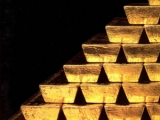 |
Deutsche Bank Forecast $2,000 For Gold, Says Not A Bubble(0) Gold may have risen 521% since 2001, but Deutsche Bank thinks gold prices will need to rise a good $550 more before it will be considered a bubble. “In our view, the prospect of powerful rally in gold reflects ongoing stress in the financial system and the maintenance of super low interest rates. The popularity of physically backed gold ETFs have also changed the relationship of the gold price to the US dollar such that gold can now rally in both rising and falling US dollar environments,” says Deutsche Bank. The bank has a target price of $2,000 for a Troy ounce of gold, before it expects the market would be ‘considered a bubble’. |
|
Central Banks Buying To Boost Gold: HSBC(2) Central banks are buying gold, says HSBC. That mean that the metal’s stratospheric rise may not be over yet. And with Goldman Sachs spelling doom for the dollar, gold fundamentals look strong The price of gold is normally determined by a combination of global real interest rates, the value of the U.S. dollar and risk aversion (so-called ‘safe haven’ demand) plus net supply from new production and changes in stocks held by central banks. Calculate them and you get a two-year chart of gold which looks like this: While retail demand from China and India are strong drivers of gold prices, HSBC believes that the arrival of central banks into the fray will mark a new chapter for growth in gold prices. “The change in central bank demand is an important structural difference in net supply and demand conditions relative to the past and it seems set to continue. Central banks in the emerging world remain keen to diversify away from the US dollar and the attraction of precious metals, including gold is unlikely to fade anytime soon.” “Changes in central bank stocks of gold can make a bigger difference to net supply than changes in production because of the huge size of stocks relative to annual production. Central banks are the holders of the largest stock piles of gold. For many years they were net sellers of gold. They preferred to own assets that generated a running yield because the focus was on improving the rate of return on their assets,” says HSBC. Concern about dollar weakness and debasement from ultra loose monetary policy has turned central banks into a source of net demand for gold not net supply. Central banks in India, China, Russia and Mexico have recently been buyers of gold in an effort to diversify their foreign exchange reserves away from excessive dependence on US treasuries and other US dollar-denominated assets. The figures from World Gold Council confirm that trend. “Significant purchases by central banks across a number of regions in the first quarter reinforced gold’s vital role as a reserve asset. Purchases by central banks jumped to 129.0 tonnes (US$5.7-billion), more than the total for 2010 as a whole,” says WGC, which believes 2011 will see more central banks turn to gold purchasing programmes as a means of diversifying their reserves. Central banks of emerging economies remain under weight in their gold hoardings and WGC expects the rebalancing to continue. The growth will be largely driven by the People’s Bank of China (PBOC), the country’s central bank, which is already the sixth largest official holder of gold. Still, gold is a mere 1.6% of its overall reserves and the statements coming out of the PBOC suggest that it views gold as a strong investment alternative to offset rising inflation and global instability. Apart from central banks, investors are also piling in. Despite the high prices, demand for gold in the first quarter rose by 100tonnes, to reach 981.3 tonnes, worth $43.7-billion. “Much of the 100-tonne increase in demand was due to strong growth in the investment sector. We believe that suitable conditions remain in place to ensure that investment demand will maintain its solid growth in the coming quarters.” GOLD VS DOLLAR Here are Goldman Sachs’ two reasons why the dollar will sink again: U.S. trade and investment balances with the rest of the world remain negative. “The U.S. trade deficit is still widening and we expect it to continue to widen,” Goldman analysts said in its note. “Ultimately, it is difficult to envisage a dollar-bullish scenario without a notably stronger U.S tradable goods sector.” The bank says continued deterioration in the trade balance will pass through into a continued deterioration of the U.S. current account deficit. For the dollar to strengthen in this scenario, foreign appetite for U.S. assets need to pick up substantially to have the deficit financed through foreign direct investment and portfolio inflows, Goldman says. But data shows that is not happening. The Fed will be the last among major economies to raise interest rates, and the U.S. Federal Reserve will leave interest rates on hold this year and next. The bank now sees EUR/USD at 1.45, 1.50 and 1.55 in three, six and 12 months vs 1.40, 1.45 and 1.50 previously. It projects $/JPY at 82, 82 and 86 over three, six and 12 months from 86, 86 and 90, previously. With such structural forces driving gold, the fundamentals for the yellow metal look solid. But fundamentals don’t always drive markets. © alifarabia.com |
 The weakest link: short-term liquidity and how it impacts Islamic finance
  Islamic finance: An industry inclusive to all, irrespective of background
  SPECIAL COMMENT: Missing Link in Islamic Finance Hubs: Islamic Venture Capital
  Media and public relations — the missing link in Islamic finance
  SPECIAL COMMENT: OIC Islamic Index - The Malaysia Story?
  SPECIAL COMMENT: Ramadan Wish List For Islamic Finance
  Natural gas to be fastest growing energy source
  Dull economy takes shine away from Cameroon
  Mozambique political tensions seen rising in 2014 Muslim consumerism is linked to real economy sectors
 Sorry. No data so far.
Contacts and informationAlifArabia’s aim is to offer a brutally frank but sincere analysis on the Middle East region’s business and political issues. It wants to see a thriving and dynamic Middle East that encourages corporate and government transparency, investments and policies that allow the economies to grow.
|
Social networks |
Most popular categories |