



 |
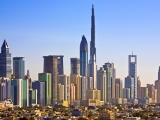
30% drop in Bahrain real estate points to a larger problem(0) Like the rest of the economy, Bahrain real estate sector has suffered on account of the country’s political and social unrest. With the economy expected to grow at a snail’s pace - indeed some analysts expect Bahrain’s GDP to contract this year - growth in most sectors will be hard to find. As the country’s political dialogue in limbo, the economy appears to be in a depressed state. Bahrain’s rent has seen a 30% drop in certain areas due to the unrest in the country. The tiny Kingdom had come to a standstill earlier this year after Shia protestors clashed with Bahraini and GCC forces, which led to the deaths and imprisonment of many protestors. A state of emergency was imposed immediately in the country and lifted in June, but by that time the damage to the economy was clear. READ MORE HERE |
 |
Dubai Among 10 Sovereigns Most Likely To Default(0) Gulf states saw their default risks subside considerably during the second quarter as investors shrugged off the Arab Spring and focused on the troubled EU states. Still, Dubai remained among the list of sovereigns most likely to default. Dubai, which was ranked as the 7th most risky sovereign in the first quarter, is now at the edge of the list of 10 countries most likely to default, according to data from the second quarter of 2011. READ MORE HERE |
 |
No Arab Spring Dividends For The Middle East?(0) The Arab World’s tryst with democracy and freedom is unlikely to bear economic fruits, according to a study. Instead, we could well see a gridlock political environment and economic growth that continues to lag global averages. The Economist Intelligence Unit (EIU) insightful study on how the Arab Spring initiative is likely to play out, suggests a 60% probability of a gridlocked political environment that is unlikely to result in realizing the aspirations of the region’s citizens. READ MORE HERE |
|
Cast Your Vote In Arab Spring Awards(0) Spring is nearly six months old. It is time to take stock, remember those who lost their lives and continue to fight, and hand out some well-deserved awards to the key players. The New York Times columnist Nicholas Kristof, asked the rhetorical question ‘What Country Handled Arab Spring The Best? His own answer: Morocco. But he left the discussion at that. Given that the Arab Spring is just about six months old, alifarabia.com was inspired to take stock of how the various countries have handled a revolution that has smashed Middle East dogmas, broken the will of Arab strongmen and given hopes to millions not just in the Arab World but also around the world. The Middle East has seen more public participation in politics in the past six months than it has done over the past 50 years. Much to the shock of Zine El Abidine Ben Ali, Hosni Mubarak and Moamer Qaddhafi, the people of the Arab World launched a unique coup that they could not have fathom and never saw coming. These strongmen were looking to suppress indigenous Islamic movements, the radicals, Al-Qaeda sympathisers, the socialists, the Shiaas and the sufis. They were looking for tangible forces they could fight, and suppress and imprison and maim - as they had done in the past. |
|
High-Spending Gulf In Dilemma As Opec Loses Relevance(0) With Opec seemingly irrelevant, the GCC is trying to find a balance between responsible crude suppliers and their own domestic needs. But, as Deutsche Bank warns, their own high breakeven prices are making them even more vulnerable to oil price shocks than before. READ MORE HERE |
|
Saudi-Led GCC Aims to Spread Regional Influence(0) The potential inclusion of Morocco and Jordan in the GCC fold should be taken for what it is – a political move by the Gulf states to widen their sphere of influence in the region. There is, of course, nothing wrong with it. The United States has done it with NAFTA, the EU has been handing out membership forms to many countries within their vicinity; there is of course the ASEAN, and even BRIC nations have recruited South Africa in their club – they are now called BRICS. Read The Full Article On Economonitor |
|
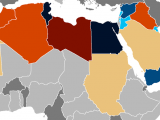
Middle East Countries Fall In Peace Index(0) Qatar, which has been beating its regional rival on economic performance, has also won the title of the most peaceful country in the Middle East North Africa region. The Institute of Economics & Peace, bestowed the number one regional ranking to Qatar in its annual Global Peace Index (GPI) 2011. READ MORE HERE |
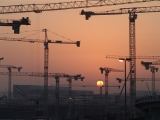 |
$1.6T Middle East Projects Are Delayed Or Cancelled: Citibank(0) Close to $1.6-trillion worth of projects are cancelled or are on hold in the Middle East and East North African market, with $800-billion in the UAE alone, according to Citibank. The statistics are a reflection of the hangover of the leveraged days in the region when billion dollar projects were announced virtually every other day. Read More Here |
 |
Gulf Plus: The GCC Looks To Expand Its Sphere Of Influence(0) Jordan and Morocco’s possible inclusion in the Gulf is a political move rather than an economic one, but there might be other - unlikely - candidates in the region far suitable for the purpose. The potential inclusion of Morocco and Jordan in the GCC fold should be taken for what it is - a political move by the Gulf states to widen their sphere of influence in the region. Read More Here |
 |
Survey: Revival & Reach of Islamic Finance(1) By Rushdi Siddiqui, Global Head, Islamic Finance & OIC Countries Thomson Reuters It’s polling time once again in Islamic finance, but, today, we survey two major developments: Arab revolution and death of Osama Bin Laden (OBL), and examine the consequences, if any, on Islamic finance on the Maghreb and anti-Shariah countries. Interestingly, the million-dollar mansion living OBL and his executive team camped in ‘cave gate-aways’ witnessed in real time the Al Qaeda ideology of hate, mayhem and murder discredited by a highly educated, but very poor Tunisian fruit-seller seeking dignity of work in providing for his family. |
 The weakest link: short-term liquidity and how it impacts Islamic finance
  Islamic finance: An industry inclusive to all, irrespective of background
  SPECIAL COMMENT: Missing Link in Islamic Finance Hubs: Islamic Venture Capital
  Media and public relations — the missing link in Islamic finance
  SPECIAL COMMENT: OIC Islamic Index - The Malaysia Story?
  SPECIAL COMMENT: Ramadan Wish List For Islamic Finance
  Natural gas to be fastest growing energy source
  Dull economy takes shine away from Cameroon
  Mozambique political tensions seen rising in 2014 Muslim consumerism is linked to real economy sectors
 Sorry. No data so far.
Contacts and informationAlifArabia’s aim is to offer a brutally frank but sincere analysis on the Middle East region’s business and political issues. It wants to see a thriving and dynamic Middle East that encourages corporate and government transparency, investments and policies that allow the economies to grow.
|
Social networks |
Most popular categories |