



 |
Islamic Finance: Does it include you?(0) By Rushdi Siddiqui There were three recent major Islamic finance conferences in Malaysia: Global Islamic Finance Forum (GIFF), Islamic Finance News (IFN), and Kuala Lumpur Islamic finance forum (KLIFF), and headline question was neither asked nor answered or raised? Who represents the financial interests of the super-majority of 1.8 billion Muslims comprised of have nots, students and the youth? Are they ‘bankable in the wait’ for Islamic finance for sizing and seizing. |
 |
Capital with a human face(0) By Rushdi Siddiqui, Global Head of Islamic Finance at Thomson Reuters The forty-year old, $1.2 trillion Islamic finance industry needs to take stock and look in the mirror and examine the reflection holistically. Have we arrived at the ‘reset’ moment that every relationship, in this case, faith and finance, must surely undergo? This fortnightly column, Participation Finance/Banking, will be about the signposts, speed bumps, potholes, and detours on the road ahead in Islamic finance. It’s about addressing the present challenges for tomorrow’s deliverables, changing today’s dialogue for tomorrow’s conversations, and focusing on the substance over form so we move towards financing/banking (with established rules) and away from sole reliance on the faith. |
 |
The weakest link: short-term liquidity and how it impacts Islamic finance(0) By Rushdi Siddiqui, Global Head of Islamic Finance at Thomson Reuters Let me start off with a loaded question, what one word in Islamic finance is as important as Shari’ah, tax, accounting, regulation, and standardisation (STARS)? Here are some clues: Islamic finance has institutions called Liquidity Management Center (LMC) in Bahrain, Liquidity Management House (LMH) in Kuwait, and International Islamic Liquidity Management Corporation (IILM) in Malaysia, plus other similar organisations with different names. The UAE Central Bank has been encouraging commodity Murabaha certificate of deposits (CDs) and expanded to repurchase (repo) offerings to address short-term UAE Islamic bank needs. The Central Bank of Bahrain (CBB) has been issuing liquidity, addressing Sukuk Al-Salaam, short term, non-tradable securities. Index providers have created Shari’ah-compliant liquid blue chips, similar to the Dow Jones Islamic Market International Titans 100 Index. At many of the Islamic finance conferences, there are speakers and sessions dedicated to liquidity management risk along with credit, operational, market, and Shari’ah non-compliant risk. Thomson Reuters launched the Islamic Inter-bank Benchmark Rate (IIBR), decoupling from LIBOR, an indigenous innovation for Islamic banks to manage their own short term liquidity. The Islamic Financial Services Board (IFSB) released documents directed towards enhancing reliability and stability in the industry, through The Development of Islamic Money Markets (technical notes), earlier this year. The Bursa Suq Al-Sila (in Malaysia) is a commodity trading platform, underlying is, say, palm oil, directed towards facilitating Islamic liquidity management. Well if you haven’t spotted the common thread, in a word it is liquidity and it goes with asset-liability matching. In Islamic finance, there has been a historical mismatch because of the lack of robust short-term money market instruments; primarily reliance on two party bi-lateral commodity Murabaha and Wakala agreements, to manage the liquidity, surplus and deficit of Islamic banks. The challenges associated with bi-lateral agreements includes counter-party credit risk, meaning that the lending entity may not be able to get its funds back with profit, if the receiving entity goes out of business. Obviously, the situation becomes more pronounced if subjected to external shocks, like the credit crisis in 2008, where liquidity freezes, hence, presenting fire-priced asset sales as the only alternative with the resulting ‘systemic’ risk to the niche industry. The short-term liquidity challenge has also produced something called ‘leakage,’ where Shari’ah-compliant funds are placed in ‘conventional’ spaces. For example, the CEO of CIMB Islamic Bank, Badlisyah Abdul Ghani, stated during an interview in 2007 that, “there is nothing wrong with commodity Murabaha as a structure … what is not liked is when proceeds … are used for non-Shari’ah purposes … this leakage of Islamic funds is huge … We estimate it is over $1.2 trillion … mostly invested in US Treasuries and non-compliant investment products … There is continued chatter in the Islamic finance market place about authentic Shari’ah-based solutions, as today’s offering, to address short term liquidity, is about either removing the Haraam elements or placing Islamic ‘wrappers’ on their conventional counter-part products. However, it must be understood that Islamic finance is an immensely small sub-set (valued at $1.2 trillion) of conventional finance (valued at over $100 trillion) and of course much younger, four decades versus four centuries. And to be fair yes, Islamic finance needs to stop using its infancy as an excuse and to dissociate from the law of necessity, as Islamic finance solutions are gradually surfacing. Let’s also manage expectations accordingly on what issues Islamic finance can resolve today within this niche industry, before proposing it as a solution for the ills of conventional finance. Today, Islamic finance is more about incomplete product pushing at the national/country level, than providing holistic financial and financing solutions. For example, conversations are invariably raised on the inefficiencies, such as the inability to achieve economies of scale/size or the lengthy time frame it takes to bring a Sukuk to the market in the GCC, associated with a lack of standardisation, hence, one possible reason that the conventional financial industry has not yet taken IF seriously. Thus, if we do not have a ‘unified’ and efficient approach to addressing some of our major issues like short term liquidity, then it is going to be a challenge for others to accept our advice regarding their concerns. To grow Islamic finance to $2 trillion and cross-sell beyond its traditional markets, fundamental, not reactive, and foundational, not bi-lateral, approaches are needed and necessary. The thinking of ‘if, it ain’t broke, what you gonna fix,’ is no longer applicable to addressing short term liquidity in Islamic finance. To get to the end-goal of so called ‘Islamic’ purity, the industry, with guidance from regulators, has to go through interim tolerance parameters that are time consuming to avoid self-destructive destabilisation. Islamic finance has to, at one level, reflect its age and maturity, and not that of the more established conventional finance. In fast tracking solutions, the law of unintended consequences kicks in, where the solution actually creates more problems. Thus, the alternative approaches in different geographies to, say, liquidity to asset-liability mismatch is the industry recognising a challenge and transparently offering suggestions to find a solution. This reinforces the fact Islamic finance, today, is fragmented and domestic in nature, i.e., pieces in a jigsaw puzzle. With the recent ‘conventional banking’ scandals over alleged Libor manipulation and money laundering, this openness needs to be both acknowledged and commended! |
|
Information, The New Gold Dinar(0) By Rushdi Siddiqui, Global Head of Islamic Finance, Thomson Reuters I recently had the opportunity to sit down with one of the leading experts in Malaysia on bond/sukuk valuations, Meor Amri Meor Ayob, chief executive officer of Bond Pricing Agency Malaysia (BPAM) Sdn Bhd. He articulates some extremely important takeaways on the role and impact of information, from availability to transparency to credibility, on capital market development for both Islamic finance and Muslim countries. We often hear about exporting Malaysia’s Islamic finance model to jurisdictions wanting to be a complete financial hub. Malaysia may want to start with its flagship that measures the health and pulse of the fixed income market, BPA of Malaysia. It’s an interesting story that deserves an information spotlight. In the Beginning The history of the world or humanity can be defined by distinct period of advancements. To name a few as example, The Stone Age, the Agricultural Revolution, the Islamic Golden Age, the European Renaissance, the Age of Enlightenment and the Industrial Revolution are all characterised by a common singular cause: the explosion of information. The development of Malaysia’s bond and sukuk markets were also precipitated similarly. Introduction of various regulatory guidelines on the issuance process, as well as key market infrastructures such as credit rating agencies, automated systems for tendering, issuance and transfers of funds (FAST and RENTAS) and a trading dissemination system have contributed immensely to the growth in supply and demand. Sustaining such a growth requires a very good legal as well as price discovery mechanism to enable market participants to be well informed of valuation levels and their rights. In this regard, Malaysia has in placed a very good legal framework which has shown its impartiality as well as fairness. However, the issue of valuation remains a very grey area. This factor is very important as only with a strong valuation regime in place could one confidently assess the performance of Malaysia’s bond and sukuk markets. In the Beginning A relatively recent piece to the jigsaw is the introduction of the Bond Pricing Agency concept in Malaysia. Since Bond Pricing Agency Malaysia Sdn Bhd (or BPA Malaysia) was established in 2004, the company has provided daily valuation for every bonds and sukuk traded in Malaysia. For the first time, market players have a valuation source that was established with the stated objective of being independent and conforming to the rules and regulations spelt out by the Securities Commission under the Bond Pricing Agency Guidelines 2006. Despite having a regulatory based price discovery mechanism for market players, adoption of such a system requires a level of trust in the quality of output. For market players to be confident in the product, the highest level of excellence is a prerequisite for the service provider. A formal feedback procedure must be made available to subscribers to query. The provider should also provide technical briefings as well as publish research papers to market players. These reactive and proactive measures can provide an invaluable insight into the valuation process. The level of transparency helps build trust and confidence in the valuation system. This symbiotic relationship also helps the service provider to ensure its output is market relevant. With eight years of data, there is now a treasure trove of information in BPA Malaysia. The company is now able to present data series as well as design sets of indicators that could effectively show the performance and risk levels of any portfolio of bonds and sukuk. Coupled with growing acceptance by more market players for the service, the bond and sukuk markets have forged forward with additional momentum. Information is Golden Revitalising trading in the secondary market has been a goal for all market players. Published evaluated prices (or commonly known as “mark-to-market” prices) from a bond pricing agency acts as a price discovery system, enabling traders to assess the feasibility of initiating a transaction. This same price discovery system can also help revitalise the primary market for bonds and sukuk. From an origination and underwriting perspective, primary level pricing becomes challenging especially for lower credits. Mark-to-market pricing on previously issued corporate bonds and sukuk can promote new issues by functioning as benchmarks for primary level pricing. The clarity of price discovery and engagement between market players, promotes the depth and breadth of new product development. The availability of data and the buildup of market professionals will spur the evolution of the bond and sukuk markets. When advanced pricing methodologies are established, it will encourage more bond offerings and more active trading of these products in the secondary market. The effect of such advancement also supports the work done in accounting as well as financial institution space. The availability of mark-to-market prices for bonds and sukuk from an independent bond pricing agency easily satisfies the requirements set by the accounting standards to value these particular financial assets on balance sheet. The availability of market based credit curves now allow risk based capital requirements to be implemented for financial institutions. All of this brings together the necessary conditions for a scientific way to approach the bond and sukuk markets. Solving the “Valuation Dilemma” is one of the “Holy Grail” in the fixed income world. Lack of transparency perpetuates the problems of information asymmetry and discourage existing players to do more as well as becoming a substantial barrier to entry to new players. Firms that are incapable of attaining unbiased, transparent and independent valuation of their portfolios would consequently face problems in managing risk and effectively the whole business. Risk, return and valuation are interrelated. Valuation provides a holistic solution to counter the risk challenges of dealing with illiquidity and increasing complexity of the market. In addition, it promotes better capital return efficiency. Quality versus Quantity of Information History has shown the importance of quality valuation. The last decade alone, a number of financial crises in some regions of the world have shown the importance of fully understanding the ramifications of the pricing and valuation function. These events give a clear lesson not only why valuation is needed but more importantly, the quality of such services, if available, should not be taken for granted. A laissez-faire attitude towards information can also create questions of accuracy and credibility. The onus of responsibility must be inculcated into each provider. Failure to conform to certain set standards can be costly for the market. Unfettered right for anyone to provide data without the necessary safeguards could invite potential systemic risk for everyone. BPA Malaysia is cognisant to this fact. The company has been working diligently for the last eight years to introduce new products and services to help market participants get the best relevant information for their fixed income and sukuk needs. Credibility and capacity building are two focus areas for the company. Continuous open channel between the company and the market has allowed BPA Malaysia to continuously evolve its existing products and services to conform to current market needs. For example, the coming together of Thomson Reuters and BPA Malaysia to co-brand an existing index product in late 2011, confirms our belief that the company’s products are of global standards. This arrangement for the Thomson Reuters & Bond Pricing Agency Malaysia Sukuk and Bond Indices will provide a new global window to Malaysia’s sukuk and bond market. From a global perspective, BPA Malaysia is contributing to Malaysia’s aspiration to be a global financial centre especially in Islamic finance. Conclusion There are a number of important lessons that could be useful for other jurisdictions interested to replicate the Malaysian bond and sukuk growth story. Capacity building in terms of regulatory framework and key market infrastructure is paramount. Using sports as an example, to play any game, understanding the rules and having the correct equipment allows players to compete fairly. In a similar vein, such an environment must be made possible to encourage participations by market players as well as entice new players into the industry. Every jurisdiction will have their own different level of economic, legal and market maturity. However, fundamentally, ingredients for growth remain similar regardless of development stage. Availability, transparency and credibility of information; responsible stakeholders; clear rules of conduct; and strong investor protection regime makes potent growth drivers. There is no secret ingredient for success. By making available the right conditions market forces will take over and make full use of it. This facilitate decision making as no market can progress or even operate effectively without having the availability, transparency and credibility of information. The value of information in any markets has become higher than capital infrastructure and people. In current times, as evident from countless financial markets’ boom and bust events, it is perhaps high time for everyone to recognise information as the most important and valuable commodity not just for financial markets but the entire economy for any country. When something as intangible as information can move markets, its value becomes immeasurable, but BPA Malaysia has done a commendable job! Rushdi Siddiqui is the global head of Islamic finance at Thomson Reuters
Bond Pricing Agency Malaysia
Meor Amri Meor Ayob is the chief executive of Bond Pricing Agency Malaysia Sdn Bhd (BPA Malaysia). Over the last 6 years, Meor has progressively developed BPA Malaysia’s core business to become the principal source of valuation and data reference on the Malaysian Sukuk and Bond market. He continues to reinforce BPA Malaysia’s position as a specialist in valuation and to expand its reach with its stable of innovative products, providing world class data in keeping with Malaysia’s leading position in the global sukuk market. He has a Masters of Business Administration with specialisation in Finance from the International Islamic University, Malaysia. He also has a Bachelor of Science degree in Actuarial Science from the University of Kent in Canterbury, in the United Kingdom.
|
|
Mushtak Parker Interview Part III: Liquidity Management Challenge(0) By Rushdi Siddiqui is the global head of Islamic finance at Thomson Reuters In the last instalment of a three-part interview, Mushtak Parker, the leading journalistic voice on Islamic finance, shares his views on the International Islamic Liquidity Management Corporation (IILM), education in Islamic finance, moving the industry to US$2 trillion (RM6.22 trillion), scholars on multiple boards, the late Dr Zaki Badawi and, finally, how he would like to be remembered. The following are excerpts from the interview. |
|
Mushtaq Parker Interview Part II: What Makes A Good Islamic Banker?(0) By Rushdi Siddiqui, Global Head of Islamic Finance, Thomson Reuters Will the “truth” set Islamic banking free from the “cheer-leading reins” that may be holding it back from authenticity-cum-innovation? Mushtak Parker provides his insights on a successful Islamic banker and institution and some of the milestones of the industry. |
|
Mushtak Parker Speaks His Mind(0) Leading journalist on Islamic finance tells why he is often ‘harsh’ on the industry and his other views “To be persuasive we must be believable; to be believable we must be credible; (to be) credible we must be truthful.” Edward Murrow. |
 |
SPECIAL COMMENT: Ramadan Wish List For Islamic Finance(0) By Rushdi Siddiqui, Global Head of Islamic Finance, Thomson Reuters The Goal: The central issue is about the industry controlling its own destiny “Behind every success is endeavour… behind endeavour, ability… behind ability, knowledge… behind knowledge, a seeker ….” Unknown. As the blessed month of Ramadan arrives, here is my “seeking” list for Islamic finance. It’s not about another voice asking when the International Islamic Liquidity Management Corporation (IILM) will issue its first paper or disagreeing with CIMB Group CEO Datuk Seri Nazir Razak’s comment on “rolling back” government’s involvement in business, but more to do with controlling our own Islamic finance manifest destiny. |
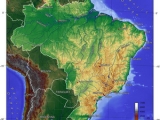 |
Structured Islamic Finance in Brazil(0) By Fehmy Saddy, PhD, President, FS Partners SA Food security has emerged as a global concern in the context of world population growth. World population is projected to increase from its current level of 7 billion to 9 billion by 2050. A recent article by Lester R. Brown on the “New Geopolitics of Food” reveals the prospect of future wars over food resources. Lubna Al Qasimi, UAE’s Minister of Trade reported recently that food imports of the GCC region could more than double over the present decade. They would grow from $25.8 billions in 2010 to $53.1 billions in 2020. Projections were based on the expected population growth of the GCC region, which could reach 50 millions by the end of the decade. The Minister concluded: “for a region such as the Gulf, there is the added urgency to secure food sources that are safe and sustainable” Brazil is the largest producer and exporter of commodities. However, four Western companies, namely, ADM, Bunge, Cargill and Dreyfus, better known by their acronym ABCD, control 70%-80% of the world food market due to their large-scale farming and financial strength. They are referred to by Brazilians as the “Four Mothers”, a designation reminiscent of the “Seven Sisters,” the infamous oil cartel that controlled oil production and pricing until the creation of OPEC in 1960. MENA countries depend on these Western multinational companies for their food. In GCC countries, the situation is even more acute as imports amount to over 90% of their needs. Therefore, there is a growing concern that dependence on the food multinationals has far reaching ramifications on their social, political and economic development. Islamic Finance of Agriculture The prohibitive interest rates charged by Brazilian banks make Islamic financial instruments ideal financing tools. There are two areas where Islamic financial institutions can use Islamic financial instruments in Brazil: agriculture production and trade. They could finance acquisitions of farms and agro-industries, and support corporate borrowers. Consider the following: 1. Buy and Lease back farmlands Brazilian farms are typically large with thousands of hectares cultivating diverse crops: corn, soybeans, sugarcane, coffee, sorghum, cotton, etc. These farms fall regularly behind on their payment of high-interest loans, and file for judicial protection from creditors, or bankruptcy. Islamic financial institutions could use the sukuk instrument to replace conventional bank loans, with a mortgage on the farm. In most cases, it is attractive to purchase the farm and lease it back to the owner or to agricultural funds, with fixed lease payments. The lease contract would provide an exit option to sell back the farm at maturity at market value. Historically, Brazilian farmlands have increased in value by 10-12% per annum. In most cases, an acquirer with ready cash can negotiate a reduction of existing loans by at least 50% of their face values. 2. Acquisition of agricultural industries Some agro-industries face the same problem of high interest loans and fall back on their payment. Islamic financial institutions could use the above mechanisms to replace conventional loans with a sukuk instrument, or acquire the company under a buy and lease back contract. There are several opportunities to purchase sugar refineries, for example, with their proper agricultural farmlands for a nominal price, and defer payment of loans over a period of 5-8 years, and even more for obligations due to government entities. 3. Contracting Farmers for a percentage of the crops One of the oldest forms of Islamic finance is Muzara’a, a profit-sharing scheme that is widely used in the MENA region and much of the Muslim world, whereby an investor advances a certain sum to the farmer for a percentage of the crops. The low cost of production and higher productivity of Brazilian farms, provides higher returns. Islamic banks could use this mechanism for the account of clients. In any case, they have no difficulty selling the commodities in their home markets. 4. Contracting Farmers for the production of commodities Another from of agricultural financing is to advance certain sums to farmers to enable them to pay for seeds, fertilizers and other plantation expenses, in exchange for certain crops at pre-determined prices. The sums advanced would be secured by a mortgage on the farm. Indeed, the food multinationals referred to above, use this ancient Islamic financing method to control production and markets. 5. Islamic Commodities Trading A controversial issue in Islamic finance today is the synthetic commodity contracts used by Islamic banks to support their Treasuries. In its basic form, an Islamic bank (in fact, a borrower) purchases the commodity contract at certain price, with a delayed payment date, and sells it back immediately to the same seller (or a sister company) at a lower price for cash, without ever taking delivery of the underlying commodity or asset. The difference in price is, of course, the time cost of money, essentially an interest payment. Most Islamic scholars consider this method as a legal “Hyla” (“Trick” in English), which does not qualify as genuine form of Murabaha. Islamic financial institutions could undertake genuine Murabaha transactions by financing actual commodities sale contracts to actual buyers in the MENA or GCC regions. Islamic financial institutions dealing with such contracts may develop an inter-banking Murabaha platform among themselves to generate liquidity for their own treasuries. Under this platform, Islamic financial institutions would buy and sell commodities contracts at prices that reflect different maturity dates and delivery schedules. In conclusion, there are numerous opportunities in Brazil suitable for Islamic financing of agriculture, as well as in other sectors. Islamic financial institutions could use Sukuk to support corporate borrowers in other vibrant sectors and benefit from high returns secured by real assets. However, two issues are always on the minds of financial institutions: exit strategy, and currency risk. With respect of the former, the Islamic methods of financing discussed above would include exit options in a highly liquid market. With respect of currency risk, lease payments are adjusted annually to the Brazilian Government deposit rate, currently around 10%, and inflation, estimated at 6.5% for 2012. |
|
Should Islamic scholars abide by an industry code of conduct?(0) By Rushdi Siddiqui, Global Head of Islamic Finance at Thomson Reuters July 4, 2012 Excerpts from an interview between the columnist and Dr Mohamad Akram Laldin, the executive director of the International Shari’ah Research Academy for Islamic Finance (ISRA): Rushdi: You were a Shariah scholar and now you are an executive director of ISRA. How did this come about? Dr Akram: I am an academician at the International Islamic University Malaysia and, at the same time, developed my expertise in syariah advisory. I am member of several syariah boards in and outside Malaysia. In 2008, the central bank of Malaysia wanted to establish a Syariah Research Academy and I was selected to be the executive director, and I am still actively participating in my syariah advisory engagements. Rushdi: What are the high level objectives of ISRA in contributing to Islamic finance? Dr Akram: The objectives of ISRA can be summarised as: * Spearhead and conduct-apply syariah research in Islamic finance. Since the establishment of ISRA in 2008, it has produced a number of academic research publications. * Enrich resources of knowledge in Islamic finance through publications and collecting materials in Islamic finance. ISRA also has a large collection of fatwas translated into English on its website. |
 The weakest link: short-term liquidity and how it impacts Islamic finance
  Islamic finance: An industry inclusive to all, irrespective of background
  SPECIAL COMMENT: Missing Link in Islamic Finance Hubs: Islamic Venture Capital
  Media and public relations — the missing link in Islamic finance
  SPECIAL COMMENT: OIC Islamic Index - The Malaysia Story?
  SPECIAL COMMENT: Ramadan Wish List For Islamic Finance
  Natural gas to be fastest growing energy source
  Dull economy takes shine away from Cameroon
  Mozambique political tensions seen rising in 2014 Muslim consumerism is linked to real economy sectors
 Sorry. No data so far.
Contacts and informationAlifArabia’s aim is to offer a brutally frank but sincere analysis on the Middle East region’s business and political issues. It wants to see a thriving and dynamic Middle East that encourages corporate and government transparency, investments and policies that allow the economies to grow.
|
Social networks |
Most popular categories |