



 |
Can Gulf stock markets maintain momentum?(0) With Gulf economies poised for growth on the back of strong macroeconomic policies, regional stock markets are also set for growth. READ MORE HERE |
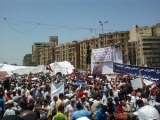 |
What To Do About Egypt’s Contracting GDP(0) The Egyptian economy contracted by 0.3% in the fourth quarter ending a politically-momentous but economically-forgettable year for the country. READ MORE HERE
|
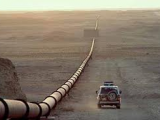 |
Egypt’s Energy Sector Still Has Life(0) A spate of new announcements from international oil companies suggests Egypt’s mature oil and gas sector remains formidable. Despite significant political and economic problems in Egypt and falling crude production levels, the country’s oil and gas sector remains attractive to international companies. READ MORE HERE
|
 |
Egypt Now Among Top Ten Sovereigns Most Likely To Default: Report(0)
January 15, 2012 Egypt is now among the ten riskiest sovereigns in the world, according to the latest report from CMA Datavision. In other words, Egypt is among the nations most likely to default on its debt. While that does not necessarily mean that Egypt will default, its spread has risen as investors are nervous that the country could default. READ MORE HERE |
 |
MENA Projects: Saudi Arabia Still the Driving Force; UAE Slowdown Continues(0) Excerpt from Citibank report: In October this year, $16.9bn of projects were awarded across MENA. On a cumulative basis, just over $82bn of projects have been awarded across the region in the year to end October. This compares favourably with FY10 when almost $80bn of projects were awarded. Saudi Arabia is the main driving force accounting for a third of the 2011 total. Iraq accounts for 20%.The UAE has awarded almost $14bn in the year to end October, almost $20bn below FY10. |
 |
SPECIAL COMMENT: The Arab Spring Could Turn Into A Long And Cruel Winter(0) By Alon Ben-Meir Due to a host of common denominators in the Arab world including the lack of traditional liberalism, the tribes’ power, the elites’ control of business, the hold on power by ethnic minorities, the military that cling to power, and the religious divide and Islamic extremism, the Arab Spring could sadly turn into a long and cruel winter. These factors are making the transformation into a more reformist governance, slow, filled with hurdles and punctuated with intense bloodshed. At the same time, each Arab country differs characteristically from one another on other dimensions including: history and culture, demographic composition, the role of the military, resources, and geostrategic situations. This combination of commonality and uniqueness has had, and will continue to have, significant impacts on how the uprising in each Arab country evolves and what kind of political order might eventually emerge. |
 |
Egypt, Tunisia and Morocco Elections: Give Islamists A ChanceComments Off Whether western countries and ME liberals like it or not, Islamic parties have emerged victorious in elections in North African states. Before typecasting and dismissing them, Islamic parties deserve to get a fair chance at leading their people. The Western world and media are terrified of the rise of Islamic parties in Egypt, Tunisia and Morocco. READ MORE HERE |
 |
Egypt’s Ten Key Post-Election Challenges(0) Egyptians have achieved a major milestone by holding the first leg of their staggered parliamentary elections, and they can take a moment to rejoice. But they know better than anyone else that the road to fulfilling their destiny is strewn with many more hurdles. READ MORE HERE |
 |
Will Egypt’s Spring Turn To Autumn?(0) On the eve of the elections, Egyptians have washed off much of the feel-good afterglow of the first revolution that ousted Hosni Mubarak. Now they are faced with the cold hard light of economic hardship and political uncertainty. While Egypt’s first revolution earlier this year was full of hope and a spontaneity that surprised even the protestors, the second revolution less than 10 months later has a much sombre undertone. READ MORE HERE |
 |
An Economic Model For Arab Spring Countries: UAE, Turkey, Malaysia Or Indonesia?(0) Arab countries that have recently been liberated from the clutches of their dictators are searching for a path to prosperity. For many, the political and social and economic achievements of Turkey is worthy of emulation. Indeed, the Prime Minister Recep Tayyip Erdogan is somewhat seen as a rock star among the youth of the Arab world. But a new study by Legatum Institute, focused on the prosperity of nations, wonders whether Arab countries could consider alternative growth models. READ MORE HERE |
 The weakest link: short-term liquidity and how it impacts Islamic finance
  Islamic finance: An industry inclusive to all, irrespective of background
  SPECIAL COMMENT: Missing Link in Islamic Finance Hubs: Islamic Venture Capital
  Media and public relations — the missing link in Islamic finance
  SPECIAL COMMENT: OIC Islamic Index - The Malaysia Story?
  SPECIAL COMMENT: Ramadan Wish List For Islamic Finance
  Natural gas to be fastest growing energy source
  Dull economy takes shine away from Cameroon
  Mozambique political tensions seen rising in 2014 Muslim consumerism is linked to real economy sectors
 Sorry. No data so far.
Contacts and informationAlifArabia’s aim is to offer a brutally frank but sincere analysis on the Middle East region’s business and political issues. It wants to see a thriving and dynamic Middle East that encourages corporate and government transparency, investments and policies that allow the economies to grow.
|
Social networks |
Most popular categories |