



 |
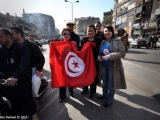
Tunisia banks still vulnerable(0) Tunisia was Ground Zero of the Arab Spring in late 2010 after a street vendor immolated himself in protest against injustice and inequality. His act of despair sparked a region-wide protest that swept aside the regimes of Tunisia, Egypt and Libya. CONTINUE READING
|
 |
Tunisia sees no sign of political resolution soon(0) Ground zero of the Arab Spring movement appears to have made very little progress after ousting its ruler Zine El-Abidine Ben Ali in early 2011. CONTINUE READING |
 |
MENA turmoil puts pressure on Jordan(0) Jordan has teetered on the edge of economic and political disaster, but it has managed to avoid the worst of the Arab Spring revolution that has ravaged its neighbors. CONTINUE READING |
|
Socio-political tension keeps Tunisia on edge(0) Tunisia, ground zero of the Arab Spring, is struggling under the weight of expectations… CONTINUE READING
|
 |
Rushdi Siddiqui: Is the Islamic finance industry ready for social media?(0) By Rushdi Siddiqui, co-founder and managing director of Azka Capital Social marketing eliminates the middlemen, providing brands the unique opportunity to have a direct relationship with their customers. — Bryan Weiner. Today, it seems Islamic finance is still stuck at a hard-copy of stage communication (faxes) when the financial world has moved on to Facebook, Twitter, blogging, etc. Many Islamic financial institutions have Web sites, but how often is it updated beyond awards won? How many Islamic banks, takaful operators, Shariah consulting firms, industry bodies, etc, are on Facebook? Yet, the youth — its future clients — in many Muslim countries with Islamic finance are on Facebook. What about the cross-sell of Islamic finance to non-Muslims as an ethical alternative? These potential customers are an important cluster of social media and they are continuously looking for offerings aligned with their values. Several Islamic financial institutions have Twitter accounts, unsure how many of their (retail) clients are on Twitter. Do these institutions believe SMS, Internet and mobile banking is the “social media” connection to their clients? Maybe the culture of social media is lacking in, say, the GCC. But we saw how effectively social media was utilised during the Arab Spring. Fear Is there a fear of technology among Islamic financial institutions? The fear of hackers stealing from customer accounts and identity theft? They have heard about horror stories on hacking from US- and EU-based banks with allegedly better (read, more expensive) firewalls. Is there fear that social media connectivity will raise the level of transparency to conventional benchmarks standards and with accountability to follow? Put differently, will social media result in enhanced governance? It is not a bad thing in this post-credit crisis environment where companies are rewarded via a stable stock price and rave reviews for transparency and governance. Is there fear that “bad news” concerning Islamic financial institutions will spread like wildfire if (deeply) connected to social media? It will spread anyway as news organisation coverage is supplemented by bloggers and tweeters in real time. Resources Is it a lack of resource issue in having, say, a “chief social media officer”? It would appear that Islamic financial institutions have not looked at public relations and outreach as an investment in their brand, but, rather, a cost of doing business. Brand-building goes towards commitment to not only clients and staff, but long-term growth of the institution, including eventual cross-border expansion and future clients. Furthermore, during challenging market cycles, the message to the community, whose attention has become shorter, is the confidence inspiring “business as usual”. Guidance The Thomson Reuters Islamic Finance Gateway, or IFG, may just provide a guidance for Islamic financial institutions on understanding about the benefits of social media connectivity. It comes down to market intelligence, and the market place is the best source of “knowledge that powers” market movements. The community connectivity function of the IFG comes down to insights by industry experts making sense of the information overload, communicating about important sign posts on the road ahead and allowing community to interface with experts on a secure platform. LinkedIn, Twitter At the behest of colleagues, I joined LinkedIn about a year ago to connect with like-minded colleagues globally to share ideas and articles. Outside of unsolicited endorsement of people I have connected with, but, not worked with, it has been a pleasant experience, especially reading leadership articles. Furthermore, I started tweeting a few months ago, initially on Islamic finance and the halal industry, but have expanded to issues related to Muslims, Islam, Muslim countries, etc. It has been a fulfilling experience and I should have joined much earlier. Why? 1. Tweeting forces one to convey their message in 140 characters, becomes very important in today’s world of short-attention span and information overload. Islamic financial institutions should be able to convey thought leadership within these constraints. 2. Twitter brings news in real time from multiple eyes, hence, it’s a multiple “op-ed” of the market place on the subject matter. The raw news provides more colour than polished sound-bites. 3. Twitter has allowed me to follow the likes of global leaders like His Highness Shaikh Mohammed bin Rashid Al Maktoum, Vice-President and Prime Minister of the UAE and Ruler of Dubai, and his comments in real time. He first tweeted about Dubai being a hub for an Islamic economy a few months ago. Conclusion Shaikh Mohammed’s tweets, at the time of writing this, on the performance of UAE government standards should encourage Islamic financial institutions to engage and embrace the social media to not only connect, but also to report developments. Rushdi Siddiqui is co-founder and managing director of Azka Capital, a private equity advisory firm focused on halal industry initiatives, and an advisor to Thomson Reuters on Islamic finance and the halal industry. |
 |
Transforming Middle Eastern Corporate Practices(1) By Elza S. Maalouf, Founder & President Integral Insights Consulting, Member of the Evolutionary Leaders Organization Corporations, like cultures, cannot skip a development stage. Life conditions in the Middle East have remained at tribal levels with egocentric overtones, which have resulted today in the sweeping revolutions of the Arab Spring. Corporate cultures in the Arab world were no exception to these values. Today visionary leaders, men and women, are changing these patterns and investing in human capacities that will outlast the Age of Oil.I have been working with Middle Eastern corporations for over a decade as a consultant and advisor to business founders and CEOs. Over the years, I have seen corporate training seminars delivered by Western consultants and trainers with the same exact content as it was delivered in the West as if the region were an extension of Anglo-Saxon values that just needed to catch up. Even the best theories from management science fall short on achieving the intended results if they are not tailored to the memetic contours of each culture. In contrast to this one-model-fits-all approach, our consultancy honors all cultures, value systems and levels of development in society, and takes into consideration the environment and habitat in which they operate. Specifically, the framework I use originated from the emerging science of memetics based on the seminal work of Professor Clare Graves and his successor and colleague Dr. Don Beck. A meme is like a gene that contains units of cultural information. Memes form into general groupings such as politics, language, economics, religion, education, health care, architecture, etc .The natural organizing principle that brings these groupings together is called a value-system or vMEME. |
 |
Looking for halal alpha in Dubai(0) By Rushdi Siddiqui, Global Head of Islamic Finance, Thomson Reuters Halal needs to move from certification and ingredients to an asset class It is one of the legs of an Islamic economy for Dubai, as recently mentioned by His Highness Shaikh Mohammad Bin Rashid Al Maktoum, Vice-President and Prime Minister of the UAE and Ruler of Dubai. It is a $640-billion (Dh2.35 trillion) niche market with greater reach and traction than Islamic finance for Muslims. It is also a consumer non-cyclical, linked to the real economy and asset-backed. Furthermore, companies such as Nestlé, Unilever, Cargill, Kraft and other Fortune 500 companies produce goods for this niche market. We’re talking about the halal industry: from food and pharmaceuticals to cosmetics, logistics and more — $2.1 trillion in total, with the food sector comprising about a third. According to a consultant study, “Consumer spending on food in the GCC is expected to reach $106 billion in the next five years … [and] Saudi Arabia and the UAE together account for around 75 per cent of the region’s total food retail market”.
Halal was in the Arab Spring countries long before Islamic finance, and they are now just talking about building enabling environment for sukuk. Here, an agriculture sukuk would have a more direct impact than general purpose sukuk.
Halal presence is a better indicator of Muslim purchasing power than the traction of Islamic finance in Western countries. “Halal has gone mainstream,” says Darhim Hashim, CEO of the International Halal Integrity Alliance. “There are now aisles — no longer shelves — in supermarkets such as Asda and Tesco, dedicated to halal products.”
Halal needs to move from the present conversation of certification and ingredients to an asset class. Thomson Reuters and Idealratings launched the world’s first halal food index, the Socially Acceptable Market Investments Halal Food Index, at the World Halal Forum in 2011. At the launch, there were 240 companies from 15 Muslim countries, including seven from the UAE, thus facilitating inward investing and intra-Organisation of Islamic Cooperation (OIC) investing.
Two points need to be addressed. Firstly, Muslims do not control the halal food supply chain (the OIC, overall, are net importers), especially at the important midstream, manufacturing and processing stages. Secondly, the present approach to food security by way of agriculture, food and land bank funds has yet to meet expectations.
There is a third way, beyond domestic growth and importing, that is less about securing food supply and more about controlling it. However, to control it, one has to know the farm to fork to finance supply chain, as well as traceability, leakages and the like.
Shaikh Mohammad’s announcement has reached the far corners of the food and finance world, and Dubai has the vision, will and means to address food security and build a global brand in the food industry, much like Emirates is for air transportation.
— The writer is Global Head, Islamic Finance & OIC Countries, Thomson Reuters |
|
Rushdi Siddiqui: Why I decided to finally tweet(0) February 04, 2013 FEB 4 — I never thought I would say that publicly, but the lesson learned is, “Never say never!” “Never’s a hard call, isn’t it? Never-ish.” — Terry Venables Tweeting: Reasons and dangers First, I wanted to understand why people tweeted. Because they have something of substance or importance to say? On hindsight, probably not, because hyper-connectivity updates make a minute ago seem historical! Because they want to connect with “like-minded people?” On hindsight, some of those “minds” should be blocked! Because they want a following? On hindsight, thank God for the ability to block, as this becomes an addiction for some! Because they want to only follow, say, a famous athlete, movie star, etc? Or that they just want to be part of a fad and then drop out when it fades? Second, I wanted to know the “dangers” of tweeting. That which has been tweeted cannot be deleted. Possibly retreated. But from a public relations 101 angle, that which cannot be deleted is a disaster for reputation management. The 24/7 information download world we live in reminds us more often than not of our missteps and failures than it does our successes. Hence to say “be careful before touching send button” cannot be overemphasised. The apology tweet cannot undo the damage done, case in point people like Rupert Murdoch and many athletes, politicians, business leaders and why even some spiritual leaders. There is also the danger of pranks played on tweet accounts. Ones opened in your name or those hacking into your account to score a point or to make a statement for individual/group benefit. This has happened to political and spiritual leaders of late. It’s interesting to note that politicians, like US President Barack Obama, have a team that tweets on their behalf. Why you ask? These are what you call an “impersonal tweet” driven by careful public relations management. The tweet can bring “rain or sunshine” to the subject matter depending on prominence of the tweeter. For example, during a recent college football game, the sportscaster made remarks concerning the beauty of one of audience members, and she suddenly went from less than 10,000 followers to over 200,000 followers (including a superstar basketball player by the name of Lebron James). So tweets can create overnight fame or notoriety depending on which side of an issue one stands and supports, and the reaction one poses to responses. There are the spam tweets, hence, the nuisance of time consuming blocking comes into the picture. Third, and probably the most difficult question, what value will I bring into the tweeting wide world? I come from the realms of Islamic finance and halal hence, and, much like TV sitcom actors, we have generally encased ourselves in that narrow arena. But this is what we do, and does not define who we are. At one level, all of us have secret aspirations of becoming superstar athletes, CEOs of Fortune 500 companies, top journalists, movie stars, doctors, scholars, can-do politicians, inventors and entrepreneurs, better dads/moms, sons/daughters, even bad guys, etc., where what we say moves companies, markets, voters and arguments. Thus, it seems tweeting is about being the first on headline commenting and/or reporting from the mundane (subjective) to the moving. Exposure and experience The nature of my “calling card”, global in title, has made me an international road runner. It has exposed me to so much in the last 15 years, from airline lounges, airlines and journeys of, at times, 17 hours, airports, hotels, taxis, tourist traps, meetings, etc. Thus, at times, I feel like a secret shopper, business development officer (outside my profession), observation tower (of people, marches, events, speeches, natural phenomenon, etc.), roving reporter, etc. I want to share these moments, in the form of 140-character mini op-eds, but never took the first step for a number of reasons (probably intimidated by such media), and, on hindsight, missed the opportunity to connect and learn from others (much earlier). Initially, I would have probably tweeted to connect with fellow practitioners in Islamic finance and halal (large community?), and then expanded to the more pressing issues in the Muslim world, from sports to athletes to policy to tolerance to hypocrisy, and connectivity and perception influence of the non-Muslim world. Lincoln quotes for Muslims Let’s start with a tweet for all Muslims and non-Muslims: “I don’t like that man. I must get to know him better.” Abraham Lincoln, 16th president of the US. How is this even different to the basic teachings of Islam or any other religion? Muslims, including myself, are you reading, understanding, and executing? The non-Muslim world needs to heed the advice of this statesman towards Islam. He also said: “… Nearly all men can stand adversity, but if you want to test a man’s character, give him power.’” All of us have examples of people we know or can predict who will fail or have failed this character test! The Muslim world is not only cursed with black gold (oil), but also power without accountability still prevails in many parts of its society. Do we thank the colonial geographic boundaries that seem to have created mental barriers? What would I ask in the world of Islamic finance and halal I would tweet the following: Students: they are spending money on courses, diplomas, etc., and want meaningful jobs upon graduation; yet, we talk about shortage of skilled people, huh? Walk the talk, Islamic finance. Scholars: they are entitled to a livelihood to support families, but what is reasonable number of board membership? Man on street: Islamic finance is not Qard Hassan (benevolent loan) or charity, but about profits not profiteering. Where are the imams, as they are the local trusted gatekeepers to the community, and, in Arab Spring countries, it’s about the mass retail. Disenfranchised (bulk of the 1.6 billion Muslims): we are still waiting for Islamic finance and many of our Muslim-majority countries are non-co-operative, whom do we turn to? Shadow banking system is the only alternative as only collateral is life/blood? Regulators/public sector: need to establish foundation for market, initially lead market and then regulate market, and cannot be an indefinite market participant as the “crowding out” phenomenon kicks in. Anti-shariah movement: present your evidence on it financing terrorism, Malaysia and Dubai would host such an event to discuss its veracity. Conventional institutions in Islamic finance: are you about absorbing liquidity or providing value and commitment? HSBC Amanah downsized operations in a number of countries where margins are not being met, profits versus commitment (beyond short term). Islamic finance: you have proved you are viable (alternative), credible (non-Islamic institutions involved), durable (better survived the recent external shock, but not by much), but what are your sustainable and scalable growth plans? Halal industry: what is your story (brand)? Why are you even more fragmented than Islamic finance? Don’t you realise you’re an asset class? Malaysia, you will just lose the halal hub title if you do not focus in building such companies (inorganically) as global brands versus the continued comments of Jakim, HDC, etc. Modern-day lifetime achievement award for Islamic finance: Sh Mohammad bin Rashid Al Maktoum, Ruler of Dubai, VP and Prime Minister of UAE, two words: continued commitment. The rest of the world: what is Islamic finance and how has it changed lives, inspired humanity, or rather where is IF in moments of global tragedies and catastrophes? OIC tweets I would tweet on following: Why do we have “His/Your Highness”, “Your Majesty”, “Sultan”, “Emir”, “Prince and crown prince”, “Datuk and Tan Sri”, “King and Queen”, etc. when the Prophet of Islam did not have such references. Yes, we respect our leaders and titles like President, Vice-President, Prime Minister. Why can’t we make them more human, approachable and accessible? Aren’t these titles creating a mental and social class war/barrier? Is this an effective way to rule in the 21st century? Where is the healthy food in Malaysia? Yet, what little is available tends to be expensive! I have been coming to Malaysia for 15 years, and go to the gym religiously, and rarely see Malaysian men there. Obesity-cum-diabetes is a major issue in the GCC, and Malaysia may not be far behind! (But Malaysian men may be spending time on football pitches and badminton courts — who knows?). We have 57 Muslim countries in the OIC, but what clustering has captured the investing world’s attention like BRICS? I suggested SAMI + 3 — Saudi Arabia, Ankara (Turkey), Malaysia, Indonesia, Egypt, Pakistan and Nigeria. It could also be MIST + 3, but MIST implies a fog, haze, etc, lack of clarity. To tweet or not When Microsoft started making computers in the ‘70s, it wanted to put a PC in every home. In less than 40 years the world has changed and today we have a computer in every pocket/handbag. The dangers of tweeting remain. Once you start, it is difficult to get out of it. It may rule your life (i.e. one keeps checking the phones at the expense of real-life human contact). But like everything in life, moderation is key in action. Need to tweet to connect with a society wired on social media, yet to do so with wisdom, caution and more importantly substance. There are always the red herrings of “committed” tweeting communities that feel the need to share their every move — it is this culture that perhaps still stops those who would/could benefit the world of “tweet” from tweeting. In conclusion, to tweet or not to tweet is no longer the relevant question to being relevant today. Maybe the question should be — do I tweet to share my next appointment or my next meal or my next relationship — or do I tweet to make the world a better place? To do my small part in making that difference? So, for those about to tweet, we salute you (but be careful and responsible). |
 |
100 Million Tourists For MENA Countries(0)
The Middle East tourism industry’s progress was cut short by the Arab Spring crisis and it’s still reeling from the after shocks that reverberate in countries across the region. CONTINUE READING |
 |
Arab Countries In Transition(0)
Countries hit by the promising but disruptive Arab Spring will need financing to the tune of USD43-billion next year, according to the International Monetary Fund (IMF). CONTINUE READING |
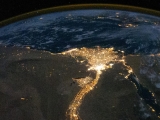 |
M&A buzz In Egypt(0) Investors are circling around Egypt’s key sectors, looking for opportunities and bargains on undervalued prices of key assets. |
 |
4.5m MENA infrastructure jobs(0)
One of the core reasons why Arab youth spilled on to the streets during the Arab Spring was their inability to get decent employment. Joblessness - which is attached to human dignity and viewed as a platform for many to further and better themselves in their country - drove many to orchestrate sweeping political changes in their own countries. CONTINUE READING |
 |
Post-Arab Spring conflict(0) While the recent conflict between Hamas and Israel could come to an end, it is clear that new battle lines and alliances are being drawn, changing once again the regional dynamic. It does not take much for the Middle East to flare up in a great ball of fire. CONTINUE READING |
 |
Re-elected Obama looking for ‘Egypt of Asia’?(0) By Rushdi Siddiqui, Global Head of Islamic Finance at Thomson Reuters
The re-election of Obama, both on popular (50 per cent to 48 per cent) and electoral (303 to 206) votes, is a message sent by the American people to work smarter (not only harder), longer, faster, and with partners, to “fix” what is broken, “mend” what needs fixing, “push” forward what is working and a “probation” to try new initiatives. The post-election comments for the peaceful president from world leaders, from secular to spiritual, have been positive, glowing, and extending an open hand to assist in the hard work ahead as all of us are in the same “boat” called humanity wanting dignity.
In the second term, Obama needs to focus on Asia, generally, before China’s once-in-decade political make-over starts execution (no pun intended), and possibly, a leading Muslim country, specifically, as an example a country which closely represents US ethnic, religious, and cultural diversification and “tolerance.”
Maybe it’s time for the president and the US to find and get behind an “Egypt of Asia”, as the oil and (perceived) regional influence of certain countries of recent past did not pan out as expected.
Omnipotence?
Will there be peace and stability in the Middle East within the next four years? It may be easier to have an Olympic gold medal winner in badminton from Malaysia than find the elusive peace in a region of piecemeal countries united and, yes, divided by tribalism.
The omnipotence of the US as the voice of reason and calming stability backed by her economic and military might has been downgraded (let’s leave S&P out of the equation) by the misadventures of George “Bring it on” Bush and the systemic risk to global economy by the sub-prime fiasco (also under George Bush), and the corresponding rise of the BRICS: Brazil, Russia, India, China and newcomer South Africa. Clearly, the power has shifted away from the US. Where it has shifted to is another issue, as it’s not debt battered and financially bleeding Europe.
Hotspot
The Arab Spring flushed out the regional diminishing US influence, including the unflinching support of entrenched poster child ally, Hosni Mubarak/Egypt, a benevolent dictator.
However, the Middle East remains important mainly because of black gold, oil, and the havoc a price escalation can play on industries and capital markets in an already weakened global economy.
The Middle East also remains a region of “unknown knowns”, composed of a complicated jigsaw puzzle of Egypt (controlled chaos), Libya (chaos), Lebanon (proxy chaos), Palestinian/Israel (two-state solution), Syria (civil war), Yemen (drones), Iran (nuclear), Al-Qaeda (stateless terrorism) and so on.
Although not mentioned on any geographical or topical defining map, Pakistan and Afghanistan are an extension of the region for the United States’ earlier intervention and on-going challenges. To put it differently, “they broke it, and have to buy it,” and with no return policy.
Thus, it will take more than four years of precision focus, shuttling negations, wisdom patience, printing press of money and, possibly, divine intervention to have an acceptable “normality” i.e. absence of conflict, not necessarily peace.
Expanding attention
The primary focus will continue on the Middle East, but, much like five-year business plans looking for new business opportunities in different geographies, the US needs to remove the “horse blinders” and see the Muslim world not as one, but as many countries with rich histories, cultures and influences. Thus, oil/gas reserves, military bases and large domestic population will continue to be important, but possibly not outcome determinative.
To make Obama’s second term more interesting on foreign policy, vis-à-vis the 57-country Muslim world, selected Muslim countries need to “pitch” themselves as representative of democratic and religious principles (is this possible?). There are three Muslim countries in the G-20, Turkey, Indonesia and Saudi Arabia, and these are only a starting point.
Other countries worthy of consideration, based upon metrics-like population, GDP growth and 2020/2030 vision, capital markets, democratic principles, OIC influence, etc include Egypt, Pakistan, Nigeria and Malaysia. As mentioned above, the court of public opinion will also matter for Obama, hence, from the above-mentioned destinations, the American public has a “challenging” opinion about these countries, except one.
The Malaysian elections are around the corner next year, and the incumbent and opposition can expand their platform to pitch about Malaysia to both the White House and Congress.
Winning the Nobel Peace Prize early in his first term is a tough benchmark act to follow for the second term for any democratically elected leader. His second term may be an extension of hope that transforms to trust that brings change, hence, actually earning the Prize that he accepted in the first term.
* The views expressed here are the personal opinion of the columnist. |
 |
Mushtak Parker Speaks His Mind(0) Leading journalist on Islamic finance tells why he is often ‘harsh’ on the industry and his other views “To be persuasive we must be believable; to be believable we must be credible; (to be) credible we must be truthful.” Edward Murrow. |
|
SPECIAL COMMENT: Ramadan Wish List For Islamic Finance(0) By Rushdi Siddiqui, Global Head of Islamic Finance, Thomson Reuters The Goal: The central issue is about the industry controlling its own destiny “Behind every success is endeavour… behind endeavour, ability… behind ability, knowledge… behind knowledge, a seeker ….” Unknown. As the blessed month of Ramadan arrives, here is my “seeking” list for Islamic finance. It’s not about another voice asking when the International Islamic Liquidity Management Corporation (IILM) will issue its first paper or disagreeing with CIMB Group CEO Datuk Seri Nazir Razak’s comment on “rolling back” government’s involvement in business, but more to do with controlling our own Islamic finance manifest destiny. |
 |
Trouble Brewing In Jordan(0) While Jordan has avoided the turmoil of Libya and Egypt, it has always seemed like a country on edge ever since the Arab Spring swept across the region. CONTINUE READING |
 |
Exclusive: Lessons for Islamic Finance Expansion - Emirates Airline(0) By Rushdi Siddiqui, Global Head of Islamic Finance, Thomson Reuters Islamic finance has reached it natural market share in certain markets according a recent A.T. Kearney report, hence, an early ‘amber colored flag alert’ on the need for international expansion. Islamic finance needs to find an example of a model company, ideally from the Muslim world, which has become a global player based upon customer service, unique selling proposition, innovation, demand, and a charismatic leader. Should it also look to the west, and examine the likes of Google, Apple, Coca Cola or Pepsi, ExxonMobil, etc.? Does it look at the management style of former GE Chairman Jack Welsh or the vision of the late Steve Jobs? |
 |
Islamic finance: Fitting In & Standing Out(1)
By Rushdi Siddiqui A Sharia-compliant equivalent of the popular UK and US reality show The Apprentice has recently been announced by a UK-based organisation. This follows the news of an ‘Islamic Facebook’ and ‘Halal-Tube.’ The Muslim world also has superheroes, like The 99, Muslim dolls (Dara and Sara), Muslim Cola (Mecca Cola), Islamic car, and so on. |
 |
Gulf Emerges As Global Sweet Spot(0) Nobody even considered looking at MENA states last year, as news of Arab Spring-related crisis, instability and the Iran conflict dominated the headlines. |
 |
Islamic finance: An industry inclusive to all, irrespective of background(0) Feb 27, 2012 Dr Mohammad Daud Bakr, president and CEO of Amanie Advisors, has the distinction of being both a globally-renowned Sharia scholar as well as an acclaimed entrepreneur. His decades’ worth of industry experience is both Amanie’s pillar of knowledge as well as the focus of its clients’ attention. In an exclusive interview with Gulf News, Dr Daud provides insights into Arab Spring countries’ potential for Islamic finance, scholars sitting on multiple Sharia boards and some of the challenges faced by the $1 trillion (Dh3.67 trillion) industry. |
 |
Islamic finance, Occupy protests and public good(0) By Rushdi Siddiqui, Global Head of Islamic Finance, Thomson Reuters There are only two ways to conquer and enslave a nation, one is by sword, the other is by debt,” said John Adams, the second president of the United States. If we expand the quote, it could include debt without collateral asset, trading of such debt, and enhancing it with leverage. There are consequences as there are market cycles. Can Occupy Wall Street (OWS), public good and Islamic finance converge? Yes, through the lofty principals of economic justice. The essence of Islamic finance is about “risk sharing over risk transfer”, as it implies a financial and economic system of checks and balances. It implies an “ethical” financial intermediation linked to the real economy for “moral” value-added output. It implies modalities of contracts whose foundations are based on transparency, where asymmetric information is minimised to prevent abuses against the weaker counter-party. Furthermore, Islamic finance is about financial inclusion paving the path for distributive wealth and income, and ensuing economic opportunities. Finally, it’s all about business and not religion, and it about profits but against profiteering. OWS According to commonly used information website Wikipedia, Occupy Wall Street is a protest movement which began last September 17… against social and economic inequality, high unemployment, greed, as well as corruption, and the undue influence of corporations — particularly from the financial services sector — on government. The protesters’ slogan ‘We are the 99 per cent’ refers to the growing income and wealth inequality in the US between the wealthiest 1 per cent and the rest of the population. It would seem many of the concerns raised by the OWS movement were similar to its predecessor spark, the Arab Spring phenomenon, except replacing “corporations” with “corrupt and repressive governments”. As of now, the Arab Spring has had more impressive results than OWS after helping bring new governments in Tunisia, Egypt, and Libya, new governments in the “wait” in Yemen and Syria, and “new governance” in other regional countries. The question becomes, how would the OWS movement react to Islamic finance? During a London demonstration along the OWS lines in 2011, a protester held up a sign, “Let’s bank the Muslim way”. Obviously, the reference is to Islamic banking, but the jury is still out if the industry will receive OWS’ endorsement as many of the financial institutions, such as HSBC and Citi, protested against have a presence in Islamic finance. Public good In March last year, the Securities Commission Malaysia (SC) and the Oxford Centre for Islamic Studies (OCIS) held a two-day closed roundtable on Islamic Finance and the Public Good. Dr Raja Nazrin Shah, Crown Prince of Perak and Financial Ambassador to the Malaysia International Islamic Financial Centre (MIFC), who officiated the roundtable, said, “public good is one concept that is common to both conventional and Islamic finance. The values advocated by Sharia are not only confined to the detailed technical aspects of transactions, but also in the extent to which the objectives of Sharia are achieved. If every aspect of Islamic finance were to be subject to a public good test, arguably no negative repercussion could ever arise. Likewise, if all conventional financial products were subjected to a public good test, the catastrophic effects of the recent crisis could have been avoided; and finance would serve its rightful purpose — as an engine that drives and supports the real economy.” At the same roundtable, the Chairman of SC, Tan Sri Zarinah Anwar, said, “… the virtues of Islamic fin-ance need to be unlocked further. Public good, ethics, shared values, governance, and real and tangible contributions to the economy hold the key to innovation and growth. Profits involving a higher social purpose and objective represent values that will create not just economic returns, but also comply with universal ethical standards. Putting all these in place will strengthen the universality and acceptability of Islamic finance, enabling it to offer a distinctive value proposition.” Thus, Islamic finance is not about privatisation of profits and socialisation of losses by the financial sector. It’s about accountability rate of returns, via due diligence, as pre-determined rates of returns do not exist in Islamic finance. Conclusion When Islamic financial institutions, such as banks and takaful operators, are allowed to reach the point of presenting a systemic risk to the industry, that is, being too large to fail, then we have become conventionally inefficient. If bailouts and bankruptcies, combined with capital protected bonuses, become a common place in Islamic finance, then we will have our own Occupy Salaam Street (OSS) movement in the Islamic finance hubs. However, today the aspirations and inspiration of OWS — the principals of economic justice — are aligned to the objectives of Islamic finance. It is about building a dynamic financial eco-system based on humanitarian beliefs, avoiding unjust enrichment and profiteering, and allowing for financial inclusion of the 99 per cent to achieve a basic necessity: human dignity. The writer is Global Head, Islamic Finance and OIC Countries at Thomson Reuters. Opinions expressed here are the writer’s own |
 |
Shiekh Yusuf Talal Delorenzo: ‘We guide and let the markets decide’(0) Feb 17, 2012 Q: We are hearing more comments from Islamic bankers who are saying Sukuk are bonds with an Islamic wrapper, and the industry needs equity/investment sukuk, what are your comments? YTD: Let’s consider the question and its source and then boil it down to a statement. Islamic investment bankers say they (when they say “the industry” I have to assume they are speaking of themselves) need equity/investment sukuk. Simple answer? AAOIFI has developed them. I have always maintained that the market will determine the direction of Islamic finance. It may well be at the present time that the market for sukuk is driven by the needs of Islamic bankers in treasury departments. These needs include predictable pricing. Thus, they have their own preferences for certain types of sukuk, maybe not the same types as Islamic investment bankers. And when the saturation point is reached, by which I mean when the treasuries of Islamic banks have sukuk holdings sufficient for their needs, regulatory and otherwise, the secondary market that everyone is hoping for will develop. It’s beginning already in a limited way. And I share the frustration of our bankers. But we need to keep working. Q: A large number of Sukuk defaulted in last several years, about 30 from Malaysia with 10 BBA and 16 Murabaha structure, are defaults a cause for concern or actually beneficial for the industry? YTD: At the 2005 IFSB conference in London on the subject of law and sukuk the subject of defaults, then only a possibility, was discussed often and widely. After all, until there are defaults, it is next to impossible to know how judges will view sukuk. The problem is multiplied when different jurisdictions and legal systems are involved. We are now, therefore, in discovery mode. And while it is indeed lamentable that sukuk have failed and investors have suffered losses, it is now the responsibility of all involved to study the cases to see what might be done better in the future. |
|
Mum, why Islamic finance?(0) Jan 30, 2012 By Rushdi Siddiqui, Global Head of Islamic Finance at Thomson Reuters There are two lasting bequests we can give our children. One is roots. The other is wings. — Hodding Carter LET’S take a break from sukuk structuring and stock screening, and talk about the children of parents in Islamic finance. They may well be the industry’s future. I suspect many of us in Islamic finance do not come from Islamic banking parents or banking family dynasties. We come from parents that were traditional bankers, engineers, physicians, scientists, journalists, merchants, civil servants, politicians, regulators, academics, and so on. And growing up, Islamic finance was probably not on our radar screen as a career. |
 |
Human Rights Watch: From Arab Spring To Arab Autumn?(0) Human Rights Watch reports, by their very nature, never present a rosy outlook as they are given to highlighting the atrocities of governments and the lack of dignity and freedom they present to millions of their hapless citizens across the world. |
 |
Worst Performing MENA Stocks in 2011(0) The Middle East North Africa markets lost more than USD100-billion in 2011, according to Zawya’s market analysis tool. Gulf markets alone lost USD52-billion, despite significant revenues generated by high crude prices during 2011, which kept the economies in great shape. The Gulf states also benefited from economic packages unveiled by virtually all the six GCC states, but investors were more concerned about Arab Spring, geopolitical tensions, slow growth in the U.S. and a sovereign debt crisis in Europe to pay to much attention to domestic stimulus. READ MORE HERE
|
|
The New Year Islamic Finance Landscape Survey(0) January 2, 2012 “An optimist stays up until midnight to see the new year in. A pessimist stays up to make sure the old year leaves.”Bill Vaughn. Islamic finance is staying up for new year for ……. The survey format is straight forward, 16 questions with multiple answers. |
 |
50 Amazing MENA Economic Indicators For 2011(0)
The year 2011 has been extraordinary not just for the tectonic shift in the region’s political structures, but also the extraordinary pressures and opportunities faced by many regional economies. With four dictators ousted - including one dead - many others were shaken to the core - the after shocks have reverberated throughout the region in 2011 and will no doubt be felt in 2012. We identify 50 amazing statistics that highlight the remarkable year: READ MORE HERE |
|
Islamic Finance: A ‘come together’ consolidation?(0) Will 2012 be the year of “come together” consolidation for Islamic banks? Size is often the justification for achieving economies of scale, used to access deals for league table prominence, used as a buffer in a challenging environment, used as defensive measure to ward off unwanted suitors, and so on. Islamic banks are very much like Islamic (equity) funds. There are hundreds of Islamic banks and funds, but the paid-up capital and assets under management, respectively, is too small to be meaningful. Yet, both, more so Islamic banks, present a unique situation (of an industry risk) of “too small to fail”. |
 |
SPECIAL COMMENT: The Arab Spring Could Turn Into A Long And Cruel Winter(0) By Alon Ben-Meir Due to a host of common denominators in the Arab world including the lack of traditional liberalism, the tribes’ power, the elites’ control of business, the hold on power by ethnic minorities, the military that cling to power, and the religious divide and Islamic extremism, the Arab Spring could sadly turn into a long and cruel winter. These factors are making the transformation into a more reformist governance, slow, filled with hurdles and punctuated with intense bloodshed. At the same time, each Arab country differs characteristically from one another on other dimensions including: history and culture, demographic composition, the role of the military, resources, and geostrategic situations. This combination of commonality and uniqueness has had, and will continue to have, significant impacts on how the uprising in each Arab country evolves and what kind of political order might eventually emerge. |
 |
The Kurdish Conflict: The Real Challenge To Turkey’s Democracy(0)
By Alon Ben-Meir In the wake of the Arab Spring and Prime Minister Erdogan’s championing of political reforms throughout the Arab world, it has now become more urgent than ever before to find an equitable solution to the Turkish-Kurdish conflict. Short of finding an immediate resolution to this debilitating struggle will not only severely compromise Turkey’s suggested model of successfully combining Islam and democracy, but it will additionally bankrupt its moral standing as it willfully continues to discriminate against 15 million Kurds who represent one-fifth of its population. |
 |
Syria’s Arab Spring & The Race For Regional Hegemony(0) By Alon Ben-Meir The Arab Spring is changing the political and strategic map of the Middle East as we know it in ways that will persist for decades to come. Notwithstanding the domestic developments in each country, the Arab Spring is uprooting long-standing authoritarian regimes, antagonists and protagonists to the West alike, and is creating a vacuum that regional powers will quickly attempt to fill. Each of the regional powers in the Middle East - Egypt, Saudi Arabia, Turkey, Iran, and Israel - are poised to exploit the uprising to their advantage. New regional alliances could emerge, as could a new “cold war” and the potential of violence between the competing powers. What is certain now, however, is that the Syrian upheaval thrusts Turkey and Iran into a collision course because they have opposing geostrategic interests that neither of them can afford to ignore. |
|
An Economic Model For Arab Spring Countries: UAE, Turkey, Malaysia Or Indonesia?(0) Arab countries that have recently been liberated from the clutches of their dictators are searching for a path to prosperity. For many, the political and social and economic achievements of Turkey is worthy of emulation. Indeed, the Prime Minister Recep Tayyip Erdogan is somewhat seen as a rock star among the youth of the Arab world. But a new study by Legatum Institute, focused on the prosperity of nations, wonders whether Arab countries could consider alternative growth models. READ MORE HERE |
 |
Arab Spring: A New Era In A Transforming Globe(0)
November 8, 2011 The Arab uprising must be seen as an integral part of a world in transformation. The technological and informational revolutions that have spurred (and continue to spur) globalization and interconnectedness between cultures make it impossible for tyrants to rule for the entirety of their lifetimes while mercilessly subjugating their peoples to lives of servitude with no prospect of ever tasting the true meaning of freedom. |
 |
‘From Tahrir Square To Times Square': Occupy Wall Street Goes Global(0)
Tens of Thousands Flood the Streets of Global Financial Centers, Capitol Cities and Small Towns to “Occupy Together” Against Wall Street Mid-Town Manhattan Jammed as Marches Converge in Times SquareNOTES FROM OCCUPWALLSTREET.ORG:
|
 |
Arab Spring-Related Economic Losses For Affected Countries: $56-Billion(0) The Arab Spring not only cost at least three dictators their jobs but also $56-billlion in lost GDP for the worst affected countries, according to a statistical study by a consulting firm. READ MORE HERE |
 |
Quick Note: OccupyWallStreet Organizers Cite Arab Spring As Inspiration(0) The Arab Spring has inspired people far beyond the region. Describing their tactics, OccupyWallStreet.com, organizers, write on their website: |
 |
Predicting Black Swans(0) Could the Arab Spring have been predicted? More significant, could we have predicted that Saudi Arabia will remain stable throughout the turmoil? Or even where Bin Laden was hiding? New data mining techniques suggest we can. READ MORE HERE |
|
Mayor Bloomberg Warns Of Egypt-style Riots If Jobs Aren’t Created In U.S. Soon(0) There will be riots in the streets: Mayor Bloomberg warns of anarchy if more jobs aren’t created soon. ‘We have a lot of kids graduating college, can’t find jobs,’ he said on his weekly radio show. ‘That’s what happened in Cairo. That’s what happened in Madrid. You don’t want those kinds of riots here.’ READ MORE HERE |
 |
A Lost Political Decade For Bahrain?(0) In many ways, Bahrain is the odd one out in the GCC bloc. The smallest state in the Gulf with the smallest economy and geographic area, Bahrain is also weak on natural resources, unlike its other fellow GCC members. Its Sunni rulers also find themselves in the minority and in the tough position of running a Shia-dominated population - other Gulf states don’t have that acute problem. And these issues appear to be undoing much of Bahrain’s economic progress of the past few decades. READ MORE HERE |
 |
Troubled Tunisians Wonder If Grassroots Revolution Will Not Raise Their Living Standards, What Will?(0) As Tunisia prepares for elections in October, the chronic and fundamental weaknesses in the country’s political and economic structures are becoming evident. While long-standing structural issues will take some time to address, external factors - such as economic problems in key trading partner Europe, and civil war in neighbouring Libya _ are further straining fragile economic growth. This has left many Tunisians wondering if a grassroots revolution will not help alleviate their lot, what will? READ MORE HERE
|
|
30% drop in Bahrain real estate points to a larger problem(0) Like the rest of the economy, Bahrain real estate sector has suffered on account of the country’s political and social unrest. With the economy expected to grow at a snail’s pace - indeed some analysts expect Bahrain’s GDP to contract this year - growth in most sectors will be hard to find. As the country’s political dialogue in limbo, the economy appears to be in a depressed state. Bahrain’s rent has seen a 30% drop in certain areas due to the unrest in the country. The tiny Kingdom had come to a standstill earlier this year after Shia protestors clashed with Bahraini and GCC forces, which led to the deaths and imprisonment of many protestors. A state of emergency was imposed immediately in the country and lifted in June, but by that time the damage to the economy was clear. READ MORE HERE |
 |
Egypt Spurns The IMF And Rushes Into The Arms Of Gulf States(0) Even as the Egyptian Government looks to revive the country’s economy, it has turned down the International Monetary Fund (IMF)’s stand-by agreement. A bold move no doubt, but was it a populist decision or purely a financial one? And if the Egyptian Government’s decision to turn down the IMF a move to spurn Mubarak-praising entities, why is it borrowing from the Gulf? Egypt’s decision to turn down International Monetary Fund (IMF) and the World Bank is a bold move, given that the country’s fiscal situation remains fragile. READ MORE HERE |
|
Cast Your Vote In Arab Spring Awards(0) Spring is nearly six months old. It is time to take stock, remember those who lost their lives and continue to fight, and hand out some well-deserved awards to the key players. The New York Times columnist Nicholas Kristof, asked the rhetorical question ‘What Country Handled Arab Spring The Best? His own answer: Morocco. But he left the discussion at that. Given that the Arab Spring is just about six months old, alifarabia.com was inspired to take stock of how the various countries have handled a revolution that has smashed Middle East dogmas, broken the will of Arab strongmen and given hopes to millions not just in the Arab World but also around the world. The Middle East has seen more public participation in politics in the past six months than it has done over the past 50 years. Much to the shock of Zine El Abidine Ben Ali, Hosni Mubarak and Moamer Qaddhafi, the people of the Arab World launched a unique coup that they could not have fathom and never saw coming. These strongmen were looking to suppress indigenous Islamic movements, the radicals, Al-Qaeda sympathisers, the socialists, the Shiaas and the sufis. They were looking for tangible forces they could fight, and suppress and imprison and maim - as they had done in the past. |
 |
Capital inflows drop in the Middle East region on political troubles(0)
The Middle East, led by troubled states such as Egypt and Lebanon, is expected to see private capital flows in the region drop to $56-billion in 2011 from $77-billion in 2010. Capital inflows in the Middle East North Africa region will drop this year, as investors avoid the region’s uncertain political and economic conditions. “In the MENA region, we project economic uncertainty to result in a sharp retrenchment in flows. Relative to our January report, inflows to Egypt and Saudi Arabia are forecast to be some $17 and $15 billion lower this year, respectively,” says an Institute of International Finance (IIF) report. Read More Here |
 100 Largest Economies By 2050: HSBC Middle East’s Top 25 Banks 9 Challenges Facing The New Crown Prince Of Saudi Arabia Egypt Will Surpass Saudi Economy By 2050: HSBC Top 10 Middle East Fund Managers
  Tanzania LNG on backburner amid constitution review Qatar, Kuwait & UAE’s Ecological Footprint Biggest in World: WWF GCC budget breakeven oil price creeps up Is Gold Rally Over? Should Islamic scholars abide by an industry code of conduct?
 Sorry. No data so far.
 Latest Analysis
Contacts and informationAlifArabia aims to provide analysis on Middle East and Africa business and political issues. It wants to see a thriving and dynamic Middle East that encourages corporate and government transparency, investments and policies that allow the economies to grow.
|
Social networks |
Most popular categories |