



 |
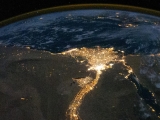
M&A buzz In Egypt(0) Investors are circling around Egypt’s key sectors, looking for opportunities and bargains on undervalued prices of key assets. |
 |
4.5m MENA infrastructure jobs(0)
One of the core reasons why Arab youth spilled on to the streets during the Arab Spring was their inability to get decent employment. Joblessness - which is attached to human dignity and viewed as a platform for many to further and better themselves in their country - drove many to orchestrate sweeping political changes in their own countries. CONTINUE READING |
 |
Post-Arab Spring conflict(0) While the recent conflict between Hamas and Israel could come to an end, it is clear that new battle lines and alliances are being drawn, changing once again the regional dynamic. It does not take much for the Middle East to flare up in a great ball of fire. CONTINUE READING |
 |
Re-elected Obama looking for ‘Egypt of Asia’?(0) By Rushdi Siddiqui, Global Head of Islamic Finance at Thomson Reuters
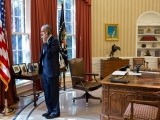
The re-election of Obama, both on popular (50 per cent to 48 per cent) and electoral (303 to 206) votes, is a message sent by the American people to work smarter (not only harder), longer, faster, and with partners, to “fix” what is broken, “mend” what needs fixing, “push” forward what is working and a “probation” to try new initiatives. The post-election comments for the peaceful president from world leaders, from secular to spiritual, have been positive, glowing, and extending an open hand to assist in the hard work ahead as all of us are in the same “boat” called humanity wanting dignity.
In the second term, Obama needs to focus on Asia, generally, before China’s once-in-decade political make-over starts execution (no pun intended), and possibly, a leading Muslim country, specifically, as an example a country which closely represents US ethnic, religious, and cultural diversification and “tolerance.”
Maybe it’s time for the president and the US to find and get behind an “Egypt of Asia”, as the oil and (perceived) regional influence of certain countries of recent past did not pan out as expected.
Omnipotence?
Will there be peace and stability in the Middle East within the next four years? It may be easier to have an Olympic gold medal winner in badminton from Malaysia than find the elusive peace in a region of piecemeal countries united and, yes, divided by tribalism.
The omnipotence of the US as the voice of reason and calming stability backed by her economic and military might has been downgraded (let’s leave S&P out of the equation) by the misadventures of George “Bring it on” Bush and the systemic risk to global economy by the sub-prime fiasco (also under George Bush), and the corresponding rise of the BRICS: Brazil, Russia, India, China and newcomer South Africa. Clearly, the power has shifted away from the US. Where it has shifted to is another issue, as it’s not debt battered and financially bleeding Europe.
Hotspot
The Arab Spring flushed out the regional diminishing US influence, including the unflinching support of entrenched poster child ally, Hosni Mubarak/Egypt, a benevolent dictator.
However, the Middle East remains important mainly because of black gold, oil, and the havoc a price escalation can play on industries and capital markets in an already weakened global economy.
The Middle East also remains a region of “unknown knowns”, composed of a complicated jigsaw puzzle of Egypt (controlled chaos), Libya (chaos), Lebanon (proxy chaos), Palestinian/Israel (two-state solution), Syria (civil war), Yemen (drones), Iran (nuclear), Al-Qaeda (stateless terrorism) and so on.
Although not mentioned on any geographical or topical defining map, Pakistan and Afghanistan are an extension of the region for the United States’ earlier intervention and on-going challenges. To put it differently, “they broke it, and have to buy it,” and with no return policy.
Thus, it will take more than four years of precision focus, shuttling negations, wisdom patience, printing press of money and, possibly, divine intervention to have an acceptable “normality” i.e. absence of conflict, not necessarily peace.
Expanding attention
The primary focus will continue on the Middle East, but, much like five-year business plans looking for new business opportunities in different geographies, the US needs to remove the “horse blinders” and see the Muslim world not as one, but as many countries with rich histories, cultures and influences. Thus, oil/gas reserves, military bases and large domestic population will continue to be important, but possibly not outcome determinative.
To make Obama’s second term more interesting on foreign policy, vis-à-vis the 57-country Muslim world, selected Muslim countries need to “pitch” themselves as representative of democratic and religious principles (is this possible?). There are three Muslim countries in the G-20, Turkey, Indonesia and Saudi Arabia, and these are only a starting point.
Other countries worthy of consideration, based upon metrics-like population, GDP growth and 2020/2030 vision, capital markets, democratic principles, OIC influence, etc include Egypt, Pakistan, Nigeria and Malaysia. As mentioned above, the court of public opinion will also matter for Obama, hence, from the above-mentioned destinations, the American public has a “challenging” opinion about these countries, except one.
The Malaysian elections are around the corner next year, and the incumbent and opposition can expand their platform to pitch about Malaysia to both the White House and Congress.
Winning the Nobel Peace Prize early in his first term is a tough benchmark act to follow for the second term for any democratically elected leader. His second term may be an extension of hope that transforms to trust that brings change, hence, actually earning the Prize that he accepted in the first term.
* The views expressed here are the personal opinion of the columnist. |
 |
Mushtak Parker Speaks His Mind(0) Leading journalist on Islamic finance tells why he is often ‘harsh’ on the industry and his other views “To be persuasive we must be believable; to be believable we must be credible; (to be) credible we must be truthful.” Edward Murrow. |
 |
SPECIAL COMMENT: Ramadan Wish List For Islamic Finance(0) By Rushdi Siddiqui, Global Head of Islamic Finance, Thomson Reuters The Goal: The central issue is about the industry controlling its own destiny “Behind every success is endeavour… behind endeavour, ability… behind ability, knowledge… behind knowledge, a seeker ….” Unknown. As the blessed month of Ramadan arrives, here is my “seeking” list for Islamic finance. It’s not about another voice asking when the International Islamic Liquidity Management Corporation (IILM) will issue its first paper or disagreeing with CIMB Group CEO Datuk Seri Nazir Razak’s comment on “rolling back” government’s involvement in business, but more to do with controlling our own Islamic finance manifest destiny. |
 |
Trouble Brewing In Jordan(0) While Jordan has avoided the turmoil of Libya and Egypt, it has always seemed like a country on edge ever since the Arab Spring swept across the region. CONTINUE READING |
 |
Exclusive: Lessons for Islamic Finance Expansion - Emirates Airline(0) By Rushdi Siddiqui, Global Head of Islamic Finance, Thomson Reuters Islamic finance has reached it natural market share in certain markets according a recent A.T. Kearney report, hence, an early ‘amber colored flag alert’ on the need for international expansion. Islamic finance needs to find an example of a model company, ideally from the Muslim world, which has become a global player based upon customer service, unique selling proposition, innovation, demand, and a charismatic leader. Should it also look to the west, and examine the likes of Google, Apple, Coca Cola or Pepsi, ExxonMobil, etc.? Does it look at the management style of former GE Chairman Jack Welsh or the vision of the late Steve Jobs? |
 |
Islamic finance: Fitting In & Standing Out(1)
By Rushdi Siddiqui A Sharia-compliant equivalent of the popular UK and US reality show The Apprentice has recently been announced by a UK-based organisation. This follows the news of an ‘Islamic Facebook’ and ‘Halal-Tube.’ The Muslim world also has superheroes, like The 99, Muslim dolls (Dara and Sara), Muslim Cola (Mecca Cola), Islamic car, and so on. |
 |
Gulf Emerges As Global Sweet Spot(0) Nobody even considered looking at MENA states last year, as news of Arab Spring-related crisis, instability and the Iran conflict dominated the headlines. |
 The weakest link: short-term liquidity and how it impacts Islamic finance
  Islamic finance: An industry inclusive to all, irrespective of background
  SPECIAL COMMENT: Missing Link in Islamic Finance Hubs: Islamic Venture Capital
  Media and public relations — the missing link in Islamic finance
  SPECIAL COMMENT: OIC Islamic Index - The Malaysia Story?
  SPECIAL COMMENT: Ramadan Wish List For Islamic Finance
  Natural gas to be fastest growing energy source
  Dull economy takes shine away from Cameroon
  Mozambique political tensions seen rising in 2014 Muslim consumerism is linked to real economy sectors
 Sorry. No data so far.
Contacts and informationAlifArabia’s aim is to offer a brutally frank but sincere analysis on the Middle East region’s business and political issues. It wants to see a thriving and dynamic Middle East that encourages corporate and government transparency, investments and policies that allow the economies to grow.
|
Social networks |
Most popular categories |