



 |
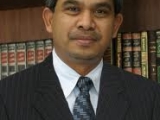
Islamic finance: An industry inclusive to all, irrespective of background(0) Feb 27, 2012 Dr Mohammad Daud Bakr, president and CEO of Amanie Advisors, has the distinction of being both a globally-renowned Sharia scholar as well as an acclaimed entrepreneur. His decades’ worth of industry experience is both Amanie’s pillar of knowledge as well as the focus of its clients’ attention. In an exclusive interview with Gulf News, Dr Daud provides insights into Arab Spring countries’ potential for Islamic finance, scholars sitting on multiple Sharia boards and some of the challenges faced by the $1 trillion (Dh3.67 trillion) industry. |
 |
Islamic finance, Occupy protests and public good(0) By Rushdi Siddiqui, Global Head of Islamic Finance, Thomson Reuters There are only two ways to conquer and enslave a nation, one is by sword, the other is by debt,” said John Adams, the second president of the United States. If we expand the quote, it could include debt without collateral asset, trading of such debt, and enhancing it with leverage. There are consequences as there are market cycles. Can Occupy Wall Street (OWS), public good and Islamic finance converge? Yes, through the lofty principals of economic justice. The essence of Islamic finance is about “risk sharing over risk transfer”, as it implies a financial and economic system of checks and balances. It implies an “ethical” financial intermediation linked to the real economy for “moral” value-added output. It implies modalities of contracts whose foundations are based on transparency, where asymmetric information is minimised to prevent abuses against the weaker counter-party. Furthermore, Islamic finance is about financial inclusion paving the path for distributive wealth and income, and ensuing economic opportunities. Finally, it’s all about business and not religion, and it about profits but against profiteering. OWS According to commonly used information website Wikipedia, Occupy Wall Street is a protest movement which began last September 17… against social and economic inequality, high unemployment, greed, as well as corruption, and the undue influence of corporations — particularly from the financial services sector — on government. The protesters’ slogan ‘We are the 99 per cent’ refers to the growing income and wealth inequality in the US between the wealthiest 1 per cent and the rest of the population. It would seem many of the concerns raised by the OWS movement were similar to its predecessor spark, the Arab Spring phenomenon, except replacing “corporations” with “corrupt and repressive governments”. As of now, the Arab Spring has had more impressive results than OWS after helping bring new governments in Tunisia, Egypt, and Libya, new governments in the “wait” in Yemen and Syria, and “new governance” in other regional countries. The question becomes, how would the OWS movement react to Islamic finance? During a London demonstration along the OWS lines in 2011, a protester held up a sign, “Let’s bank the Muslim way”. Obviously, the reference is to Islamic banking, but the jury is still out if the industry will receive OWS’ endorsement as many of the financial institutions, such as HSBC and Citi, protested against have a presence in Islamic finance. Public good In March last year, the Securities Commission Malaysia (SC) and the Oxford Centre for Islamic Studies (OCIS) held a two-day closed roundtable on Islamic Finance and the Public Good. Dr Raja Nazrin Shah, Crown Prince of Perak and Financial Ambassador to the Malaysia International Islamic Financial Centre (MIFC), who officiated the roundtable, said, “public good is one concept that is common to both conventional and Islamic finance. The values advocated by Sharia are not only confined to the detailed technical aspects of transactions, but also in the extent to which the objectives of Sharia are achieved. If every aspect of Islamic finance were to be subject to a public good test, arguably no negative repercussion could ever arise. Likewise, if all conventional financial products were subjected to a public good test, the catastrophic effects of the recent crisis could have been avoided; and finance would serve its rightful purpose — as an engine that drives and supports the real economy.” At the same roundtable, the Chairman of SC, Tan Sri Zarinah Anwar, said, “… the virtues of Islamic fin-ance need to be unlocked further. Public good, ethics, shared values, governance, and real and tangible contributions to the economy hold the key to innovation and growth. Profits involving a higher social purpose and objective represent values that will create not just economic returns, but also comply with universal ethical standards. Putting all these in place will strengthen the universality and acceptability of Islamic finance, enabling it to offer a distinctive value proposition.” Thus, Islamic finance is not about privatisation of profits and socialisation of losses by the financial sector. It’s about accountability rate of returns, via due diligence, as pre-determined rates of returns do not exist in Islamic finance. Conclusion When Islamic financial institutions, such as banks and takaful operators, are allowed to reach the point of presenting a systemic risk to the industry, that is, being too large to fail, then we have become conventionally inefficient. If bailouts and bankruptcies, combined with capital protected bonuses, become a common place in Islamic finance, then we will have our own Occupy Salaam Street (OSS) movement in the Islamic finance hubs. However, today the aspirations and inspiration of OWS — the principals of economic justice — are aligned to the objectives of Islamic finance. It is about building a dynamic financial eco-system based on humanitarian beliefs, avoiding unjust enrichment and profiteering, and allowing for financial inclusion of the 99 per cent to achieve a basic necessity: human dignity. The writer is Global Head, Islamic Finance and OIC Countries at Thomson Reuters. Opinions expressed here are the writer’s own |
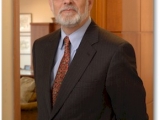 |
Shiekh Yusuf Talal Delorenzo: ‘We guide and let the markets decide’(0) Feb 17, 2012 Q: We are hearing more comments from Islamic bankers who are saying Sukuk are bonds with an Islamic wrapper, and the industry needs equity/investment sukuk, what are your comments? YTD: Let’s consider the question and its source and then boil it down to a statement. Islamic investment bankers say they (when they say “the industry” I have to assume they are speaking of themselves) need equity/investment sukuk. Simple answer? AAOIFI has developed them. I have always maintained that the market will determine the direction of Islamic finance. It may well be at the present time that the market for sukuk is driven by the needs of Islamic bankers in treasury departments. These needs include predictable pricing. Thus, they have their own preferences for certain types of sukuk, maybe not the same types as Islamic investment bankers. And when the saturation point is reached, by which I mean when the treasuries of Islamic banks have sukuk holdings sufficient for their needs, regulatory and otherwise, the secondary market that everyone is hoping for will develop. It’s beginning already in a limited way. And I share the frustration of our bankers. But we need to keep working. Q: A large number of Sukuk defaulted in last several years, about 30 from Malaysia with 10 BBA and 16 Murabaha structure, are defaults a cause for concern or actually beneficial for the industry? YTD: At the 2005 IFSB conference in London on the subject of law and sukuk the subject of defaults, then only a possibility, was discussed often and widely. After all, until there are defaults, it is next to impossible to know how judges will view sukuk. The problem is multiplied when different jurisdictions and legal systems are involved. We are now, therefore, in discovery mode. And while it is indeed lamentable that sukuk have failed and investors have suffered losses, it is now the responsibility of all involved to study the cases to see what might be done better in the future. |
 |
Mum, why Islamic finance?(0) Jan 30, 2012 By Rushdi Siddiqui, Global Head of Islamic Finance at Thomson Reuters There are two lasting bequests we can give our children. One is roots. The other is wings. — Hodding Carter LET’S take a break from sukuk structuring and stock screening, and talk about the children of parents in Islamic finance. They may well be the industry’s future. I suspect many of us in Islamic finance do not come from Islamic banking parents or banking family dynasties. We come from parents that were traditional bankers, engineers, physicians, scientists, journalists, merchants, civil servants, politicians, regulators, academics, and so on. And growing up, Islamic finance was probably not on our radar screen as a career. |
 |
Human Rights Watch: From Arab Spring To Arab Autumn?(0) Human Rights Watch reports, by their very nature, never present a rosy outlook as they are given to highlighting the atrocities of governments and the lack of dignity and freedom they present to millions of their hapless citizens across the world. |
 |
Worst Performing MENA Stocks in 2011(0) The Middle East North Africa markets lost more than USD100-billion in 2011, according to Zawya’s market analysis tool. Gulf markets alone lost USD52-billion, despite significant revenues generated by high crude prices during 2011, which kept the economies in great shape. The Gulf states also benefited from economic packages unveiled by virtually all the six GCC states, but investors were more concerned about Arab Spring, geopolitical tensions, slow growth in the U.S. and a sovereign debt crisis in Europe to pay to much attention to domestic stimulus. READ MORE HERE
|
|
The New Year Islamic Finance Landscape Survey(0) January 2, 2012 “An optimist stays up until midnight to see the new year in. A pessimist stays up to make sure the old year leaves.”Bill Vaughn. Islamic finance is staying up for new year for ……. The survey format is straight forward, 16 questions with multiple answers. |
 |
50 Amazing MENA Economic Indicators For 2011(0)
The year 2011 has been extraordinary not just for the tectonic shift in the region’s political structures, but also the extraordinary pressures and opportunities faced by many regional economies. With four dictators ousted - including one dead - many others were shaken to the core - the after shocks have reverberated throughout the region in 2011 and will no doubt be felt in 2012. We identify 50 amazing statistics that highlight the remarkable year: READ MORE HERE |
|
Islamic Finance: A ‘come together’ consolidation?(0) Will 2012 be the year of “come together” consolidation for Islamic banks? Size is often the justification for achieving economies of scale, used to access deals for league table prominence, used as a buffer in a challenging environment, used as defensive measure to ward off unwanted suitors, and so on. Islamic banks are very much like Islamic (equity) funds. There are hundreds of Islamic banks and funds, but the paid-up capital and assets under management, respectively, is too small to be meaningful. Yet, both, more so Islamic banks, present a unique situation (of an industry risk) of “too small to fail”. |
 The weakest link: short-term liquidity and how it impacts Islamic finance
  Islamic finance: An industry inclusive to all, irrespective of background
  SPECIAL COMMENT: Missing Link in Islamic Finance Hubs: Islamic Venture Capital
  Media and public relations — the missing link in Islamic finance
  SPECIAL COMMENT: OIC Islamic Index - The Malaysia Story?
  SPECIAL COMMENT: Ramadan Wish List For Islamic Finance
  Natural gas to be fastest growing energy source
  Dull economy takes shine away from Cameroon
  Mozambique political tensions seen rising in 2014 Muslim consumerism is linked to real economy sectors
 Sorry. No data so far.
Contacts and informationAlifArabia’s aim is to offer a brutally frank but sincere analysis on the Middle East region’s business and political issues. It wants to see a thriving and dynamic Middle East that encourages corporate and government transparency, investments and policies that allow the economies to grow.
|
Social networks |
Most popular categories |