



 |
IMF loan may be sole lifeline for Egypt(0) The Egyptian economy appears to be free falling as crisis after crisis seems to chip away at business confidence. CONTINUE READING
|
 |
Rushdi Siddiqui: Forming your own opinion(0) By Rushdi Siddiqu, Global Head of Islamic Finance at Thomson Reuters APRIL 1 — “I never considered a difference of opinion in politics, in religion, in philosophy, as cause for withdrawing from a friend.” — Thomas Jefferson “Life is not a spectator sport. If you’re going to spend your whole life in the grandstand just watching what goes on, in my opinion you’re wasting your life.” — Jackie Robinson Everyone has an opinion; however, some people are shy to share. An interactive article, much like a survey, requiring readers’ opinions may actually encourage wider audience participation. For many of us, constructive comments about an online article actually provide more insights than the article itself.
Politics
Why is that when China, North Korea, Russia, Venezuela (under the late Hugo Chavez) made/make provocative comments about the US, the reaction from the Tea Party loyalists and Fox talk show hosts are not immediate and proportional, if at all, when compared to comments from stateless extremists like Al Qaeda?
Is it because, in the mind of the loyalists, these sovereignties are not trying to expand religion, and they can actually do economic and/or military harm to the US? What about election year politics?
Many of the Muslim countries are trying to diversify their economies from natural resources, commodities, conventional banking, basic manufacturing, typically 4-5 economic sector bias, to a knowledge based economy as part of 2020 and 2030 vision plans.
The knowledge pursuit implies linkage of educational budgets for clusters, technology parks, equity financing (venture capital and crowd funding), legal protections, mentoring, etc. One way of looking at the output would be the number of patents registered with the US Trade & Patent Office. Does Malaysia have the most patents from the OIC?
Why do selected Muslim countries with excessive surplus continue to purchase trophy assets in the US and western Europe, at times at top of the market, and not invest more of the money in the “national mission” of establishing and enabling an educational infrastructure for future generations?
I recently had an eye-opening conversation with the former Prime Minister Tun Abdullah Ahmad Badawi, where he articulated that education starts in the mother’s womb with appropriate nutrition, food and spiritual guidance! The Muslim world needs this type of thinking to close the “knowledge” approach gap with the developed world.
Why has the OIC, as a whole, not captured the imagination of emerging market investors like BRICS? Is it because, out of the 57 OIC states, 22 are least developed but only three are G-20, there is corruption, capital flight, brain drain, and a host of most of the world’s intra-country conflicts, etc? Thus, requiring a sub-OIC, like SAMI +3, Saudi Arabia, Ankara, Malaysia, Indonesia, Pakistan, Nigeria, and Egypt? Who will promote such a clustering?
Inferiority complex
Why is it when celebrities like Mike Tyson or the late Michael Jackson allegedly “revert” to Islam, it spreads like wildfire on Muslim websites (with excitement)? Why is it when the UK wanted to issue a sovereign Sukuk (roughly and badly translated as an Islamic bond), the Islamic finance world spoke of it as a “badge of arrival” for the niche market? Do Muslims have an identity crisis and still mentally and/or are psychologically colonised by Western/conventional offerings?
Faith, finance, food and fashion
Islamic finance isn’t just about finance, but linked to faith, food, fashion, etc., hence, when will it or, rather, how will it step up and be the financial “lubricant” to these satellite-linked activities? Islamic finance needs to serve the economy, and not be positioned as the economy!
Should Ogilvy Noor, an Islamic branding consultancy, examine the merits of rebranding Islamic finance to Participation Finance, especially if the cross-sell to non-Islamic customers and countries is one of the KPI growth stories? Furthermore, how best to “educate” the anti-syariah movement, which attempts to link, without evidence, Islamic finance to terrorism financing?
Why Islamic finance, biased towards real estate financing, does not finance a real economy-linked movement like the halal food industry, as they are both mentioned in the same chapter of the Quran? The irony of the situation is a Muslim can consume the end product of certified halal food companies, like Malaysia-based Prima, but may not be able invest in the stock as it violates one of the financial ratios (too much conventional debt)!
Is the blame game spread to both halal (need to tell a better story of halal as an asset class) and Islamic finance (halal, asset backed, is ripe for Sukuk offering)?
Is food manufacturing considered a “sexy” or exciting industry compared to mega developments and information super corridors, etc.? Do people get excited about a food park or cows or chickens? Yet, everyone knows how important food security is to a country; hence, the disconnect.
Why is ethnic cuisine a great ambassador for a country? For example, in US, we have Italian, Chinese, Lebanese and Mexican food, Turkish delights, Pakistani biryani, Indian curry, Polish sausages, etc.
What Malaysian food/meal would be a good ambassador to the US? Would satay be a perfect food ambassador as the signature dish of Malaysia Airlines? How many Malaysian fast-food franchises exist in the US/UK?
Why is healthy food, vitamins, etc, expensive in Malaysia? This is one area, along with health club membership, the government should sunset subsidise until people feel the difference and understand the implications of health.
Human element
Why do Muslim countries not encourage local sport development by way of budgets, facilities and international coaches? Some of the countries offer “citizenship” for non-nationals to represent the country, and, even then a victory appears to be hollow.
For example, assume 25 per cent of the 1.8 billion Muslims are under 15 years old, there are Michael Jordans, Lebron Jameses, Tiger Woodses, David Beckhams, etc, in the Muslim world, and they would be wonderful ambassadors and role models for the country and its youth.
Who has a greater contribution to society, one who does not wear the “veil” and provides much charitable contributions, including the kindness of a smile, or the taker of charity, who passes judgment?
The highlight of the Proud to Be Human moment for 2012 had to be the recovery of Malala Yousufzai, the brave young Pakistani girl shot by the Taliban for promoting girls’ education. Her actions should earn a Nobel Peace Prize for the courage of a “special ops soldier”.
The Nobel committee needs to send a strong signal about girls’ education by awarding her the 2013 Nobel Peace Prize for Courage and Contribution to Girls’ Education in Emerging Markets.
“Too often we… enjoy the comfort of opinion without the discomfort of thought.” — John F. Kennedy
So, what is your thoughtful opinion?
* This is the personal opinion of the columnist. |
 |
Crescentrating Plans Halal-Friendly Travel(0) By Rushdi Siddiqui, Global Head Of Islamic Finance at Thomson Reuters The “Muslim travellers” is an important segment in the travel industry, however, not many hotel chains or destinations haven taken a serious look at their needs. So, many travellers have to manage their requirements while travelling or stick to familiar holiday destinations. Now the media is full of reports on Muslim Travel market, as there are a host of destinations, hotel chains, tour operators etc., all targeting the billions of dollars of these travellers. |
 |
Shekra.com: Shariah-compliant crowd funding takes off(0)
By Rushdi Siddiqui, Global Head of islamic Finance at Thomson Reuters It also an opportunity to attain the core ethical values of Shariah and the intended purposes of Islamic Finance “to do good” by contributing to socioeconomic development. |
|
Rushdi Siddiqui: Why I decided to finally tweet(0) February 04, 2013 FEB 4 — I never thought I would say that publicly, but the lesson learned is, “Never say never!” “Never’s a hard call, isn’t it? Never-ish.” — Terry Venables Tweeting: Reasons and dangers First, I wanted to understand why people tweeted. Because they have something of substance or importance to say? On hindsight, probably not, because hyper-connectivity updates make a minute ago seem historical! Because they want to connect with “like-minded people?” On hindsight, some of those “minds” should be blocked! Because they want a following? On hindsight, thank God for the ability to block, as this becomes an addiction for some! Because they want to only follow, say, a famous athlete, movie star, etc? Or that they just want to be part of a fad and then drop out when it fades? Second, I wanted to know the “dangers” of tweeting. That which has been tweeted cannot be deleted. Possibly retreated. But from a public relations 101 angle, that which cannot be deleted is a disaster for reputation management. The 24/7 information download world we live in reminds us more often than not of our missteps and failures than it does our successes. Hence to say “be careful before touching send button” cannot be overemphasised. The apology tweet cannot undo the damage done, case in point people like Rupert Murdoch and many athletes, politicians, business leaders and why even some spiritual leaders. There is also the danger of pranks played on tweet accounts. Ones opened in your name or those hacking into your account to score a point or to make a statement for individual/group benefit. This has happened to political and spiritual leaders of late. It’s interesting to note that politicians, like US President Barack Obama, have a team that tweets on their behalf. Why you ask? These are what you call an “impersonal tweet” driven by careful public relations management. The tweet can bring “rain or sunshine” to the subject matter depending on prominence of the tweeter. For example, during a recent college football game, the sportscaster made remarks concerning the beauty of one of audience members, and she suddenly went from less than 10,000 followers to over 200,000 followers (including a superstar basketball player by the name of Lebron James). So tweets can create overnight fame or notoriety depending on which side of an issue one stands and supports, and the reaction one poses to responses. There are the spam tweets, hence, the nuisance of time consuming blocking comes into the picture. Third, and probably the most difficult question, what value will I bring into the tweeting wide world? I come from the realms of Islamic finance and halal hence, and, much like TV sitcom actors, we have generally encased ourselves in that narrow arena. But this is what we do, and does not define who we are. At one level, all of us have secret aspirations of becoming superstar athletes, CEOs of Fortune 500 companies, top journalists, movie stars, doctors, scholars, can-do politicians, inventors and entrepreneurs, better dads/moms, sons/daughters, even bad guys, etc., where what we say moves companies, markets, voters and arguments. Thus, it seems tweeting is about being the first on headline commenting and/or reporting from the mundane (subjective) to the moving. Exposure and experience The nature of my “calling card”, global in title, has made me an international road runner. It has exposed me to so much in the last 15 years, from airline lounges, airlines and journeys of, at times, 17 hours, airports, hotels, taxis, tourist traps, meetings, etc. Thus, at times, I feel like a secret shopper, business development officer (outside my profession), observation tower (of people, marches, events, speeches, natural phenomenon, etc.), roving reporter, etc. I want to share these moments, in the form of 140-character mini op-eds, but never took the first step for a number of reasons (probably intimidated by such media), and, on hindsight, missed the opportunity to connect and learn from others (much earlier). Initially, I would have probably tweeted to connect with fellow practitioners in Islamic finance and halal (large community?), and then expanded to the more pressing issues in the Muslim world, from sports to athletes to policy to tolerance to hypocrisy, and connectivity and perception influence of the non-Muslim world. Lincoln quotes for Muslims Let’s start with a tweet for all Muslims and non-Muslims: “I don’t like that man. I must get to know him better.” Abraham Lincoln, 16th president of the US. How is this even different to the basic teachings of Islam or any other religion? Muslims, including myself, are you reading, understanding, and executing? The non-Muslim world needs to heed the advice of this statesman towards Islam. He also said: “… Nearly all men can stand adversity, but if you want to test a man’s character, give him power.’” All of us have examples of people we know or can predict who will fail or have failed this character test! The Muslim world is not only cursed with black gold (oil), but also power without accountability still prevails in many parts of its society. Do we thank the colonial geographic boundaries that seem to have created mental barriers? What would I ask in the world of Islamic finance and halal I would tweet the following: Students: they are spending money on courses, diplomas, etc., and want meaningful jobs upon graduation; yet, we talk about shortage of skilled people, huh? Walk the talk, Islamic finance. Scholars: they are entitled to a livelihood to support families, but what is reasonable number of board membership? Man on street: Islamic finance is not Qard Hassan (benevolent loan) or charity, but about profits not profiteering. Where are the imams, as they are the local trusted gatekeepers to the community, and, in Arab Spring countries, it’s about the mass retail. Disenfranchised (bulk of the 1.6 billion Muslims): we are still waiting for Islamic finance and many of our Muslim-majority countries are non-co-operative, whom do we turn to? Shadow banking system is the only alternative as only collateral is life/blood? Regulators/public sector: need to establish foundation for market, initially lead market and then regulate market, and cannot be an indefinite market participant as the “crowding out” phenomenon kicks in. Anti-shariah movement: present your evidence on it financing terrorism, Malaysia and Dubai would host such an event to discuss its veracity. Conventional institutions in Islamic finance: are you about absorbing liquidity or providing value and commitment? HSBC Amanah downsized operations in a number of countries where margins are not being met, profits versus commitment (beyond short term). Islamic finance: you have proved you are viable (alternative), credible (non-Islamic institutions involved), durable (better survived the recent external shock, but not by much), but what are your sustainable and scalable growth plans? Halal industry: what is your story (brand)? Why are you even more fragmented than Islamic finance? Don’t you realise you’re an asset class? Malaysia, you will just lose the halal hub title if you do not focus in building such companies (inorganically) as global brands versus the continued comments of Jakim, HDC, etc. Modern-day lifetime achievement award for Islamic finance: Sh Mohammad bin Rashid Al Maktoum, Ruler of Dubai, VP and Prime Minister of UAE, two words: continued commitment. The rest of the world: what is Islamic finance and how has it changed lives, inspired humanity, or rather where is IF in moments of global tragedies and catastrophes? OIC tweets I would tweet on following: Why do we have “His/Your Highness”, “Your Majesty”, “Sultan”, “Emir”, “Prince and crown prince”, “Datuk and Tan Sri”, “King and Queen”, etc. when the Prophet of Islam did not have such references. Yes, we respect our leaders and titles like President, Vice-President, Prime Minister. Why can’t we make them more human, approachable and accessible? Aren’t these titles creating a mental and social class war/barrier? Is this an effective way to rule in the 21st century? Where is the healthy food in Malaysia? Yet, what little is available tends to be expensive! I have been coming to Malaysia for 15 years, and go to the gym religiously, and rarely see Malaysian men there. Obesity-cum-diabetes is a major issue in the GCC, and Malaysia may not be far behind! (But Malaysian men may be spending time on football pitches and badminton courts — who knows?). We have 57 Muslim countries in the OIC, but what clustering has captured the investing world’s attention like BRICS? I suggested SAMI + 3 — Saudi Arabia, Ankara (Turkey), Malaysia, Indonesia, Egypt, Pakistan and Nigeria. It could also be MIST + 3, but MIST implies a fog, haze, etc, lack of clarity. To tweet or not When Microsoft started making computers in the ‘70s, it wanted to put a PC in every home. In less than 40 years the world has changed and today we have a computer in every pocket/handbag. The dangers of tweeting remain. Once you start, it is difficult to get out of it. It may rule your life (i.e. one keeps checking the phones at the expense of real-life human contact). But like everything in life, moderation is key in action. Need to tweet to connect with a society wired on social media, yet to do so with wisdom, caution and more importantly substance. There are always the red herrings of “committed” tweeting communities that feel the need to share their every move — it is this culture that perhaps still stops those who would/could benefit the world of “tweet” from tweeting. In conclusion, to tweet or not to tweet is no longer the relevant question to being relevant today. Maybe the question should be — do I tweet to share my next appointment or my next meal or my next relationship — or do I tweet to make the world a better place? To do my small part in making that difference? So, for those about to tweet, we salute you (but be careful and responsible). |
 |
Egypt’s energy prospects(0)
BP’s decision to reportedly spend USD11-billion in Egypt’s deep-water gas deposits is a significant move by the oil major which could be a game-changer for the country’s economy. CONTINUE READING |
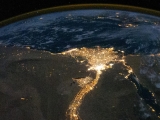 |
M&A buzz In Egypt(0) Investors are circling around Egypt’s key sectors, looking for opportunities and bargains on undervalued prices of key assets. |
 |
Re-elected Obama looking for ‘Egypt of Asia’?(0) By Rushdi Siddiqui, Global Head of Islamic Finance at Thomson Reuters
The re-election of Obama, both on popular (50 per cent to 48 per cent) and electoral (303 to 206) votes, is a message sent by the American people to work smarter (not only harder), longer, faster, and with partners, to “fix” what is broken, “mend” what needs fixing, “push” forward what is working and a “probation” to try new initiatives. The post-election comments for the peaceful president from world leaders, from secular to spiritual, have been positive, glowing, and extending an open hand to assist in the hard work ahead as all of us are in the same “boat” called humanity wanting dignity.
In the second term, Obama needs to focus on Asia, generally, before China’s once-in-decade political make-over starts execution (no pun intended), and possibly, a leading Muslim country, specifically, as an example a country which closely represents US ethnic, religious, and cultural diversification and “tolerance.”
Maybe it’s time for the president and the US to find and get behind an “Egypt of Asia”, as the oil and (perceived) regional influence of certain countries of recent past did not pan out as expected.
Omnipotence?
Will there be peace and stability in the Middle East within the next four years? It may be easier to have an Olympic gold medal winner in badminton from Malaysia than find the elusive peace in a region of piecemeal countries united and, yes, divided by tribalism.
The omnipotence of the US as the voice of reason and calming stability backed by her economic and military might has been downgraded (let’s leave S&P out of the equation) by the misadventures of George “Bring it on” Bush and the systemic risk to global economy by the sub-prime fiasco (also under George Bush), and the corresponding rise of the BRICS: Brazil, Russia, India, China and newcomer South Africa. Clearly, the power has shifted away from the US. Where it has shifted to is another issue, as it’s not debt battered and financially bleeding Europe.
Hotspot
The Arab Spring flushed out the regional diminishing US influence, including the unflinching support of entrenched poster child ally, Hosni Mubarak/Egypt, a benevolent dictator.
However, the Middle East remains important mainly because of black gold, oil, and the havoc a price escalation can play on industries and capital markets in an already weakened global economy.
The Middle East also remains a region of “unknown knowns”, composed of a complicated jigsaw puzzle of Egypt (controlled chaos), Libya (chaos), Lebanon (proxy chaos), Palestinian/Israel (two-state solution), Syria (civil war), Yemen (drones), Iran (nuclear), Al-Qaeda (stateless terrorism) and so on.
Although not mentioned on any geographical or topical defining map, Pakistan and Afghanistan are an extension of the region for the United States’ earlier intervention and on-going challenges. To put it differently, “they broke it, and have to buy it,” and with no return policy.
Thus, it will take more than four years of precision focus, shuttling negations, wisdom patience, printing press of money and, possibly, divine intervention to have an acceptable “normality” i.e. absence of conflict, not necessarily peace.
Expanding attention
The primary focus will continue on the Middle East, but, much like five-year business plans looking for new business opportunities in different geographies, the US needs to remove the “horse blinders” and see the Muslim world not as one, but as many countries with rich histories, cultures and influences. Thus, oil/gas reserves, military bases and large domestic population will continue to be important, but possibly not outcome determinative.
To make Obama’s second term more interesting on foreign policy, vis-à-vis the 57-country Muslim world, selected Muslim countries need to “pitch” themselves as representative of democratic and religious principles (is this possible?). There are three Muslim countries in the G-20, Turkey, Indonesia and Saudi Arabia, and these are only a starting point.
Other countries worthy of consideration, based upon metrics-like population, GDP growth and 2020/2030 vision, capital markets, democratic principles, OIC influence, etc include Egypt, Pakistan, Nigeria and Malaysia. As mentioned above, the court of public opinion will also matter for Obama, hence, from the above-mentioned destinations, the American public has a “challenging” opinion about these countries, except one.
The Malaysian elections are around the corner next year, and the incumbent and opposition can expand their platform to pitch about Malaysia to both the White House and Congress.
Winning the Nobel Peace Prize early in his first term is a tough benchmark act to follow for the second term for any democratically elected leader. His second term may be an extension of hope that transforms to trust that brings change, hence, actually earning the Prize that he accepted in the first term.
* The views expressed here are the personal opinion of the columnist. |
 |
Egypt’s FDI Quest(0) The Egyptian economy has managed to avoid the worst, but it needs foreign investment to get better. CONTINUE READING |
 |
Q3 Preview: Weak Quarter?(0)
Egyptian and Emirati-listed companies are expected to lead strong growth in the third quarter, as both countries recover from their economic challenges. CONTINUE READING |
 The weakest link: short-term liquidity and how it impacts Islamic finance
  Islamic finance: An industry inclusive to all, irrespective of background
  SPECIAL COMMENT: Missing Link in Islamic Finance Hubs: Islamic Venture Capital
  Media and public relations — the missing link in Islamic finance
  SPECIAL COMMENT: OIC Islamic Index - The Malaysia Story?
  SPECIAL COMMENT: Ramadan Wish List For Islamic Finance
  Natural gas to be fastest growing energy source
  Dull economy takes shine away from Cameroon
  Mozambique political tensions seen rising in 2014 Muslim consumerism is linked to real economy sectors
 Sorry. No data so far.
Contacts and informationAlifArabia’s aim is to offer a brutally frank but sincere analysis on the Middle East region’s business and political issues. It wants to see a thriving and dynamic Middle East that encourages corporate and government transparency, investments and policies that allow the economies to grow.
|
Social networks |
Most popular categories |