



 |
Cash-Rich Gulf’s Financing Challenge(0) As the EU crisis worsens, GCC banks are likely to face a higher demand for corporate loans as capital market liquidity tightens…. CONTINUE READING |
 |
Gulf States’ Budget Breakeven Oil Price Declines(0) Breakeven oil prices for Saudi Arabia and the UAE decline for the first time in years, according to Deutsche Bank, which is great news for the
GCC, especially at a time of falling crude prices and global and regional economic uncertainty. CONTINUE READING |
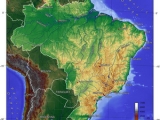 |
Structured Islamic Finance in Brazil(0) By Fehmy Saddy, PhD, President, FS Partners SA Food security has emerged as a global concern in the context of world population growth. World population is projected to increase from its current level of 7 billion to 9 billion by 2050. A recent article by Lester R. Brown on the “New Geopolitics of Food” reveals the prospect of future wars over food resources. Lubna Al Qasimi, UAE’s Minister of Trade reported recently that food imports of the GCC region could more than double over the present decade. They would grow from $25.8 billions in 2010 to $53.1 billions in 2020. Projections were based on the expected population growth of the GCC region, which could reach 50 millions by the end of the decade. The Minister concluded: “for a region such as the Gulf, there is the added urgency to secure food sources that are safe and sustainable” Brazil is the largest producer and exporter of commodities. However, four Western companies, namely, ADM, Bunge, Cargill and Dreyfus, better known by their acronym ABCD, control 70%-80% of the world food market due to their large-scale farming and financial strength. They are referred to by Brazilians as the “Four Mothers”, a designation reminiscent of the “Seven Sisters,” the infamous oil cartel that controlled oil production and pricing until the creation of OPEC in 1960. MENA countries depend on these Western multinational companies for their food. In GCC countries, the situation is even more acute as imports amount to over 90% of their needs. Therefore, there is a growing concern that dependence on the food multinationals has far reaching ramifications on their social, political and economic development. Islamic Finance of Agriculture The prohibitive interest rates charged by Brazilian banks make Islamic financial instruments ideal financing tools. There are two areas where Islamic financial institutions can use Islamic financial instruments in Brazil: agriculture production and trade. They could finance acquisitions of farms and agro-industries, and support corporate borrowers. Consider the following: 1. Buy and Lease back farmlands Brazilian farms are typically large with thousands of hectares cultivating diverse crops: corn, soybeans, sugarcane, coffee, sorghum, cotton, etc. These farms fall regularly behind on their payment of high-interest loans, and file for judicial protection from creditors, or bankruptcy. Islamic financial institutions could use the sukuk instrument to replace conventional bank loans, with a mortgage on the farm. In most cases, it is attractive to purchase the farm and lease it back to the owner or to agricultural funds, with fixed lease payments. The lease contract would provide an exit option to sell back the farm at maturity at market value. Historically, Brazilian farmlands have increased in value by 10-12% per annum. In most cases, an acquirer with ready cash can negotiate a reduction of existing loans by at least 50% of their face values. 2. Acquisition of agricultural industries Some agro-industries face the same problem of high interest loans and fall back on their payment. Islamic financial institutions could use the above mechanisms to replace conventional loans with a sukuk instrument, or acquire the company under a buy and lease back contract. There are several opportunities to purchase sugar refineries, for example, with their proper agricultural farmlands for a nominal price, and defer payment of loans over a period of 5-8 years, and even more for obligations due to government entities. 3. Contracting Farmers for a percentage of the crops One of the oldest forms of Islamic finance is Muzara’a, a profit-sharing scheme that is widely used in the MENA region and much of the Muslim world, whereby an investor advances a certain sum to the farmer for a percentage of the crops. The low cost of production and higher productivity of Brazilian farms, provides higher returns. Islamic banks could use this mechanism for the account of clients. In any case, they have no difficulty selling the commodities in their home markets. 4. Contracting Farmers for the production of commodities Another from of agricultural financing is to advance certain sums to farmers to enable them to pay for seeds, fertilizers and other plantation expenses, in exchange for certain crops at pre-determined prices. The sums advanced would be secured by a mortgage on the farm. Indeed, the food multinationals referred to above, use this ancient Islamic financing method to control production and markets. 5. Islamic Commodities Trading A controversial issue in Islamic finance today is the synthetic commodity contracts used by Islamic banks to support their Treasuries. In its basic form, an Islamic bank (in fact, a borrower) purchases the commodity contract at certain price, with a delayed payment date, and sells it back immediately to the same seller (or a sister company) at a lower price for cash, without ever taking delivery of the underlying commodity or asset. The difference in price is, of course, the time cost of money, essentially an interest payment. Most Islamic scholars consider this method as a legal “Hyla” (“Trick” in English), which does not qualify as genuine form of Murabaha. Islamic financial institutions could undertake genuine Murabaha transactions by financing actual commodities sale contracts to actual buyers in the MENA or GCC regions. Islamic financial institutions dealing with such contracts may develop an inter-banking Murabaha platform among themselves to generate liquidity for their own treasuries. Under this platform, Islamic financial institutions would buy and sell commodities contracts at prices that reflect different maturity dates and delivery schedules. In conclusion, there are numerous opportunities in Brazil suitable for Islamic financing of agriculture, as well as in other sectors. Islamic financial institutions could use Sukuk to support corporate borrowers in other vibrant sectors and benefit from high returns secured by real assets. However, two issues are always on the minds of financial institutions: exit strategy, and currency risk. With respect of the former, the Islamic methods of financing discussed above would include exit options in a highly liquid market. With respect of currency risk, lease payments are adjusted annually to the Brazilian Government deposit rate, currently around 10%, and inflation, estimated at 6.5% for 2012. |
 |
Should Islamic scholars abide by an industry code of conduct?(0) By Rushdi Siddiqui, Global Head of Islamic Finance at Thomson Reuters July 4, 2012 Excerpts from an interview between the columnist and Dr Mohamad Akram Laldin, the executive director of the International Shari’ah Research Academy for Islamic Finance (ISRA): Rushdi: You were a Shariah scholar and now you are an executive director of ISRA. How did this come about? Dr Akram: I am an academician at the International Islamic University Malaysia and, at the same time, developed my expertise in syariah advisory. I am member of several syariah boards in and outside Malaysia. In 2008, the central bank of Malaysia wanted to establish a Syariah Research Academy and I was selected to be the executive director, and I am still actively participating in my syariah advisory engagements. Rushdi: What are the high level objectives of ISRA in contributing to Islamic finance? Dr Akram: The objectives of ISRA can be summarised as: * Spearhead and conduct-apply syariah research in Islamic finance. Since the establishment of ISRA in 2008, it has produced a number of academic research publications. * Enrich resources of knowledge in Islamic finance through publications and collecting materials in Islamic finance. ISRA also has a large collection of fatwas translated into English on its website. |
 |
Islamic finance must finance its diversification(0) By Rushdi Siddiqui, Global Head Of Islamic Finance, Thomson Reuters Islamic finance is usually described as an infant market with domestic focus and supported by the government, hence, much like a baby reliant upon it parents in a home environment of nutrition, nurturing, and natural growth. “To be competitive in the new world order, one has to think like an immigrant, create like an artisan, work like a start-up and provide service like a waitress, and continuously create a unique value add.” Thomas Friedman, Foreign Affairs Correspondent of the NY Times. |
 |
9 key points from the GCC Summit(0) The timing could not have been more inconvenient. In the week Gulf leaders met to discuss ways to create a more unified group, similar to an ‘EU model’, European Union leaders were struggling to keep their group united amid an unravelling economic and political crisis. READ MORE HERE |
 |
Islamic finance: Fitting In & Standing Out(1)
By Rushdi Siddiqui A Sharia-compliant equivalent of the popular UK and US reality show The Apprentice has recently been announced by a UK-based organisation. This follows the news of an ‘Islamic Facebook’ and ‘Halal-Tube.’ The Muslim world also has superheroes, like The 99, Muslim dolls (Dara and Sara), Muslim Cola (Mecca Cola), Islamic car, and so on. |
|
$1 Trillion (Islamic finance) meet $640 billion (halal industry)(0) By Rushdi Siddiqui, Global Head of Islamic Finance, Thomson Reuters Halal industry, as an asset class, is looking for compliant liquidity. Islamic finance, as a movement connected to the real economy, is looking for impactful intra-OIC (compliant) investment and financing opportunities. The convergence is happening in real time, and one of the “leaders” in the reunification is a strong-willed pioneering woman, Jumaatun (Juju) Azmi, founder and managing director of KasheDia. |
 |
Where are the ‘sisters’ in Islamic finance?(0) By Rushdi Siddiquim, Global Head of Islamic Finance, Thomson Reuters The retirement of Tan Sri Zarinah Anwar as chairman of Malaysia’s Securities Commission (SC) was a defining moment on the need to establish a ‘bench’ strength for women in Islamic finance. |
 |
Open Letter to IDB President: Mega Islamic Trading Platform(0) By Rushdi Siddiqui, Global Head of Islamic Finance, Thomson Reuters Dear Dr. Ahmad Mohamed Ali, President, Islamic Development Bank (IDB) Group: Asalaam Alaikum: The Islamic finance world welcomes your comments on the ‘Mega’ Islamic Bank to effectively compete against well capitalized conventional financial institutions. “…The ‘Mega Islamic Bank’ comes as an initiative of the Islamic Development Bank in its efforts to address the dearth of senior financiers, the absence of the Islamic tools of stock exchange and the absence of market liquidity between Islamic banks.” However, $1 billion, with $500 million in paid capital by the three founders (IDB, Dallah Albaraka and Qatar Government), is smaller than three existing Islamic banks, which have never addressed themselves as ‘mega.’ The three include Saudi Arabia’s Al Rajhi, Qatar’s Mashraf Al Rayan and Kuwait’s Kuwait Finance House (KFH). Furthermore, it seems the ‘mega’ story may be incomplete without Malaysia’s participation. |
 The weakest link: short-term liquidity and how it impacts Islamic finance
  Islamic finance: An industry inclusive to all, irrespective of background
  SPECIAL COMMENT: Missing Link in Islamic Finance Hubs: Islamic Venture Capital
  Media and public relations — the missing link in Islamic finance
  SPECIAL COMMENT: OIC Islamic Index - The Malaysia Story?
  SPECIAL COMMENT: Ramadan Wish List For Islamic Finance
  Natural gas to be fastest growing energy source
  Dull economy takes shine away from Cameroon
  Mozambique political tensions seen rising in 2014 Muslim consumerism is linked to real economy sectors
 Sorry. No data so far.
Contacts and informationAlifArabia’s aim is to offer a brutally frank but sincere analysis on the Middle East region’s business and political issues. It wants to see a thriving and dynamic Middle East that encourages corporate and government transparency, investments and policies that allow the economies to grow.
|
Social networks |
Most popular categories |