



 |
Iran economy to contract further as nuclear talks continue(0) Iran is at a crossroad.Uncertainty about the outcome of dialogue between the Islamic regime and Western powers has also left the country’s economy in limbo. CONTINUE READING |
 |
Weak macro puts Iran on inflation’s sharp edge(0) The last time the IMF analyzed Iran’s economy in 2011, it was heavily criticized for praising Tehran’s structural reforms. CONTINUE READING |
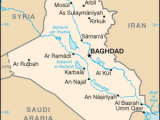 |
Iran, Iraq oil alliance talks may be premature(0) Hussain Al-Shahristani, Iraqi deputy prime minister for Energy Affairs’ recent comments on collaboration with Iran has stirred the hornet’s nest and may have made Saudi Arabia a bit uneasy. CONTINUE READING |
 |
Iran weighs two possible economic scenarios(0) The Tehran Stock Market has soared 133% year-to-date as Iranian investors are hoping that their new president will be able to strike a deal with Western powers over the country’s nuclear program. CONTINUE READING |
 |
Relaxed oil sanctions to ease Tehran’s economic pains(0) As much as 500,000 barrels of Iranian oil could return to the market if Western sanctions are eased, according to the Centre for Global Energy Studies. CONTINUE READING |
 |
Asia’s net oil imports to reach over 25m bpd by 2035(0) Asia Pacific’s net oil imports by 2035 are equivalent to the combined production of major OPEC producers such as Saudi Arabia, Iran, Iraq, Kuwait and the UAE, according to the Asian Development Bank. CONTINUE READING |
 |
Iran props up economy amid loses of USD4.2bn/month(0) Iran’s beleaguered economy may catch a break if the thawing of Tehran’s relationship with Washington results in an easing of sanctions. CONTINUE READING |
 |
Rouhani inherits Iran’s enduring problems(0) Hassan Rouhani, Iran’s newly elected president, will have to contend with a laundry list of economic problems as he takes an oath in parliament on August 3. CONTINUE READING
|
 |
Oil-rich Turkmenistan faces global backlash(0) When North Korea, Iran and Kazakhstan start praising your human rights records, it may be time to change tactics. CONTINUE READING |
 |
Crescentrating Plans Halal-Friendly Travel(0) By Rushdi Siddiqui, Global Head Of Islamic Finance at Thomson Reuters The “Muslim travellers” is an important segment in the travel industry, however, not many hotel chains or destinations haven taken a serious look at their needs. So, many travellers have to manage their requirements while travelling or stick to familiar holiday destinations. Now the media is full of reports on Muslim Travel market, as there are a host of destinations, hotel chains, tour operators etc., all targeting the billions of dollars of these travellers. |
 |
Re-elected Obama looking for ‘Egypt of Asia’?(0) By Rushdi Siddiqui, Global Head of Islamic Finance at Thomson Reuters
The re-election of Obama, both on popular (50 per cent to 48 per cent) and electoral (303 to 206) votes, is a message sent by the American people to work smarter (not only harder), longer, faster, and with partners, to “fix” what is broken, “mend” what needs fixing, “push” forward what is working and a “probation” to try new initiatives. The post-election comments for the peaceful president from world leaders, from secular to spiritual, have been positive, glowing, and extending an open hand to assist in the hard work ahead as all of us are in the same “boat” called humanity wanting dignity.
In the second term, Obama needs to focus on Asia, generally, before China’s once-in-decade political make-over starts execution (no pun intended), and possibly, a leading Muslim country, specifically, as an example a country which closely represents US ethnic, religious, and cultural diversification and “tolerance.”
Maybe it’s time for the president and the US to find and get behind an “Egypt of Asia”, as the oil and (perceived) regional influence of certain countries of recent past did not pan out as expected.
Omnipotence?
Will there be peace and stability in the Middle East within the next four years? It may be easier to have an Olympic gold medal winner in badminton from Malaysia than find the elusive peace in a region of piecemeal countries united and, yes, divided by tribalism.
The omnipotence of the US as the voice of reason and calming stability backed by her economic and military might has been downgraded (let’s leave S&P out of the equation) by the misadventures of George “Bring it on” Bush and the systemic risk to global economy by the sub-prime fiasco (also under George Bush), and the corresponding rise of the BRICS: Brazil, Russia, India, China and newcomer South Africa. Clearly, the power has shifted away from the US. Where it has shifted to is another issue, as it’s not debt battered and financially bleeding Europe.
Hotspot
The Arab Spring flushed out the regional diminishing US influence, including the unflinching support of entrenched poster child ally, Hosni Mubarak/Egypt, a benevolent dictator.
However, the Middle East remains important mainly because of black gold, oil, and the havoc a price escalation can play on industries and capital markets in an already weakened global economy.
The Middle East also remains a region of “unknown knowns”, composed of a complicated jigsaw puzzle of Egypt (controlled chaos), Libya (chaos), Lebanon (proxy chaos), Palestinian/Israel (two-state solution), Syria (civil war), Yemen (drones), Iran (nuclear), Al-Qaeda (stateless terrorism) and so on.
Although not mentioned on any geographical or topical defining map, Pakistan and Afghanistan are an extension of the region for the United States’ earlier intervention and on-going challenges. To put it differently, “they broke it, and have to buy it,” and with no return policy.
Thus, it will take more than four years of precision focus, shuttling negations, wisdom patience, printing press of money and, possibly, divine intervention to have an acceptable “normality” i.e. absence of conflict, not necessarily peace.
Expanding attention
The primary focus will continue on the Middle East, but, much like five-year business plans looking for new business opportunities in different geographies, the US needs to remove the “horse blinders” and see the Muslim world not as one, but as many countries with rich histories, cultures and influences. Thus, oil/gas reserves, military bases and large domestic population will continue to be important, but possibly not outcome determinative.
To make Obama’s second term more interesting on foreign policy, vis-à-vis the 57-country Muslim world, selected Muslim countries need to “pitch” themselves as representative of democratic and religious principles (is this possible?). There are three Muslim countries in the G-20, Turkey, Indonesia and Saudi Arabia, and these are only a starting point.
Other countries worthy of consideration, based upon metrics-like population, GDP growth and 2020/2030 vision, capital markets, democratic principles, OIC influence, etc include Egypt, Pakistan, Nigeria and Malaysia. As mentioned above, the court of public opinion will also matter for Obama, hence, from the above-mentioned destinations, the American public has a “challenging” opinion about these countries, except one.
The Malaysian elections are around the corner next year, and the incumbent and opposition can expand their platform to pitch about Malaysia to both the White House and Congress.
Winning the Nobel Peace Prize early in his first term is a tough benchmark act to follow for the second term for any democratically elected leader. His second term may be an extension of hope that transforms to trust that brings change, hence, actually earning the Prize that he accepted in the first term.
* The views expressed here are the personal opinion of the columnist. |
 |
Mushtaq Parker Interview Part II: What Makes A Good Islamic Banker?(0) By Rushdi Siddiqui, Global Head of Islamic Finance, Thomson Reuters Will the “truth” set Islamic banking free from the “cheer-leading reins” that may be holding it back from authenticity-cum-innovation? Mushtak Parker provides his insights on a successful Islamic banker and institution and some of the milestones of the industry. |
 |
Isolating Iran(0) Efforts to bar Iran from oil markets and still keep oil prices relatively low has been a masterstroke by US and its allies. Such measures could a long way in getting concessions from Iran on its controversial nuclear programme and ease regional tensions…. CONTINUE READING |
 |
SPECIAL COMMENT: Eliminating the disconnects in Islamic Finance(0) By Rushdi Siddiqui, Global Head of Islamic Finance, Thomson Reuters IF ISLAMIC finance (IF) is about business, then, logically, the product offering must primarily be about business and syariah compliance second, correct? Read More |
 |
Iraq to surpass Iran oil output, but faces Kurd problem(0) It should be a moment of pride for the Nour Al-Maliki government. Iraq’s oil production crossed three million barrels per day - the last time production was so high was in 1979, when 3.49 million barrels per day rolled out of the country’s oil wells just as President Saddam Hussain came to power. READ MORE HERE
|
 |
Gulf Emerges As Global Sweet Spot(0) Nobody even considered looking at MENA states last year, as news of Arab Spring-related crisis, instability and the Iran conflict dominated the headlines. |
 |
OPEC Shia-Sunni Split?(0) Chatham House says OPEC may be heading for a Shia-Sunni split, but it appears to have discounted the group’s enduring powers and its resilience despite wars and severe disputes between member states. READ MORE HERE |
 |
Global Recession Fears Return(0) As the world faces its biggest oil crisis since the 1970s, politicians are blaming every one - President Obama, Iran, QE and Saudi King - for high oil prices. How about putting some blame on Israel for pushing the world into another unwanted war? READ MORE HERE |
 |
Which Country Will Suffer Most If Strait Of Hormuz Is Blocked?(0) Which regional companies and countries stand to lose in the event that Iran closes the Strait of Hormuz? Ratings agency Standard & Poor’s takes a look. READ MORE HERE
|
 |
Recession Fears Return Thanks To High Oil Prices(0)
As the world faces its biggest oil crisis since the 1970s, politicians are blaming every one - President Obama, Iran, QE and Saudi King - for high oil prices. How about putting some blame on Israel for pushing the world into another unwanted war. READ MORE HERE |
 |
S&P: Which Middle East Companies & Countries Will Suffer If Strait of Hormuz Is Blocked?(0) It’s a crisis that won’t go away. While the region is no stranger to Israelis and Iranians trading insults and threats, Tel Aviv’s latest hue and cry over Iran’s nuclear ambition refuses to die down. Recent bombing attacks on Israeli embassies in New Dehli, Tbilisi (Georgia) and Bangkok was blamed on Iran - claims denied by Tehran - have frayed nerves and the Iranian President Mahmoud Ahmadinejad did nothing to soothe them by attending an event that highlighted Iran’s “nuclear achievements” on Wednesday. |
 |
Saudi Arabia’s Balancing Act(0) While publicly Saudi Arabia may not like Iran’s warning that the Kingdom should not make up for lost Tehran oil production, privately the Kingdom won’t mind as that keeps oil prices well above their budget target of USD90. |
 |
100 Largest Economies By 2050: HSBC(1) January 15, 2012 A year after HSBC released its 2050 report which estimated that Egypt would surpass Saudi Arabia as the largest economy in the Middle East, the bank has dug deeper in its crystal ball-gazing research. |
|
Iraqi Oil Replacing Iranian Oil?(0) Iran may not be able to maintain its oil output by 2016 due to sustained international sanctions, but Iraq should be able to step into the breach, says the International Energy Agency. Adding to the alarm bells surrounding Iran’s oil production, the International Energy Agency (IEA) says that there is a real danger that Tehran will not be able to maintain its oil output under the weight of international sanctions. READ MORE HERE |
 |
MENA 2012 Outlook: Oil Exporting Countries(0) In the first part of the 2012 regional economic prospects, a look at oil-rich countries’ efforts to manage their citizens’ expectations, economic slowdown and regional and domestic political upheavals in the New Year. The year 2011 was probably the most unexpected for the Middle East in decades with not just the magnitude of changes unravelling in the region, but also the sheer number of those cataclysmic changes. READ MORE HERE |
 |
MENA Projects: Saudi Arabia Still the Driving Force; UAE Slowdown Continues(0) Excerpt from Citibank report: In October this year, $16.9bn of projects were awarded across MENA. On a cumulative basis, just over $82bn of projects have been awarded across the region in the year to end October. This compares favourably with FY10 when almost $80bn of projects were awarded. Saudi Arabia is the main driving force accounting for a third of the 2011 total. Iraq accounts for 20%.The UAE has awarded almost $14bn in the year to end October, almost $20bn below FY10. |
 |
SPECIAL COMMENT: The Arab Spring Could Turn Into A Long And Cruel Winter(0) By Alon Ben-Meir Due to a host of common denominators in the Arab world including the lack of traditional liberalism, the tribes’ power, the elites’ control of business, the hold on power by ethnic minorities, the military that cling to power, and the religious divide and Islamic extremism, the Arab Spring could sadly turn into a long and cruel winter. These factors are making the transformation into a more reformist governance, slow, filled with hurdles and punctuated with intense bloodshed. At the same time, each Arab country differs characteristically from one another on other dimensions including: history and culture, demographic composition, the role of the military, resources, and geostrategic situations. This combination of commonality and uniqueness has had, and will continue to have, significant impacts on how the uprising in each Arab country evolves and what kind of political order might eventually emerge. |
 |
BRIC: Growth Engine Or Bloody Ridiculous Investment Concept (BRIC)?(0)
Goldman Sachs takes stock of its 10-year BRIC investment model, adding new countries such as Egypt and Iran in the mix. But Societe Generale ridicules the BRIC acronym, calling it a Bloody Ridiculous Investment Concept. READ MORE HERE |
 |
The Kurdish Conflict: The Real Challenge To Turkey’s Democracy(0)
By Alon Ben-Meir In the wake of the Arab Spring and Prime Minister Erdogan’s championing of political reforms throughout the Arab world, it has now become more urgent than ever before to find an equitable solution to the Turkish-Kurdish conflict. Short of finding an immediate resolution to this debilitating struggle will not only severely compromise Turkey’s suggested model of successfully combining Islam and democracy, but it will additionally bankrupt its moral standing as it willfully continues to discriminate against 15 million Kurds who represent one-fifth of its population. |
 |
Could Iran Stop Oil Supplies To Shock Global Economy?-JP Morgan(0)
The latest round of conflict between Iran and the trio of Western powers, Israel and Gulf allies once again brings to the fore the fragility of oil markets. Even a few weeks ago, rumours of an Israeli attack on Iranian nuclear facilities were confined to neo-conservative think tanks, and fringe right movements, but now the discourse has entered the mainstream and oil markets. READ MORE HERE |
 |
Syria’s Arab Spring & The Race For Regional Hegemony(0) By Alon Ben-Meir The Arab Spring is changing the political and strategic map of the Middle East as we know it in ways that will persist for decades to come. Notwithstanding the domestic developments in each country, the Arab Spring is uprooting long-standing authoritarian regimes, antagonists and protagonists to the West alike, and is creating a vacuum that regional powers will quickly attempt to fill. Each of the regional powers in the Middle East - Egypt, Saudi Arabia, Turkey, Iran, and Israel - are poised to exploit the uprising to their advantage. New regional alliances could emerge, as could a new “cold war” and the potential of violence between the competing powers. What is certain now, however, is that the Syrian upheaval thrusts Turkey and Iran into a collision course because they have opposing geostrategic interests that neither of them can afford to ignore. |
 |
The Irony Of Nethanyahu’s ‘Success Story’(0) By Alon Ben-Meir It is ironic how those loyal to Prime Minister Benjamin Netanyahu have created a narrative of a success story of Netanyahu’s achievements where failure is clearly rampant. They point to the solidity of the governing coalition, the halting of the Gaza flotillas, the failure of the Palestinian UN gambit, the release of Gilad Shalit, the expansion of settlements and the standing ovation from Congress, all while defiantly opposing any of the peacemaking moves proposed by President Obama. For Netanyahu’s supporters this is success when in fact the precise opposite is true. Israel is more isolated in the international community than ever before, its relations with allies have been frayed, it faces unprecedented threats from Iran and its proxies, and an uncertain regional security environment has emerged in full force. Meanwhile inequality and soaring costs of living throughout the country have brought masses to the streets. To be sure, for the safety and security of Israel and its future as a democratic State, Netanyahu’s record is disastrous. His achievements are nothing short of utter defeat for Israel as a country and the Israelis as a people, making the nation appears increasingly like a pariah state. |
 |
Israel Attack On Iran Could Push Oil To $275 Per Barrel: Oil Trader Survey(0)
An Israeli attack on Iran’s nuclear facilities could choke off the Strait of Hormuz, sending oil prices spiralling out of control in a worst-case scenario, according to a new survey. READ MORE HERE |
 |
Ten OPEC Forecasts(0)
Read the ten major forecasts from Opec’s latest World Oil Outlook, ranging from the challenges and prospects for oil developers to the intense competition they will face over the next 25 years. READ MORE HERE |
|
RT Video: Allegations Against Iran - ‘Murder Plot Bizarre Comedy Show’(0) The allegations against two Iranians soliciting a Mexican drug cartel to assasinate the Saudi Ambassador to the United States has been received with widespread skepticism: |
|
Iran-Saudi Tensions Escalate After Alleged Assasination Attempt(1) The alleged involvement of Iranians in a plot to kill the Saudi ambassador in the United States adds another layer of uncertainty in the region and escalation of tension between Riyadh and Tehran. It doesn’t take long for sunny Middle East to turn dark. |
 |
A Market Bubble Made In Tehran(0) The Iranian bourse is in the midst of a fantastic rally on the back of high oil prices, new initial public offerings and lack of other investment opportunities for Iranians.
With a number of sectors represented on the index, Iranians are benefiting from investing in a deep, liquid environment, trading around 200 million shares per day in a market that is capitalised at $100-billion - roughly the size of UAE and Kuwaiti bourses and much bigger than the Egypt Stock Exchange. |
 |
Iran’s Oil Exports Set To Hit $100Bn in 2011, Despite Crippling Sanctions(0) With a string of impressive economic policies, Iran has ensured that it remains a major energy supplier, despite various restrictions imposed by the western international community. But while Iran has benefited from high oil prices, lack of major investments in the country’s energy sector could hamper growth and continue to handicap the country’s economic prosperity. Add to this dynamic, is Tehran’s controversial nuclear programme and its divisive role in regional politics, which makes it a target for many countries around the region that are eager to hurt Iran’s economy. READ MORE HERE |
|
EIA Vs OPEC: A Goallless Draw?(0) Even if Saudi Arabia was aware of the IEA’s move to draw from its oil reserves, all parties appear to have lost face, without really upsetting the trend of stubbornly high oil prices. Goldman says buy the oil dip. |
|
Saudi-Led GCC Aims to Spread Regional Influence(0) The potential inclusion of Morocco and Jordan in the GCC fold should be taken for what it is – a political move by the Gulf states to widen their sphere of influence in the region. There is, of course, nothing wrong with it. The United States has done it with NAFTA, the EU has been handing out membership forms to many countries within their vicinity; there is of course the ASEAN, and even BRIC nations have recruited South Africa in their club – they are now called BRICS. Read The Full Article On Economonitor |
|
Gulf Plus: The GCC Looks To Expand Its Sphere Of Influence(0) Jordan and Morocco’s possible inclusion in the Gulf is a political move rather than an economic one, but there might be other - unlikely - candidates in the region far suitable for the purpose. The potential inclusion of Morocco and Jordan in the GCC fold should be taken for what it is - a political move by the Gulf states to widen their sphere of influence in the region. Read More Here |
 |
10 Fascinating Oil Charts(6) Erste Research Group’s excellent report on oil crunches some fascinating data on oil and its current short-term and long-term influence on the global economy. We picked ten charts to highlights some key findings from the report. |
 100 Largest Economies By 2050: HSBC Middle East’s Top 25 Banks 9 Challenges Facing The New Crown Prince Of Saudi Arabia Egypt Will Surpass Saudi Economy By 2050: HSBC Top 10 Middle East Fund Managers
  Tanzania LNG on backburner amid constitution review Saudi Arabia 6th Richest Economy By 2050: Citibank SPECIAL COMMENT: Islamic Venture Capital - A Distinguishing Factor The Case For Muslim BRIC: Saudi, Ankara (Turkey), Malaysia & Indonesia, or SAMI Saudi and Opec breakeven oil prices are rising at worrying levels
 Sorry. No data so far.
 Latest Analysis
Contacts and informationAlifArabia aims to provide analysis on Middle East and Africa business and political issues. It wants to see a thriving and dynamic Middle East that encourages corporate and government transparency, investments and policies that allow the economies to grow.
|
Social networks |
Most popular categories |