



 |
Why Iraq’s oil auction failed(0)
Did Iraq overplay its hand in the failed fourth bid for oil and gas exploration with energy companies? CONTINUE READING |
 |
Iraq to surpass Iran oil output, but faces Kurd problem(0) It should be a moment of pride for the Nour Al-Maliki government. Iraq’s oil production crossed three million barrels per day - the last time production was so high was in 1979, when 3.49 million barrels per day rolled out of the country’s oil wells just as President Saddam Hussain came to power. READ MORE HERE
|
 |
Exxon’s Kurdistan(0) Why did Exxon strike a deal with Kurdistan at the cost of upsetting Baghdad? Because Kurdistan offered up one of the greatest oil basins in the world, roughly half the size of Abu Dhabi. READ MORE HERE
|
 |
OPEC Shia-Sunni Split?(0) Chatham House says OPEC may be heading for a Shia-Sunni split, but it appears to have discounted the group’s enduring powers and its resilience despite wars and severe disputes between member states. READ MORE HERE |
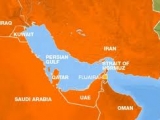 |
Which Country Will Suffer Most If Strait Of Hormuz Is Blocked?(0) Which regional companies and countries stand to lose in the event that Iran closes the Strait of Hormuz? Ratings agency Standard & Poor’s takes a look. READ MORE HERE
|
 |
Iraq Discloses Energy Export Revenues; Earned $41-Billion In 2009(0) Iraq has disclosed detailed information about the US$ 41 billion in revenue it received from oil and gas exports in 2009. Iraq’s disclosure of the figures follows the country’s commitment to the EITI standard, the global standard for transparency of resource revenues. The revenues are published in Iraq’s first EITI Report, which detailed production figures and revenues from the sales of oil abroad in 2009. Clare Short, Chair of the international EITI Board welcomed the report saying, “Through the launch of its first EITI report, Iraq has taken a significant step towards transparency in its all-important oil sector. With transparency of the payments for its oil and gas, Iraq’s citizens can see how much the government receives from the country’s vast natural resources and start to ensure that Iraq’s resource wealth is properly managed. Greater transparency will help Iraq overcome some of the many challenges it is facing”. |
 |
50 Amazing MENA Economic Indicators For 2011(0)
The year 2011 has been extraordinary not just for the tectonic shift in the region’s political structures, but also the extraordinary pressures and opportunities faced by many regional economies. With four dictators ousted - including one dead - many others were shaken to the core - the after shocks have reverberated throughout the region in 2011 and will no doubt be felt in 2012. We identify 50 amazing statistics that highlight the remarkable year: READ MORE HERE |
|
Iraqi Oil Replacing Iranian Oil?(0) Iran may not be able to maintain its oil output by 2016 due to sustained international sanctions, but Iraq should be able to step into the breach, says the International Energy Agency. Adding to the alarm bells surrounding Iran’s oil production, the International Energy Agency (IEA) says that there is a real danger that Tehran will not be able to maintain its oil output under the weight of international sanctions. READ MORE HERE |
 |
MENA 2012 Outlook: Oil Exporting Countries(0) In the first part of the 2012 regional economic prospects, a look at oil-rich countries’ efforts to manage their citizens’ expectations, economic slowdown and regional and domestic political upheavals in the New Year. The year 2011 was probably the most unexpected for the Middle East in decades with not just the magnitude of changes unravelling in the region, but also the sheer number of those cataclysmic changes. READ MORE HERE |
 |
MENA Projects: Saudi Arabia Still the Driving Force; UAE Slowdown Continues(0) Excerpt from Citibank report: In October this year, $16.9bn of projects were awarded across MENA. On a cumulative basis, just over $82bn of projects have been awarded across the region in the year to end October. This compares favourably with FY10 when almost $80bn of projects were awarded. Saudi Arabia is the main driving force accounting for a third of the 2011 total. Iraq accounts for 20%.The UAE has awarded almost $14bn in the year to end October, almost $20bn below FY10. |
 The weakest link: short-term liquidity and how it impacts Islamic finance
  Islamic finance: An industry inclusive to all, irrespective of background
  SPECIAL COMMENT: Missing Link in Islamic Finance Hubs: Islamic Venture Capital
  Media and public relations — the missing link in Islamic finance
  SPECIAL COMMENT: OIC Islamic Index - The Malaysia Story?
  SPECIAL COMMENT: Ramadan Wish List For Islamic Finance
  Natural gas to be fastest growing energy source
  Dull economy takes shine away from Cameroon
  Mozambique political tensions seen rising in 2014 Muslim consumerism is linked to real economy sectors
 Sorry. No data so far.
Contacts and informationAlifArabia’s aim is to offer a brutally frank but sincere analysis on the Middle East region’s business and political issues. It wants to see a thriving and dynamic Middle East that encourages corporate and government transparency, investments and policies that allow the economies to grow.
|
Social networks |
Most popular categories |