



 |
Libya reserves drawdown accelerates(0) A combination of oil production disruptions and runaway spending could deplete Libya’s formidable financial reserves in less than five years, analysts warn. CONTINUE READING |
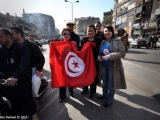 |
Tunisia banks still vulnerable(0) Tunisia was Ground Zero of the Arab Spring in late 2010 after a street vendor immolated himself in protest against injustice and inequality. His act of despair sparked a region-wide protest that swept aside the regimes of Tunisia, Egypt and Libya. CONTINUE READING
|
 |
Libya risks meltdown as fresh tension builds up(0) Libya has gone from a much-lauded country trying to get back on its feet after a bloody civil war, to a basket-case within the space of a few short months. CONTINUE READING |
 |
Libya on shaky ground as insurgency rises(0) Libya’s economic figures are the envy of the world, but the country teeters on the edge of dysfunction. CONTINUE READING |
 |
Re-elected Obama looking for ‘Egypt of Asia’?(0) By Rushdi Siddiqui, Global Head of Islamic Finance at Thomson Reuters
The re-election of Obama, both on popular (50 per cent to 48 per cent) and electoral (303 to 206) votes, is a message sent by the American people to work smarter (not only harder), longer, faster, and with partners, to “fix” what is broken, “mend” what needs fixing, “push” forward what is working and a “probation” to try new initiatives. The post-election comments for the peaceful president from world leaders, from secular to spiritual, have been positive, glowing, and extending an open hand to assist in the hard work ahead as all of us are in the same “boat” called humanity wanting dignity.
In the second term, Obama needs to focus on Asia, generally, before China’s once-in-decade political make-over starts execution (no pun intended), and possibly, a leading Muslim country, specifically, as an example a country which closely represents US ethnic, religious, and cultural diversification and “tolerance.”
Maybe it’s time for the president and the US to find and get behind an “Egypt of Asia”, as the oil and (perceived) regional influence of certain countries of recent past did not pan out as expected.
Omnipotence?
Will there be peace and stability in the Middle East within the next four years? It may be easier to have an Olympic gold medal winner in badminton from Malaysia than find the elusive peace in a region of piecemeal countries united and, yes, divided by tribalism.
The omnipotence of the US as the voice of reason and calming stability backed by her economic and military might has been downgraded (let’s leave S&P out of the equation) by the misadventures of George “Bring it on” Bush and the systemic risk to global economy by the sub-prime fiasco (also under George Bush), and the corresponding rise of the BRICS: Brazil, Russia, India, China and newcomer South Africa. Clearly, the power has shifted away from the US. Where it has shifted to is another issue, as it’s not debt battered and financially bleeding Europe.
Hotspot
The Arab Spring flushed out the regional diminishing US influence, including the unflinching support of entrenched poster child ally, Hosni Mubarak/Egypt, a benevolent dictator.
However, the Middle East remains important mainly because of black gold, oil, and the havoc a price escalation can play on industries and capital markets in an already weakened global economy.
The Middle East also remains a region of “unknown knowns”, composed of a complicated jigsaw puzzle of Egypt (controlled chaos), Libya (chaos), Lebanon (proxy chaos), Palestinian/Israel (two-state solution), Syria (civil war), Yemen (drones), Iran (nuclear), Al-Qaeda (stateless terrorism) and so on.
Although not mentioned on any geographical or topical defining map, Pakistan and Afghanistan are an extension of the region for the United States’ earlier intervention and on-going challenges. To put it differently, “they broke it, and have to buy it,” and with no return policy.
Thus, it will take more than four years of precision focus, shuttling negations, wisdom patience, printing press of money and, possibly, divine intervention to have an acceptable “normality” i.e. absence of conflict, not necessarily peace.
Expanding attention
The primary focus will continue on the Middle East, but, much like five-year business plans looking for new business opportunities in different geographies, the US needs to remove the “horse blinders” and see the Muslim world not as one, but as many countries with rich histories, cultures and influences. Thus, oil/gas reserves, military bases and large domestic population will continue to be important, but possibly not outcome determinative.
To make Obama’s second term more interesting on foreign policy, vis-à-vis the 57-country Muslim world, selected Muslim countries need to “pitch” themselves as representative of democratic and religious principles (is this possible?). There are three Muslim countries in the G-20, Turkey, Indonesia and Saudi Arabia, and these are only a starting point.
Other countries worthy of consideration, based upon metrics-like population, GDP growth and 2020/2030 vision, capital markets, democratic principles, OIC influence, etc include Egypt, Pakistan, Nigeria and Malaysia. As mentioned above, the court of public opinion will also matter for Obama, hence, from the above-mentioned destinations, the American public has a “challenging” opinion about these countries, except one.
The Malaysian elections are around the corner next year, and the incumbent and opposition can expand their platform to pitch about Malaysia to both the White House and Congress.
Winning the Nobel Peace Prize early in his first term is a tough benchmark act to follow for the second term for any democratically elected leader. His second term may be an extension of hope that transforms to trust that brings change, hence, actually earning the Prize that he accepted in the first term.
* The views expressed here are the personal opinion of the columnist. |
 |
Qaddafi’s Weapons(0) Libya’s transformation from being the personal fiefdom of Moammer Gaddafi to a fledgling democracy is an incredible achievement. CONTINUE READING |
 |
North African States Exposed To EU(0) Morocco, Egypt, Libya and Algeria are at high risk to a Eurozone meltdown, but Gulf states hardly have reason to be complacent, according to new research. CONTINUE READING |
 |
Trials & Opportunities In Tunisia(0) Unemployment and corruption persists in Tunisia, with religious tensions also coming to the fore. But is the world expecting too much, too soon from Tunisia? And can Libya’s reconstruction needs give Tunisian economy a fillip?… CONTINUE READING |
 |
Trouble Brewing In Jordan(0) While Jordan has avoided the turmoil of Libya and Egypt, it has always seemed like a country on edge ever since the Arab Spring swept across the region. CONTINUE READING |
 |
Fast-growing Libya(0)
The Libyan economy is set to grow by 20%, the fastest in Africa, and easily among the fastest in an otherwise depressed global economy. CONTINUE READING |
 |
Libya’s 9 Challenges(0) Libya’s oil sector has returned quickly to full speed, but the rest of the country remains in a state of disrepair. Maplecroft identifies at least nine key challenges facing the country. While Libya has done well in ramping up oil production to near pre-civil war levels, much remains to be done. READ MORE HERE
|
 |
Islamic finance, Occupy protests and public good(0) By Rushdi Siddiqui, Global Head of Islamic Finance, Thomson Reuters There are only two ways to conquer and enslave a nation, one is by sword, the other is by debt,” said John Adams, the second president of the United States. If we expand the quote, it could include debt without collateral asset, trading of such debt, and enhancing it with leverage. There are consequences as there are market cycles. Can Occupy Wall Street (OWS), public good and Islamic finance converge? Yes, through the lofty principals of economic justice. The essence of Islamic finance is about “risk sharing over risk transfer”, as it implies a financial and economic system of checks and balances. It implies an “ethical” financial intermediation linked to the real economy for “moral” value-added output. It implies modalities of contracts whose foundations are based on transparency, where asymmetric information is minimised to prevent abuses against the weaker counter-party. Furthermore, Islamic finance is about financial inclusion paving the path for distributive wealth and income, and ensuing economic opportunities. Finally, it’s all about business and not religion, and it about profits but against profiteering. OWS According to commonly used information website Wikipedia, Occupy Wall Street is a protest movement which began last September 17… against social and economic inequality, high unemployment, greed, as well as corruption, and the undue influence of corporations — particularly from the financial services sector — on government. The protesters’ slogan ‘We are the 99 per cent’ refers to the growing income and wealth inequality in the US between the wealthiest 1 per cent and the rest of the population. It would seem many of the concerns raised by the OWS movement were similar to its predecessor spark, the Arab Spring phenomenon, except replacing “corporations” with “corrupt and repressive governments”. As of now, the Arab Spring has had more impressive results than OWS after helping bring new governments in Tunisia, Egypt, and Libya, new governments in the “wait” in Yemen and Syria, and “new governance” in other regional countries. The question becomes, how would the OWS movement react to Islamic finance? During a London demonstration along the OWS lines in 2011, a protester held up a sign, “Let’s bank the Muslim way”. Obviously, the reference is to Islamic banking, but the jury is still out if the industry will receive OWS’ endorsement as many of the financial institutions, such as HSBC and Citi, protested against have a presence in Islamic finance. Public good In March last year, the Securities Commission Malaysia (SC) and the Oxford Centre for Islamic Studies (OCIS) held a two-day closed roundtable on Islamic Finance and the Public Good. Dr Raja Nazrin Shah, Crown Prince of Perak and Financial Ambassador to the Malaysia International Islamic Financial Centre (MIFC), who officiated the roundtable, said, “public good is one concept that is common to both conventional and Islamic finance. The values advocated by Sharia are not only confined to the detailed technical aspects of transactions, but also in the extent to which the objectives of Sharia are achieved. If every aspect of Islamic finance were to be subject to a public good test, arguably no negative repercussion could ever arise. Likewise, if all conventional financial products were subjected to a public good test, the catastrophic effects of the recent crisis could have been avoided; and finance would serve its rightful purpose — as an engine that drives and supports the real economy.” At the same roundtable, the Chairman of SC, Tan Sri Zarinah Anwar, said, “… the virtues of Islamic fin-ance need to be unlocked further. Public good, ethics, shared values, governance, and real and tangible contributions to the economy hold the key to innovation and growth. Profits involving a higher social purpose and objective represent values that will create not just economic returns, but also comply with universal ethical standards. Putting all these in place will strengthen the universality and acceptability of Islamic finance, enabling it to offer a distinctive value proposition.” Thus, Islamic finance is not about privatisation of profits and socialisation of losses by the financial sector. It’s about accountability rate of returns, via due diligence, as pre-determined rates of returns do not exist in Islamic finance. Conclusion When Islamic financial institutions, such as banks and takaful operators, are allowed to reach the point of presenting a systemic risk to the industry, that is, being too large to fail, then we have become conventionally inefficient. If bailouts and bankruptcies, combined with capital protected bonuses, become a common place in Islamic finance, then we will have our own Occupy Salaam Street (OSS) movement in the Islamic finance hubs. However, today the aspirations and inspiration of OWS — the principals of economic justice — are aligned to the objectives of Islamic finance. It is about building a dynamic financial eco-system based on humanitarian beliefs, avoiding unjust enrichment and profiteering, and allowing for financial inclusion of the 99 per cent to achieve a basic necessity: human dignity. The writer is Global Head, Islamic Finance and OIC Countries at Thomson Reuters. Opinions expressed here are the writer’s own |
 |
Libya Revisited(0) The figures are in: Libya’s civil war cost the country a 60% contraction in GDP as forces loyal to maverick leader Moammer Gaddafi tried in vain to contain the rising tide of rebels eager to rid the country of the brutal dictator. With NATO air cover and Arab arms and financing feeding the rebels, it was inevitable that the regime would fall. What was even more inevitable was Colonel’s Gaddafi’s death at the hands of a ragtag army of rebels in the most grisly fashion on the streets of Sirte. READ MORE HERE |
 |
Human Rights Watch: From Arab Spring To Arab Autumn?(0) Human Rights Watch reports, by their very nature, never present a rosy outlook as they are given to highlighting the atrocities of governments and the lack of dignity and freedom they present to millions of their hapless citizens across the world. |
 |
IMF Issues Global Economic Risk Alert… Again(0)
The year 2012 may not appear to be any better than 2011 as many businesses had hoped. A new update of the International Monetary Fund’s (IMF) World Economic Outlook, says global economy will rise 3.3% in 2012, a downward revision from 4% in its previous forecast. Excluding Libya, MENA growth projections for 2012 and 2013 are set to be lower by -1.6 and -1.2 percentage points, respectively, than in the September 2011 WEO. READ MORE HERE |
 |
Abu Dhabi, Why So Austere?(0) In the context of the region, the UAE and especially Abu Dhabi, was the proverbial safe haven along with Qatar. While it was not a great year by any stretch of the imagination, the UAE looked good simply because others such as Egypt, Bahrain, Libya and Syria were imploding. READ MORE HERE |
 |
Can the NTC Unite Libya?(0) While the international community saw Libyans collectively rise up against the rule of Moammar Gaddafi and saw the emergence of the National Transitional Council (NTC) as the unifying force, the reality on the ground is quite different. A new study by the International Crisis Group (ICG) brings into sharp focus the rivalries, the complexities and the number of militias, groups, and secular and religious parties that have come to the fore and are jostling for attention and representation in the new Libya. READ MORE HERE |
 |
The New Year Islamic Finance Landscape Survey(0) January 2, 2012 “An optimist stays up until midnight to see the new year in. A pessimist stays up to make sure the old year leaves.”Bill Vaughn. Islamic finance is staying up for new year for ……. The survey format is straight forward, 16 questions with multiple answers. |
 |
50 Amazing MENA Economic Indicators For 2011(0)
The year 2011 has been extraordinary not just for the tectonic shift in the region’s political structures, but also the extraordinary pressures and opportunities faced by many regional economies. With four dictators ousted - including one dead - many others were shaken to the core - the after shocks have reverberated throughout the region in 2011 and will no doubt be felt in 2012. We identify 50 amazing statistics that highlight the remarkable year: READ MORE HERE |
|
Islamic Finance: A ‘come together’ consolidation?(0) Will 2012 be the year of “come together” consolidation for Islamic banks? Size is often the justification for achieving economies of scale, used to access deals for league table prominence, used as a buffer in a challenging environment, used as defensive measure to ward off unwanted suitors, and so on. Islamic banks are very much like Islamic (equity) funds. There are hundreds of Islamic banks and funds, but the paid-up capital and assets under management, respectively, is too small to be meaningful. Yet, both, more so Islamic banks, present a unique situation (of an industry risk) of “too small to fail”. |
 |
MENA 2012 Outlook: Oil Exporting Countries(0) In the first part of the 2012 regional economic prospects, a look at oil-rich countries’ efforts to manage their citizens’ expectations, economic slowdown and regional and domestic political upheavals in the New Year. The year 2011 was probably the most unexpected for the Middle East in decades with not just the magnitude of changes unravelling in the region, but also the sheer number of those cataclysmic changes. READ MORE HERE |
 |
SPECIAL COMMENT: The Arab Spring Could Turn Into A Long And Cruel Winter(0) By Alon Ben-Meir Due to a host of common denominators in the Arab world including the lack of traditional liberalism, the tribes’ power, the elites’ control of business, the hold on power by ethnic minorities, the military that cling to power, and the religious divide and Islamic extremism, the Arab Spring could sadly turn into a long and cruel winter. These factors are making the transformation into a more reformist governance, slow, filled with hurdles and punctuated with intense bloodshed. At the same time, each Arab country differs characteristically from one another on other dimensions including: history and culture, demographic composition, the role of the military, resources, and geostrategic situations. This combination of commonality and uniqueness has had, and will continue to have, significant impacts on how the uprising in each Arab country evolves and what kind of political order might eventually emerge. |
 |
Arab Spring: A New Era In A Transforming Globe(0)
November 8, 2011 The Arab uprising must be seen as an integral part of a world in transformation. The technological and informational revolutions that have spurred (and continue to spur) globalization and interconnectedness between cultures make it impossible for tyrants to rule for the entirety of their lifetimes while mercilessly subjugating their peoples to lives of servitude with no prospect of ever tasting the true meaning of freedom. |
 |
Did Gaddafi Die As The Richest Man In The World?(0) While the world fixates on whether Colonel Gaddafi died as the richest man in the world, with $200-billion ferreted away, ordinary Libyans focus on pulling themselves out of poverty in a country in disarray. READ MORE HERE |
 |
‘Mission Accomplished’ In Libya & Iraq?(0) By George Friedman In a week when the European crisis continued building, the White House chose publicly to focus on announcements about the end of wars. The death of Moammar Gadhafi was said to mark the end of the war in Libya, and excitement about a new democratic Libya abounded. Regarding Iraq, the White House transformed the refusal of the Iraqi government to permit U.S. troops to remain into a decision by Washington instead of an Iraqi rebuff. |
|
Post-Gaddafi Libya: $30Bn Needed To Raise Oil Production(0) It’s ironic that the man who used his formidable oil assets as a weapon to hold his people - and the world - hostage, saw little reaction from oil markets upon his death. |
 |
Will Syrians Deploy Libyan Model Of Resistance?(0) With Libya’s civil war over for all practical purposes after the death of Colonel Muammr Gaddafi - at least for now.. all eyes have turned back to Syria. The country is in the grip of severe unrest with President Bashar Al Assad using his entire force to quash dissent. But despite his most brutal efforts, the protests continue to be a daily occurence. |
|
Graphic Video Content: The Final Moments of Libya’s Muammar Gaddafi(0) Despite its graphic content, it is an important historical moment in the region. Hence, reposting with caveats and warnings that it is very graphic content of the final moments of the Libyan dictator - apologies in advance:
|
|
Arab Spring-Related Economic Losses For Affected Countries: $56-Billion(0) The Arab Spring not only cost at least three dictators their jobs but also $56-billlion in lost GDP for the worst affected countries, according to a statistical study by a consulting firm. READ MORE HERE |
 |
New Libya: Great Opportunities, Greater Challenges(0) Ousting Moammer Gaddhafi may have been the easy part as the National Transitional Council mulls over the next steps to restore domestic stability and investor confidence back into the state. The slate has not exactly been wiped clean, but it is the dawn of a new era in Libya. With Colonel Moammer Gaddhafi a fugitive in the country he ran with an iron fist for 42 years, the Libyan rebels’ National Transitional Council (NTC) has quickly emerged as the legitimate group running the country in the interim. READ MORE HERE |
 |
Why Oil Prices Will Continue To Remain High(0) Even as hopes arise of a quick resumption of Libyan oil, a whole host of new supply-side worries will ensure that crude production remains tight. The resumption of Libyan oil will not dent oil prices as supply constraints continue to add up. READ MORE HERE |
|
Videos We Like: Battle For Tripoli (Al Jazeera)(0)
Moammer Gaddhafi’s regime is crumbling, his son is captured. How long will the resistance last before Libya can be completely free and prepare for a revolutionary change?
|
 |
Troubled Tunisians Wonder If Grassroots Revolution Will Not Raise Their Living Standards, What Will?(0) As Tunisia prepares for elections in October, the chronic and fundamental weaknesses in the country’s political and economic structures are becoming evident. While long-standing structural issues will take some time to address, external factors - such as economic problems in key trading partner Europe, and civil war in neighbouring Libya _ are further straining fragile economic growth. This has left many Tunisians wondering if a grassroots revolution will not help alleviate their lot, what will? READ MORE HERE
|
|
Donald Trump’s Hysterical Comments About Opec, Saudi Arabia and Kuwait Are Way Off The Mark(1) Donald Trump’s recent hysterical comments on the Organization of the Petroleum Exporting Countries (OPEC), Saudi Arabia and Kuwait are set to put more pressure on President Obama. Expect more pressures on Mideast states as the race for the White House heats up. Read More Here |
|
Mark Mobius’ Middle East North Africa View(0) Mark Mobius’ Franklin Templeton can see clear opportunities in the haze of Middle East turmoil. |
 100 Largest Economies By 2050: HSBC Middle East’s Top 25 Banks 9 Challenges Facing The New Crown Prince Of Saudi Arabia Egypt Will Surpass Saudi Economy By 2050: HSBC Top 10 Middle East Fund Managers
  Tanzania LNG on backburner amid constitution review Saudi Arabia 6th Richest Economy By 2050: Citibank SPECIAL COMMENT: Islamic Venture Capital - A Distinguishing Factor The Case For Muslim BRIC: Saudi, Ankara (Turkey), Malaysia & Indonesia, or SAMI Saudi and Opec breakeven oil prices are rising at worrying levels
 Sorry. No data so far.
 Latest Analysis
Contacts and informationAlifArabia aims to provide analysis on Middle East and Africa business and political issues. It wants to see a thriving and dynamic Middle East that encourages corporate and government transparency, investments and policies that allow the economies to grow.
|
Social networks |
Most popular categories |