




 |
Educated, Ambitious, Essential: Women Will Drive the GCC’s Future(0)
Booz & Company addresses ways in which the GCC’s private sector can address nationalization and unemploymentby hiring the region’s highly educated female population Private-sectorcompanies in the Gulf CooperationCouncil (GCC) have an opportunity to address several pressing issues, includingnationalization imperatives and local unemployment, by attracting morenational women into their workforce. Booz& Company has developeda framework to help companies in this effort. Looming Changes in the GCC Workforce Private and semi-private companies inthe GCC are under enormous pressure to nationalize their workforce, owingto a combination of high regional unemployment and a currently outsizedproportion of expatriate workers in the region. Thus far the talent pool of women employeesin the region remains largely untapped, due to social, occupational, andlegal challenges. Private and semi-private organizations in the GCC donot rely heavily on GCC nationals to fill their employment needs, and theyrely even less on women as a group. GCC governments have taken a numberof steps to improve this situation, such as Saudi Arabia’s national policies,including a five-year plan, Human Resources Development Fund (HRDF) programs,and royal decrees, and the women’s leadership center that Qatar is establishing. However, to achieve the goal of greateremployment among national women in the regional workforce, companies willneed to implement internal programs to recruit, develop, and retain womenemployees. This will require solving a number of social, occupational,and legal challenges, with roots in long-standing and sensitive culturalattitudes in the region. “There are clear benefits to be claimed.The companies that take the lead in this issue will help address the GCC’sunemployment problem among nationals. They will also assume a key rolein shaping the future of women in the region,” said RamezShehadi, Partner with Booz & Company. “Mostsignificant, they will tap into a base of talented national women thatis well-educated and eager to join the workforce, giving these companies a long-term competitive edge.” A Three-Part Framework for Change Booz & Company has undertaken substantialresearch in this area, includinga comprehensive survey and client work. We have also developed a frameworkto address these issues, in order to help GCC companies more successfullyintroduce national women into their workforce in greater numbers. Our framework consists of three elements:1) defining an overall corporate vision for employing women based on asolid case for change; 2) developing a talent management strategy and operatingmodel to source, train, promote, and retain women; and 3) implementinga change management strategy to engage with and secure the support of internaland external stakeholders. 1. Women’s Employment Vision One thing is clear from the effortsof companies worldwide to attract and retain talented women: Implementingdiversity for diversity’s sake does not work. To begin successfully integratingwomen into their workforce, GCC companies must have a senior champion whocan make a business case for the need to do so. “Creatingsuch a business case is not without challenges. There is little in theway of objective, broad-based research that clearly establishes the importanceof integrating women into the workforce, and nonethat is specific to the region,” said Dr. Leila Hoteit, Principal withBooz & Company. “However,anecdotal evidence from a multitude of companies shows the value that astrong female talent base can engender. A business case could be basedon any of three elements: workforce,customers, or suppliers.” Workforce: A dedicated effortto recruit and retain women does more than just fill talent gaps. A diverseworkforce leads to higher employee engagement across the board. More than100 studies have demonstrated the correlation between employee engagementand business performance: Engaged employees are far more productive andcommitted, and they are more likely to make progress toward company goals,as well as the goals of their own group Customers: Companies in a wide variety of sectors will need to more effectively target women as this keydemographic’s spending power continues to grow.To do so, companies need to ensure not only that they have women on staffbut that women are in the right positions to enhance the company’s go-to-marketstrategy with their insights, such as R&D, product development, marketing, and sales. Suppliers: Companies need womenin the right roles to raise awareness about potential new suppliers, usetheir networks to build these relationships, and maintain the relationshipsover the long term. One company found annual cost savings of $2 millionto $4 million when it focused on women-owned businesses by categorizingall third-party orders and enhancing the competitiveness of each category. 2. TalentManagement The second element of the frameworkrequires developing a comprehensive approach to hire the most promisingwomen candidates, invest in developing their technical and soft skills,evaluate them objectively, and retain them. Talent acquisition: Companiesshould apply a unified process for attracting qualified talent from allavailable sources. This includes hiring entry-level candidates directlyfrom the ranks of recent graduates of women’s colleges and vocationalinstitutes. Another key channel for young talent is to sponsor students.Still another source, particularly for experienced professionals and managers,is the region’s recruiting firms. “Companiescan partner with leading technology training institutions to establisha pipeline of women professionals with specializedtechnical experience,” said Dr Kamal Tarazi, Principal with Booz &Company. “For example, the Womenin Technology (WIT) program, a collaboration between Microsoft and localwomen’s organizations, teaches computer skills to women in nine MiddleEast and North Africa countries. Since its launch in 2005, WIT has trainedmore than 3,500 women throughout the MENA region.” The company should ensure the same clearobjectives and criteria are used in recruiting women as in its usual recruitingprocess, and avoid making subjective judgments about, for example, a femalecandidate’s age or number of children. It should also seek to have strongfemale representation in recruiting to project an image of a company thatfully embraces and values diversity. Learning and development: Inaddition to recruiting and hiring female candidates, companies must implementa training program to develop women employees in technical areas and softskills. Companiesshould consider a mentorship program that pairs less experienced stafferswith more experienced women. In addition to serving as role models, thementors would offer junior women an opportunity to share their concernsand issues. Performance management: To supportthe integration of women into the workforce, companies must establish anobjective system for evaluating their performance. This process needs tobe clearly communicated and strictly implemented to ensure fairness. Allscores should be objective and measurable, based on specific outcomes (suchas turnover and employee satisfaction in the HR function, or sales numbersfor the sales department), and the evaluation process should include multiplesources of input—e.g., managers, colleagues, and subordinates. Althoughthis is good practice for all employees, recent experience has shown thatit is difficult to implement when evaluating women employees in a male-dominatedenvironment. For example, in some job appraisals, women receive referencesto personality traits—they are “shy” or “emotional”—rather than specificdescriptions of behaviors or quantitative assessments of their job impact.At other times appraisals may reflect an inherent, though unconscious,bias regarding women employees’ long-term commitment to the company inthe context of family obligations. Retention: Once the company hastaken these measures to recruit, hire, develop, and evaluate the womenin its workforce, it should devote equal effort to retaining women employeesand ensure that they stay professionally fulfilled and motivated. Thisis critical, given the scarcity of skilled resources in the market andthe investment that would be needed to hire and develop a new employee.We advocate a balance of traditional incentives and “pride builders,”or less quantifiable and concrete benefits.The first category, incentives, consistsof fairly traditional HR levers: rewards such as compensation and benefits,opportunities for career advancement, and a work–life balance that offerssufficient flexibility to attend to personal obligations while also pursuinga career. The introduction of resources such as family-friendly policieswould go a long way in helping retain talent: For example, employees mayseek part-time work, or the opportunity to telecommute certain days orfor a finite period of time, as long as the job’s requirements allow forit. 3. ChangeManagement “Becauseincreasing women’s participation is a complex initiative with potentialramifications for the entire organization, companies will require an extensivechange management strategy in order to succeed,”said Shehadi. “Atthe outset, all relevant stakeholders,both internal and external, mustunderstand the program and its objectives. This may require overcomingmisguided but still prevalent perceptions among some about the roles ofwomen in society, or their ability to succeed in the private-sector workplace.” Because these perceptions can be stubborn,changing them within companies must start from the top. Companies mustline up support and commitment from the board and executive vice presidents(EVPs), who must lead by example. Senior management should actively monitorkey metrics through dashboards or score cards that track turnover, thenumber of women in senior positions, and other relevant indicators. At lower levels, the company shouldidentify middle management champions for the program. These champions canbegin spreading awareness of the program in advance, along with motivatingtheir staff to embrace the change. They can overcome unforeseen obstaclesat that level—through a performance-driven approach—and identify andcommunicate challenges up the chain of command. Finally, companies will need to adda diversity-management component to the slate of mandatory training requiredof all employees. It is not sufficient to simply prepare women to jointhe labor force; management must prepare the rest of the employees to makethe integration of women a company-wide success as well. The entire company should build on smallsuccesses, potentially through recognition via in-house communicationssuch as internal magazines or newsletters, or through awards given to thedepartment that has the greatest proportion of women employees, or thelargest number of women in leadership roles. “Introducing women into the GCC private-sectorworkforce will not be easy, and there is a risk of moving too fast. Eventhose companies that are most aggressively pursuing nationalization cannotsimply replace one skilled and experienced expat worker with one nationalwoman,” said Dr Hoteit. “In the longer term, this change is inevitable.Attitudes in the region are changing, and many companies are now activelyworking to define their strategic vision for how women will fit into theirworkforce. Women have the education and—more important—the desire toplay a more central role in the region’s labor market.” Reaping the Rewards The entrance of more women into theregional economy will serve as an economic multiplier, creating benefitsfor each nation as a whole. “Booz & Company’s research onthe “Third Billion” — the billion women worldwide who are poised tohave an impact on the global economy as workers and consumers — showsthat these new engines of economic activity create vast markets and increasethe size and quality of the talent pool,” concluded Tarazi. “In periodsof relative prosperity, their aspirations and persistence are engines forgrowth. In slower periods, they represent pockets of economic activitythat ameliorate the impact of decline.” For private and semi-private organizationsin the region, nationalization and regional unemployment provide an opportunityto tap an underused talent pool. Defining a strategic vision to betterintegrate women, developing a comprehensive talent strategy to do so, andcarefully managing the transition will be critical for companies that wantto capitalize on this opportunity. Companies that adopt an intelligentstrategy to manage this transition will gain a competitive edge, througha workforce that is more engaged and better reflects the GCC populationat large. Scridb filter |
 |
‘Cross pollinating’ Islamic finance in GCC, Malaysia(0) Continuous effort - not strength or intelligence - is the key to unlocking our potential. - Winston Churchill How many Malaysian Islamic bankers work in senior positions at Islamic financial institutions in the GCC (Gulf Cooperation Council), Pakistan and the UK? Conversely, how many non-Malaysians work in senior positions at Malaysian Islamic financial institutions? Does the training and experience in Malaysia for Islamic finance somehow imply that it’s too Malaysia-centric (Shafi school) for GCC (Hanbali, Hanafi, Jafri schools) Islamic financial institutions? Does it somehow imply that there needs to be a “retraining” of Malaysian Islamic bankers to the GCC “way” of Islamic banking, finance and takaful? |
 |
Qatar Most Competitive Economy In Region, UAE Slips In WEF Ranking Again(0) Qatar leaves regional competitors in the dust, rising as one of the most competitive economy in the world. But Arab Spring unkind to competitiveness of liberated Egyptian and Tunisian economies. Another survey, another glowing review of Qatar. The World Economic Forum’s Global Competitiveness Index 2011-12 finds the gas-rich state the region’s most competitive and emerging as the 14th most business-friendly country in the world. READ MORE HERE Scridb filter |
 |
Arab Spring Costs Gulf $150 Billion(1) Gulf states have pledged $150-billion in response to the regional unrest, according to Bank of America Merrill Lynch estimates. But it may not be enough. READ MORE HERE Scridb filter |
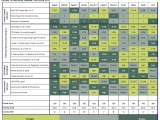 |
EFG-Hermes’ Insightful Heat Map On Middle East’s Problems(2) Read why EFG-Hermes is worried about Omani and Bahraini growth. And the bank’s insightful regional heat map that neatly highlights problem areas. Read the full story here Scridb filter |
|
Gulf’s ‘Marshall Plan’ Blues(2) Just when analysts were giving up on a truly unified GCC, the six states have closed ranks with the unmistakable presence of Saudi tanks and soldiers on Bahraini soil. Read More |
|
Statistically Speaking: Impact of Oil at $100 on MidEast GDPs(0) Oil prices are poised to hit the magical $100 per barrel once again and economists, analysts have taken out the proverbial calculators to see what it means for oil-based economies of the Middle East. Read More Scridb filter |
 Middle East’s Top 25 Banks
  100 Largest Economies By 2050: HSBC
  Hitchhiker’s Guide To Arab Spring (Caution: Humor Required)
  Forbes Billionaires’ List: Middle East’s Richest Lost Big Last Year
  New Saudi Mortgage Law: An Analysis
  What’s in store for Dubai Inc. In 2012?
  500 New Hotels Under Construction In The Middle East
  Rushdi Siddiqui on Dubai’s timely Islamic finance strategy
  $1-Trillion Of Oil Revenues May Be Looking To Buy Assets Next Year: MS
  Middle East States’ Foreign Assets To Hit $2.2 Trillion By Year End: IIF
 Sorry. No data so far.
Contacts and informationAlifArabia’s aim is to offer a brutally frank but sincere analysis on the Middle East region’s business and political issues. It wants to see a thriving and dynamic Middle East that encourages corporate and government transparency, investments and policies that allow the economies to grow.
|
Social networks |
Most popular categories |