



 |
Qatar, Kuwait & UAE’s Ecological Footprint Biggest in World: WWF(0)
Here’s a list Qatar would not want to top: The World Wild Life Fund (WWF) has ranked Qatar as the country with the largest ecological footprint per capita in its latest report. The tiny country is joined by neighbours Kuwait and the United Arab Emirates as the three nations with the largest ecological footprint - far exceeding other countries. READ MORE HERE |
 |
Special Comment: Hitting the glass ceiling?(0) By Rushdi Siddiqui, Global Head of Islamic Finance, Thomson Reuters To grow, Islamic banks must compete with conventional lenders Dedicated Islamic banks are generally national in nature and in certain markets have reached their ‘natural market share’ for Islamic banking, according to an A.T. Kearney study. A recent report by the consulting firm A.T. Kearney, The Future of Islamic Banking, and a Reuters article, ‘No windfall from Qatar ban on Islamic windows’, have generated much productive chatter globally. |
 |
Open Letter to IDB President: Mega Islamic Trading Platform(0) By Rushdi Siddiqui, Global Head of Islamic Finance, Thomson Reuters Dear Dr. Ahmad Mohamed Ali, President, Islamic Development Bank (IDB) Group: Asalaam Alaikum: The Islamic finance world welcomes your comments on the ‘Mega’ Islamic Bank to effectively compete against well capitalized conventional financial institutions. “…The ‘Mega Islamic Bank’ comes as an initiative of the Islamic Development Bank in its efforts to address the dearth of senior financiers, the absence of the Islamic tools of stock exchange and the absence of market liquidity between Islamic banks.” However, $1 billion, with $500 million in paid capital by the three founders (IDB, Dallah Albaraka and Qatar Government), is smaller than three existing Islamic banks, which have never addressed themselves as ‘mega.’ The three include Saudi Arabia’s Al Rajhi, Qatar’s Mashraf Al Rayan and Kuwait’s Kuwait Finance House (KFH). Furthermore, it seems the ‘mega’ story may be incomplete without Malaysia’s participation. |
 |
Where To Invest In The Middle East: Bank of America Merrill Lynch(0) With Gulf economies poised for growth on the back of strong macroeconomic policies, regional stock markets are also set for growth. The two most liquid GCC markets - Dubai and Saudi Arabia - are both up well over 20% since the start of the year, with the Egyptian market also rising an astonishing 33%. READ MORE HERE |
 |
Is Saudi Arabia’s Growth Jobless?(0) It will be no mean feat to outpace Qatar’s amazing GDP growth, but that’s exactly what Saudi Arabia is estimated to accomplish in 2012. |
 |
Resource-Rich Countries Are Often Education-Poor: OECD Study(0) An OECD study shows countries with greater income from natural resources tend to be socially less developed. Which perhaps explains why Saudi, Qatari and Kuwaiti students fare far worse then Lebanese and Taiwanese students. READ MORE HERE |
|
Rushdi Siddiqui: May Be Islamic Finance Is Only For Muslims?(0) March 14, 2012 By Rushdi Siddiqui, Global Head of Islamic Finance, Thomson Reuters Provocative statements are commonplace in the world of politics, academia, business and finance. They serve a ‘perception of purpose’, from distraction to direction and denial to dissatisfaction. Put differently, such comments are viewed as ‘info-tainment’ to stand out in a competitive market environment. |
 |
Media and public relations — the missing link in Islamic finance(0) By Rushdi Siddiqui, Global Head of Islamic Finance NEED FOR CONTROL ROOM: The industry has alphabet bodies that deal with various issues but when it comes to public relations and marketing, there seems to be a gaping hole that is getting larger Is there a media and public relations (PR) “control room” for Islamic finance that educates, creates awareness, undertakes damage control, etc, so that the industry is “conventionally efficient” media-savvy? Some recent headlines, by-lined articles, blogs and press releases from Islamic finance provide the answer: * Is Islamic Finance a Failure? Reuters (Guest Columnist) * KFH: Banking Products that Cement Value of Savings in Society, press release * Islamic Banks Misleading: Clients Emirates 24/7 (Dubai, UAE) * Reporters Notebook: The Ethical Aspects of Islamic Banks, www.greenprophet.com * Most Trusted Middle East Banks, www.Alifarabia.com * Questionable Islamic Banking Principles, www.freemalaysiatoday.com * Shining Star of the Middle East, Financial News * The Trillion Dollar Hoax, The Islamic Globe * The Lessons from the Goldman Sachs Proposed US$2 Billion Sukuk Saga, Arab News * Mega Islamic Bank Plans Cancelled, Gulf Daily News (Bahrain). Let’s put aside those writers seeking publicity, cheerleaders of the industry, the anti-syariah movement and the well-meaning purest, and those who, unfortunately, have had a bad experience, from inappropriate products to fraud to customer service, in Islamic finance. The truth about Islamic finance is somewhere between “today’s offering and where we eventually want it to be tomorrow”. The continued “conflicting” headlines should be the “cold water” wake-up call for the industry on two fronts: ADDRESSING the substance, over form, of the Islamic finance, and; CONVEYING its message, as the perception of the industry is not aligned to the objectives of movement, including raising/writing comments after “unbalanced, out-of-context, exaggerated, or untrue” articles in the media circles. Industry body Usually, industries, from finance and healthcare to technology, have financed a designated company/industry body to educate, lobby, promote to new customers and market, undertake damage control, and so on. Their broad message is supplemented and complimented by local institutions with customised local message. For example, in many of non-Muslim countries with an established Muslim population, there are Muslim organisations, like Council of American Islamic Relations in the US or Muslim Council of Britain and so on, that, in effect, act as the “PR” arm for “righting wrongs, damage control, or addressing media/political errors of omission and commission”. In Islamic finance, we have alphabet industry bodies: for accounting and auditing (Bahrain-based AAOIFI), for prudential regulations and governance (Malaysia-based IFSB), for Islamic capital and money market (Bahrain-based IIFM), etc. Although, they have some common shareholders, let’s put aside the inability of these industry bodies to host one Islamic finance event that is supported by all of them. Let’s put aside lack of speaker invitation of one industry body to the head of its sister industry body for a presentation slot. Notwithstanding present “turf” challenges, these industry bodies have done a commendable job of raising awareness and educating the wholesale stakeholders of the technical aspects of Islamic finance, in Muslim and non-Muslim countries, on standards, governance, and regulations. However, when it comes to the public relations and marketing of Islamic financial institutions or even damage control, there is a gaping hole and it is getting larger. In fairness to the above-mentioned industry bodies, they have resource constraints, from manpower to finance, and, furthermore, expanding their mandate to include marketing and public relations for a geographically- dispersed and fragmented industry at various stages of development is unreasonable. However, something more needs to be done as Islamic finance is only strong as the weakest link. The continued negative headlines will not go away even if we continue to ignore them or convince ourselves that it’s the growing pains of an emerging industry. They should be seen as the tip of the iceberg of issues and feedback on the industry’s perception/message. Funding of body The time has arrived for the majority to conclude there is need for an industry body that is tasked with public relations and marketing of Islamic finance at, say, the “wholesale level” - governments, regulators, financial institutions, law firms, western media, and so on. It allows for a universal message, a necessary pre-requisite to achieve harmonisation-cum-standardisation, that builds the foundation for local Islamic financial institutions to customise and add local content. After determining a need for an industry body to promote and educate Islamic finance, the funding question must be addressed. Fortunately, the experience of AAOFI, IFSB, IIFM, etc, suggests the stakeholders could include the Islamic Development Bank (IDB), Islamic financial institutions (possibly one from every country that has declared itself an Islamic finance hub), forward-looking governments like Malaysia, the United Arab Emirates, and possibly the existing industry bodies (to include their technical message). One of the lessons learned from the existing industry bodies is the need for adequate capitalisation and annual budget (adjusted for demand). It makes no sense to provide a shoestring budget when the objectives are global and the awareness and education is on-going and expanding. Location of industry body One of the takeaways about an industry body’s location is that it raises the profile of the country and the country raises the profile of the industry body, as there is now a “go to” place on the global map. Thus, bodies like the AAOIFI, IIFM and IIRA have raised the profile of Bahrain, while the IFSB, ISRA, and INCIEF have raised that of Malaysia. Therefore, Dubai (UAE), Qatar, Pakistan, Indonesia, Brunei or even London, Paris, or Luxembourg have an opportunity to host an industry body that promotes awareness and information about Islamic finance and shows their commitment to the industry. Furthermore, much like the phrase “think global, act local”, it makes to have geographically situated satellite offices to address local time zone challenges. Mandates Beyond awareness, education, damage control, etc, one of the areas that require immediate attention is a more robust investor relations depart of Islamic financial institution, including addressing media training for executives. The media, especially western, wants access to senior executives, which implies challenging questions, and, it is here that the industry can best utilise them to send its message to the masses globally. Additional responsibilities could include establishing and hosting a Davos-type event, including the US$640 billion (RM1.9 trillion) halal industry, in Europe, the Gulf and Southeast Asia. Thus, not Islamic finance per se, but the link of Islamic finance and funding education, healthcare, infrastructure, know-ledge-based economy, etc. Some examples where the proposed PR Islamic body could have provided guidance for clear, coherent and concise clarifications: SCHOLARS (confusion as to their role in the West), purification and zakat (not funnelling money to financing extremists), money exchange places in Muslim countries are not Islamic financial institutions, etc. COORDINATE with other industry bodies for job openings, direct inquiries to appropriate industry bodies and Islamic financial institutions (reduce information cost for existing/potential users) PRODUCT launches, new bank/takaful launched, etc. I’m not convinced that a general or financial PR firm can provide the needed specialised message and follow-ups that a dedicated body can direct. DAMAGE control includes recent media frenzy on Islamic banking in Nigeria, Goldman Sachs’ US$2 billion sukuk, sukuk defaults, Islamic funds closing, Islamic bank (Dubai Bank and Islamic Bank of Britain) rescue, etc. BRANDING of Islamic finance. Has time arrived to survey the stakeholders on the naming? In Turkey, its called Participation Banking and it conveys the essence and objective of the movement and is less politically charged, especially if Islamic finance is for all mankind. Continuing to call it “Islamic”, combined with marketing materials emphasising syariah board and adherence, may not convey its universality. Many of these issues also go to trust and confidence of Islamic finance by depositors, investors, shareholders, etc. Conclusion Although Islamic finance is less than 40 years old, the time has arrived for the industry to have a dedicated well-financed body to send a coherent and consistent message about the industry. This is an investment and not a cost, and not having such a body is to have continued schizophrenia headlines and resulting systemic brand risk. Rushdi Siddiqui is the global head of Islamic finance at Thomson Reuters |
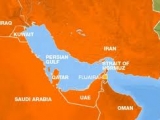 |
Which Country Will Suffer Most If Strait Of Hormuz Is Blocked?(0) Which regional companies and countries stand to lose in the event that Iran closes the Strait of Hormuz? Ratings agency Standard & Poor’s takes a look. READ MORE HERE
|
 |
Most Trusted Middle East Banks(0)
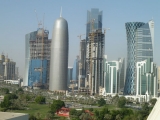
Thirty-three Middle East banks are among 500 of the world’s most trusted banks, according to a new study. READ MORE HERE |
 The weakest link: short-term liquidity and how it impacts Islamic finance
  Islamic finance: An industry inclusive to all, irrespective of background
  SPECIAL COMMENT: Missing Link in Islamic Finance Hubs: Islamic Venture Capital
  Media and public relations — the missing link in Islamic finance
  SPECIAL COMMENT: OIC Islamic Index - The Malaysia Story?
  SPECIAL COMMENT: Ramadan Wish List For Islamic Finance
  Natural gas to be fastest growing energy source
  Dull economy takes shine away from Cameroon
  Mozambique political tensions seen rising in 2014 Muslim consumerism is linked to real economy sectors
 Sorry. No data so far.
Contacts and informationAlifArabia’s aim is to offer a brutally frank but sincere analysis on the Middle East region’s business and political issues. It wants to see a thriving and dynamic Middle East that encourages corporate and government transparency, investments and policies that allow the economies to grow.
|
Social networks |
Most popular categories |