



 |
50 Amazing MENA Economic Indicators For 2011(0)
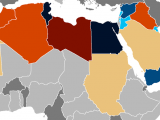
The year 2011 has been extraordinary not just for the tectonic shift in the region’s political structures, but also the extraordinary pressures and opportunities faced by many regional economies. With four dictators ousted - including one dead - many others were shaken to the core - the after shocks have reverberated throughout the region in 2011 and will no doubt be felt in 2012. We identify 50 amazing statistics that highlight the remarkable year: READ MORE HERE |
 |
SPECIAL COMMENT: The Arab Spring Could Turn Into A Long And Cruel Winter(0) By Alon Ben-Meir Due to a host of common denominators in the Arab world including the lack of traditional liberalism, the tribes’ power, the elites’ control of business, the hold on power by ethnic minorities, the military that cling to power, and the religious divide and Islamic extremism, the Arab Spring could sadly turn into a long and cruel winter. These factors are making the transformation into a more reformist governance, slow, filled with hurdles and punctuated with intense bloodshed. At the same time, each Arab country differs characteristically from one another on other dimensions including: history and culture, demographic composition, the role of the military, resources, and geostrategic situations. This combination of commonality and uniqueness has had, and will continue to have, significant impacts on how the uprising in each Arab country evolves and what kind of political order might eventually emerge. |
 |
The Kurdish Conflict: The Real Challenge To Turkey’s Democracy(0)
By Alon Ben-Meir In the wake of the Arab Spring and Prime Minister Erdogan’s championing of political reforms throughout the Arab world, it has now become more urgent than ever before to find an equitable solution to the Turkish-Kurdish conflict. Short of finding an immediate resolution to this debilitating struggle will not only severely compromise Turkey’s suggested model of successfully combining Islam and democracy, but it will additionally bankrupt its moral standing as it willfully continues to discriminate against 15 million Kurds who represent one-fifth of its population. |
 |
Arab League Looks To Squeeze Syrian Government Out Of Power(0) Alarm bells are ringing in Damascus as western and Arab governments are looking to put pressure on the Assad regime. New sanctions and a new report by the United Nations Human Rights Council (UNHCR) is a damning indictment of how Syrian President Bashar Al Assad the domestic crisis that has engulfed his country - by sheer brute violence. READ MORE HERE |
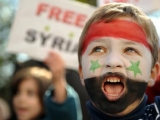 |
Syria’s Arab Spring & The Race For Regional Hegemony(0) By Alon Ben-Meir The Arab Spring is changing the political and strategic map of the Middle East as we know it in ways that will persist for decades to come. Notwithstanding the domestic developments in each country, the Arab Spring is uprooting long-standing authoritarian regimes, antagonists and protagonists to the West alike, and is creating a vacuum that regional powers will quickly attempt to fill. Each of the regional powers in the Middle East - Egypt, Saudi Arabia, Turkey, Iran, and Israel - are poised to exploit the uprising to their advantage. New regional alliances could emerge, as could a new “cold war” and the potential of violence between the competing powers. What is certain now, however, is that the Syrian upheaval thrusts Turkey and Iran into a collision course because they have opposing geostrategic interests that neither of them can afford to ignore. |
 |
‘Mission Accomplished’ In Libya & Iraq?(0) By George Friedman In a week when the European crisis continued building, the White House chose publicly to focus on announcements about the end of wars. The death of Moammar Gadhafi was said to mark the end of the war in Libya, and excitement about a new democratic Libya abounded. Regarding Iraq, the White House transformed the refusal of the Iraqi government to permit U.S. troops to remain into a decision by Washington instead of an Iraqi rebuff. |
|
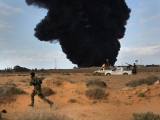
Will Syrians Deploy Libyan Model Of Resistance?(0) With Libya’s civil war over for all practical purposes after the death of Colonel Muammr Gaddafi - at least for now.. all eyes have turned back to Syria. The country is in the grip of severe unrest with President Bashar Al Assad using his entire force to quash dissent. But despite his most brutal efforts, the protests continue to be a daily occurence. |
 |
Arab Spring-Related Economic Losses For Affected Countries: $56-Billion(0) The Arab Spring not only cost at least three dictators their jobs but also $56-billlion in lost GDP for the worst affected countries, according to a statistical study by a consulting firm. READ MORE HERE |
|
EU Sanctions Needed To Weaken Cruel Syrian Regime(0) While the U.S. oil sanctions on Syria are welcome, the world can inflict a much bigger blow to Bashar Al-Assad’s regime if its biggest customer — the European Union — shunned its crude exports too. It has become a grim but almost familiar sight on TV: unarmed Syrian protesting against the government on the streets, only to flee at the sound of gunfire from Syrian forces - a few minutes later lay bodies on the streets. READ MORE HERE |
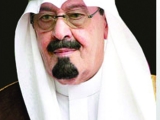 |
Why The Arab Spring May Yet Come To Saudi Arabia(1) It was an unlikely public display of affection. Close to 2,000 Syrian expatriates gathered on the streets of Jeddah, carrying Saudi flags and pictures of the Saudi King to thank him for criticising Syrian President Bashar Al Assad and demanding an end to his wretched violence against his own people. In an unusually frank criticism, the King demanded that Al-Assad end the violence against his own people, breaking the silence in the Arab World over one of the biggest atrocities being committed within the region. But, “as a number of Saudi youths started joining the gathering [of Syrian expatriates], police intervened and dispersed the people peacefully,” reported Arab News. READ MORE HERE |
 The weakest link: short-term liquidity and how it impacts Islamic finance
  Islamic finance: An industry inclusive to all, irrespective of background
  SPECIAL COMMENT: Missing Link in Islamic Finance Hubs: Islamic Venture Capital
  Media and public relations — the missing link in Islamic finance
  SPECIAL COMMENT: OIC Islamic Index - The Malaysia Story?
  SPECIAL COMMENT: Ramadan Wish List For Islamic Finance
  Natural gas to be fastest growing energy source
  Dull economy takes shine away from Cameroon
  Mozambique political tensions seen rising in 2014 Muslim consumerism is linked to real economy sectors
 Sorry. No data so far.
Contacts and informationAlifArabia’s aim is to offer a brutally frank but sincere analysis on the Middle East region’s business and political issues. It wants to see a thriving and dynamic Middle East that encourages corporate and government transparency, investments and policies that allow the economies to grow.
|
Social networks |
Most popular categories |