



 |
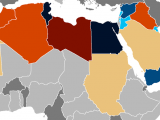
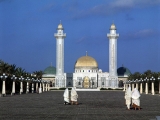
EIU Democracy Index 2011 Shows MENA Countries Have Long Way To Go(0) Tunisia’s travails over the past year paid off as it shot up in the Economist Intelligence Unit (EIU) Democracy Index 2011. Tunisia experienced the biggest increase of any country in its democracy score in 2011. It moved from an authoritarian to a hybrid regime. READ MORE HERE |
 |
Islamic Finance: A ‘come together’ consolidation?(0) Will 2012 be the year of “come together” consolidation for Islamic banks? Size is often the justification for achieving economies of scale, used to access deals for league table prominence, used as a buffer in a challenging environment, used as defensive measure to ward off unwanted suitors, and so on. Islamic banks are very much like Islamic (equity) funds. There are hundreds of Islamic banks and funds, but the paid-up capital and assets under management, respectively, is too small to be meaningful. Yet, both, more so Islamic banks, present a unique situation (of an industry risk) of “too small to fail”. |
 |
SPECIAL COMMENT: The Arab Spring Could Turn Into A Long And Cruel Winter(0) By Alon Ben-Meir Due to a host of common denominators in the Arab world including the lack of traditional liberalism, the tribes’ power, the elites’ control of business, the hold on power by ethnic minorities, the military that cling to power, and the religious divide and Islamic extremism, the Arab Spring could sadly turn into a long and cruel winter. These factors are making the transformation into a more reformist governance, slow, filled with hurdles and punctuated with intense bloodshed. At the same time, each Arab country differs characteristically from one another on other dimensions including: history and culture, demographic composition, the role of the military, resources, and geostrategic situations. This combination of commonality and uniqueness has had, and will continue to have, significant impacts on how the uprising in each Arab country evolves and what kind of political order might eventually emerge. |
 |
Egypt, Tunisia and Morocco Elections: Give Islamists A ChanceComments Off Whether western countries and ME liberals like it or not, Islamic parties have emerged victorious in elections in North African states. Before typecasting and dismissing them, Islamic parties deserve to get a fair chance at leading their people. The Western world and media are terrified of the rise of Islamic parties in Egypt, Tunisia and Morocco. READ MORE HERE |
 |
Arab Spring: A New Era In A Transforming Globe(0)
November 8, 2011 The Arab uprising must be seen as an integral part of a world in transformation. The technological and informational revolutions that have spurred (and continue to spur) globalization and interconnectedness between cultures make it impossible for tyrants to rule for the entirety of their lifetimes while mercilessly subjugating their peoples to lives of servitude with no prospect of ever tasting the true meaning of freedom. |
 |
Troubled Tunisians Wonder If Grassroots Revolution Will Not Raise Their Living Standards, What Will?(0) As Tunisia prepares for elections in October, the chronic and fundamental weaknesses in the country’s political and economic structures are becoming evident. While long-standing structural issues will take some time to address, external factors - such as economic problems in key trading partner Europe, and civil war in neighbouring Libya _ are further straining fragile economic growth. This has left many Tunisians wondering if a grassroots revolution will not help alleviate their lot, what will? READ MORE HERE
|
Sorry. No data so far.
Contacts and informationAlifArabia’s aim is to offer a brutally frank but sincere analysis on the Middle East region’s business and political issues. It wants to see a thriving and dynamic Middle East that encourages corporate and government transparency, investments and policies that allow the economies to grow.
|
Social networks |
Most popular categories |