



 |
Nurturing democracy startup Tunisia(0) The prime minister of Tunisia recently called his country a “democracy startup”. CONTINUE READING |
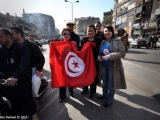 |
Tunisia banks still vulnerable(0) Tunisia was Ground Zero of the Arab Spring in late 2010 after a street vendor immolated himself in protest against injustice and inequality. His act of despair sparked a region-wide protest that swept aside the regimes of Tunisia, Egypt and Libya. CONTINUE READING
|
|
Tunisia sparks fresh hope for North Africa(0) A streak of sunlight just cut through the gloom in North Africa. CONTINUE READING |
|
Tunisia sees no sign of political resolution soon(0) Ground zero of the Arab Spring movement appears to have made very little progress after ousting its ruler Zine El-Abidine Ben Ali in early 2011. CONTINUE READING |
|
Socio-political tension keeps Tunisia on edge(0) Tunisia, ground zero of the Arab Spring, is struggling under the weight of expectations… CONTINUE READING
|
 |
Trials & Opportunities In Tunisia(0) Unemployment and corruption persists in Tunisia, with religious tensions also coming to the fore. But is the world expecting too much, too soon from Tunisia? And can Libya’s reconstruction needs give Tunisian economy a fillip?… CONTINUE READING |
 |
Islamic finance, Occupy protests and public good(0) By Rushdi Siddiqui, Global Head of Islamic Finance, Thomson Reuters There are only two ways to conquer and enslave a nation, one is by sword, the other is by debt,” said John Adams, the second president of the United States. If we expand the quote, it could include debt without collateral asset, trading of such debt, and enhancing it with leverage. There are consequences as there are market cycles. Can Occupy Wall Street (OWS), public good and Islamic finance converge? Yes, through the lofty principals of economic justice. The essence of Islamic finance is about “risk sharing over risk transfer”, as it implies a financial and economic system of checks and balances. It implies an “ethical” financial intermediation linked to the real economy for “moral” value-added output. It implies modalities of contracts whose foundations are based on transparency, where asymmetric information is minimised to prevent abuses against the weaker counter-party. Furthermore, Islamic finance is about financial inclusion paving the path for distributive wealth and income, and ensuing economic opportunities. Finally, it’s all about business and not religion, and it about profits but against profiteering. OWS According to commonly used information website Wikipedia, Occupy Wall Street is a protest movement which began last September 17… against social and economic inequality, high unemployment, greed, as well as corruption, and the undue influence of corporations — particularly from the financial services sector — on government. The protesters’ slogan ‘We are the 99 per cent’ refers to the growing income and wealth inequality in the US between the wealthiest 1 per cent and the rest of the population. It would seem many of the concerns raised by the OWS movement were similar to its predecessor spark, the Arab Spring phenomenon, except replacing “corporations” with “corrupt and repressive governments”. As of now, the Arab Spring has had more impressive results than OWS after helping bring new governments in Tunisia, Egypt, and Libya, new governments in the “wait” in Yemen and Syria, and “new governance” in other regional countries. The question becomes, how would the OWS movement react to Islamic finance? During a London demonstration along the OWS lines in 2011, a protester held up a sign, “Let’s bank the Muslim way”. Obviously, the reference is to Islamic banking, but the jury is still out if the industry will receive OWS’ endorsement as many of the financial institutions, such as HSBC and Citi, protested against have a presence in Islamic finance. Public good In March last year, the Securities Commission Malaysia (SC) and the Oxford Centre for Islamic Studies (OCIS) held a two-day closed roundtable on Islamic Finance and the Public Good. Dr Raja Nazrin Shah, Crown Prince of Perak and Financial Ambassador to the Malaysia International Islamic Financial Centre (MIFC), who officiated the roundtable, said, “public good is one concept that is common to both conventional and Islamic finance. The values advocated by Sharia are not only confined to the detailed technical aspects of transactions, but also in the extent to which the objectives of Sharia are achieved. If every aspect of Islamic finance were to be subject to a public good test, arguably no negative repercussion could ever arise. Likewise, if all conventional financial products were subjected to a public good test, the catastrophic effects of the recent crisis could have been avoided; and finance would serve its rightful purpose — as an engine that drives and supports the real economy.” At the same roundtable, the Chairman of SC, Tan Sri Zarinah Anwar, said, “… the virtues of Islamic fin-ance need to be unlocked further. Public good, ethics, shared values, governance, and real and tangible contributions to the economy hold the key to innovation and growth. Profits involving a higher social purpose and objective represent values that will create not just economic returns, but also comply with universal ethical standards. Putting all these in place will strengthen the universality and acceptability of Islamic finance, enabling it to offer a distinctive value proposition.” Thus, Islamic finance is not about privatisation of profits and socialisation of losses by the financial sector. It’s about accountability rate of returns, via due diligence, as pre-determined rates of returns do not exist in Islamic finance. Conclusion When Islamic financial institutions, such as banks and takaful operators, are allowed to reach the point of presenting a systemic risk to the industry, that is, being too large to fail, then we have become conventionally inefficient. If bailouts and bankruptcies, combined with capital protected bonuses, become a common place in Islamic finance, then we will have our own Occupy Salaam Street (OSS) movement in the Islamic finance hubs. However, today the aspirations and inspiration of OWS — the principals of economic justice — are aligned to the objectives of Islamic finance. It is about building a dynamic financial eco-system based on humanitarian beliefs, avoiding unjust enrichment and profiteering, and allowing for financial inclusion of the 99 per cent to achieve a basic necessity: human dignity. The writer is Global Head, Islamic Finance and OIC Countries at Thomson Reuters. Opinions expressed here are the writer’s own |
 |
Mum, why Islamic finance?(0) Jan 30, 2012 By Rushdi Siddiqui, Global Head of Islamic Finance at Thomson Reuters There are two lasting bequests we can give our children. One is roots. The other is wings. — Hodding Carter LET’S take a break from sukuk structuring and stock screening, and talk about the children of parents in Islamic finance. They may well be the industry’s future. I suspect many of us in Islamic finance do not come from Islamic banking parents or banking family dynasties. We come from parents that were traditional bankers, engineers, physicians, scientists, journalists, merchants, civil servants, politicians, regulators, academics, and so on. And growing up, Islamic finance was probably not on our radar screen as a career. |
 |
2011: Year of Shariah Compliant Index Out Performance(0) January 17, 2012 By Rushdi Siddiqui, Global Head of Islamic Finance, Thomson Reuters “The proper man understands equity, the small man profits.” Confucius. The year 2011 was the year for [Malaysia] Shariah compliant index out-performance against all conventional developed and emerging market country indicies and almost all frontier countries. The Islamic finance industry has not talked up the Islamic equity capital market story, as the Islamic debt capital market poster child, ‘Sukuk,’ has become the alter-ego of Islamic finance. But, does that amount to concentration brand and business risk for a $1 trillion, where Sukuk are, at best, 20% of Islamic finance? |
 |
EIU Democracy Index 2011 Shows MENA Countries Have Long Way To Go(0) Tunisia’s travails over the past year paid off as it shot up in the Economist Intelligence Unit (EIU) Democracy Index 2011. Tunisia experienced the biggest increase of any country in its democracy score in 2011. It moved from an authoritarian to a hybrid regime. READ MORE HERE |
|
The New Year Islamic Finance Landscape Survey(0) January 2, 2012 “An optimist stays up until midnight to see the new year in. A pessimist stays up to make sure the old year leaves.”Bill Vaughn. Islamic finance is staying up for new year for ……. The survey format is straight forward, 16 questions with multiple answers. |
 |
50 Amazing MENA Economic Indicators For 2011(0)
The year 2011 has been extraordinary not just for the tectonic shift in the region’s political structures, but also the extraordinary pressures and opportunities faced by many regional economies. With four dictators ousted - including one dead - many others were shaken to the core - the after shocks have reverberated throughout the region in 2011 and will no doubt be felt in 2012. We identify 50 amazing statistics that highlight the remarkable year: READ MORE HERE |
|
Islamic Finance: A ‘come together’ consolidation?(0) Will 2012 be the year of “come together” consolidation for Islamic banks? Size is often the justification for achieving economies of scale, used to access deals for league table prominence, used as a buffer in a challenging environment, used as defensive measure to ward off unwanted suitors, and so on. Islamic banks are very much like Islamic (equity) funds. There are hundreds of Islamic banks and funds, but the paid-up capital and assets under management, respectively, is too small to be meaningful. Yet, both, more so Islamic banks, present a unique situation (of an industry risk) of “too small to fail”. |
 |
SPECIAL COMMENT: The Arab Spring Could Turn Into A Long And Cruel Winter(0) By Alon Ben-Meir Due to a host of common denominators in the Arab world including the lack of traditional liberalism, the tribes’ power, the elites’ control of business, the hold on power by ethnic minorities, the military that cling to power, and the religious divide and Islamic extremism, the Arab Spring could sadly turn into a long and cruel winter. These factors are making the transformation into a more reformist governance, slow, filled with hurdles and punctuated with intense bloodshed. At the same time, each Arab country differs characteristically from one another on other dimensions including: history and culture, demographic composition, the role of the military, resources, and geostrategic situations. This combination of commonality and uniqueness has had, and will continue to have, significant impacts on how the uprising in each Arab country evolves and what kind of political order might eventually emerge. |
|
Egypt, Tunisia and Morocco Elections: Give Islamists A ChanceComments Off Whether western countries and ME liberals like it or not, Islamic parties have emerged victorious in elections in North African states. Before typecasting and dismissing them, Islamic parties deserve to get a fair chance at leading their people. The Western world and media are terrified of the rise of Islamic parties in Egypt, Tunisia and Morocco. READ MORE HERE |
 |
Arab Spring: A New Era In A Transforming Globe(0)
November 8, 2011 The Arab uprising must be seen as an integral part of a world in transformation. The technological and informational revolutions that have spurred (and continue to spur) globalization and interconnectedness between cultures make it impossible for tyrants to rule for the entirety of their lifetimes while mercilessly subjugating their peoples to lives of servitude with no prospect of ever tasting the true meaning of freedom. |
 |
Arab Spring-Related Economic Losses For Affected Countries: $56-Billion(0) The Arab Spring not only cost at least three dictators their jobs but also $56-billlion in lost GDP for the worst affected countries, according to a statistical study by a consulting firm. READ MORE HERE |
 |
Predicting Black Swans(0) Could the Arab Spring have been predicted? More significant, could we have predicted that Saudi Arabia will remain stable throughout the turmoil? Or even where Bin Laden was hiding? New data mining techniques suggest we can. READ MORE HERE |
 |
Troubled Tunisians Wonder If Grassroots Revolution Will Not Raise Their Living Standards, What Will?(0) As Tunisia prepares for elections in October, the chronic and fundamental weaknesses in the country’s political and economic structures are becoming evident. While long-standing structural issues will take some time to address, external factors - such as economic problems in key trading partner Europe, and civil war in neighbouring Libya _ are further straining fragile economic growth. This has left many Tunisians wondering if a grassroots revolution will not help alleviate their lot, what will? READ MORE HERE
|
 |
Recession Alert: Egypt, Yemen, Syria & Tunisia In Danger Of Falling Into Recession - IIF(0) Middle East’s oil-importing countries such as Egypt, Yemen, Tunisia and Syria could fall into recession this year, according to the International Institute of Finance (IIF), a group of 430 major international banks and financial institutions. Read More Here |
|
Tunisia Finds Life After Jasmine Revolution Not As Rosy (Yet)(0) Tunisia, the unlikely trail-blazer that sowed the seeds of the Jasmine Revolution, is finding life after the revolution far from rosy. Can the government’s 17-point plan help turn its economy around? Tunisia is the unlikely poster child of the Arab Revolution, but its citizens are now coming to terms with life after strongman Ben Ali departed and left the nation’s reins to an interim government. |
|
Gulf States Have World’s Lowest Corporate Tax Regimes(0) Most Gulf states offer some of the lowest tax rates to Forbes 2000 companies. But is there a link between the trouble in other Middle East states and their tax rates? Read More Here |
|
Where’s the next Tunisia?(0) Which countries are ‘ripe for a revolution’ and is there a likelihood that the people of the Arab World will be able to shake the very foundations of the region’s autocracy, monarchy and dictatorships that rule their fates? Read More |
 100 Largest Economies By 2050: HSBC Middle East’s Top 25 Banks 9 Challenges Facing The New Crown Prince Of Saudi Arabia Egypt Will Surpass Saudi Economy By 2050: HSBC Top 10 Middle East Fund Managers
  Tanzania LNG on backburner amid constitution review Saudi Arabia 6th Richest Economy By 2050: Citibank SPECIAL COMMENT: Islamic Venture Capital - A Distinguishing Factor The Case For Muslim BRIC: Saudi, Ankara (Turkey), Malaysia & Indonesia, or SAMI Saudi and Opec breakeven oil prices are rising at worrying levels
 Sorry. No data so far.
 Latest Analysis
Contacts and informationAlifArabia aims to provide analysis on Middle East and Africa business and political issues. It wants to see a thriving and dynamic Middle East that encourages corporate and government transparency, investments and policies that allow the economies to grow.
|
Social networks |
Most popular categories |