



 |
Mandatory insurance law fuels growth in UAE healthcare(0) Dubai government’s approval of the mandatory insurance law last year is starting to trigger a new wave of growth in the emirate’s healthcare sector, according to Shuaa Capital. CONTINUE READING |
 |
New firm positions UAE in aluminum output(0) Dubai Aluminium ‘s ( DUBAL ) formal merger with its Abu Dhabi counterpart Emirates Aluminium (EMAL) is a reflection of the UAE’s rise as a low-cost smelter destination at a time when high-cost players are slashing their output. CONTINUE READING |
 |
Dubai Expo sentiment spurs UAE banking sector(0) The UAE banking sector’s outlook has improved considerably over the past few quarters as a spate of new infrastructure and construction projects come on track and strong economic activity helped improve business sentiment in the country. CONTINUE READING
|
 |
Mideast energy giants invest in North American shale(0) The UAE and Saudi Arabia are set to join their Gulf peer Qatar in participating in the shale oil and gas revolution unfolding in North America. CONTINUE READING |
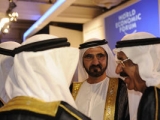 |
UAE eyes 65% rise in GDP per capita by 2021(0) If further proof was ever needed that the UAE’s confidence was well and truly back, it came with the UAE prime minister Sheikh Mohammed bin Rashid Al Maktoum ‘s new goal that the country’s GDP per capita would rise by 65% over the next seven years, just in time for the UAE’s 50th birthday. CONTINUE READING |
 |
GCC oil majors seek to reverse the ‘resource curse’(0) Oil and gas exporters such as the UAE, Saudi Arabia, Qatar and Oman are succeeding in reversing the so-called “resource curse”, but they still have a long way to go before realizing their full potential. CONTINUE READING |
 |
UAE gas reserves offer fresh fiscal hopes(0) Natural gas importer UAE is working on a number of projects that could boost the country’s natural gas production… CONTINUE READING |
|
Minerals draw UAE, other investors to Guinea(0) Guinea’s impoverished economy received a major boost in late November when Abu Dhabi’s Mubadala Development Company signed a deal with the government to build an alumina refinery, which is expected to attract an estimated USD 5 billion in foreign investment. CONTINUE READING |
 |
UAE banks get kudos for improved balance sheet(0) The UAE’s banking sector’s solid performance over the past few quarters has earned the praise of ratings agency. CONTINUE READING |
 |
Asia’s net oil imports to reach over 25m bpd by 2035(0) Asia Pacific’s net oil imports by 2035 are equivalent to the combined production of major OPEC producers such as Saudi Arabia, Iran, Iraq, Kuwait and the UAE, according to the Asian Development Bank. CONTINUE READING |
 |
Muslim consumerism is linked to real economy sectors(0) By Rushdi Siddiqui Dubai actually has most of the attributes of an Islamic economy. For example, an activity log for a person in Dubai may entail: He lives in a residence that is Islamically mortgaged by, say, Tamweel, and it is ‘insured’ by Takaful Re Limited. The profit rate payment is off Thomson Reuter’s six-month Islamic Interbank Benchmark Rate (IIBR). He has peace of mind as his biggest ‘asset’ is Shariah-compliant. |
 |
UAE’s Aldar explores Kazakhstan real estate potential(0) Fresh from completing its merger with Sorouh Properties, Aldar Properties has made a major international move by kicking-off its Kazakhstan project. CONTINUE READING |
 |
Uniting Islamic finance and halal at conferences(0) By Rushdi Siddiqui, co-founder and MD of Azka Capital Conferences provide an insight on the road ahead for industries, products, innovations, and services. The speakers are assumed to know more than most on the other side of the podium. One of the interesting developments in the Islamic finance conferencing arena has been the introduction of topical issues from the $2.1 trillion halal industry. Is it because there is no ‘new new’ in Islamic finance or the realisation that Islamic finance needs to build bridges to new areas linked to the real economy or both? |
|
Innovation and invention in modern Muslim world(0) By Rushdi Siddiqui, The Islamic Development Bank, held their 24th Annual Symposium in beautiful Dushanbe, Tajikistan, invited me to chair a session on ‘Innovating for Economic Development in IDB Member Countries’. At first glance, the words ‘invention’ and ‘innovation’ are not typically associated with the Muslim world. The word ‘imitation’ (or reverse engineering) often is linked to the third world, Muslim majority countries. Yes, there is some element of innovation involved in reverse engineering, from pharmaceuticals to electronics, but it’s not something to be proud about to entice, say, foreign direct investment. The bigger question is, how much longer should the Muslim world continue to flatter via imitation, i.e., a ‘Xerox’ society. Innovation and invention have been traditionally linked to Islam/Arab/Muslims since the birth of the religion, but something happened along the way. We have become a society of buyers over builders, consumers over savers, exporters of capital and importers returns, hence, an unsustainable situation. The first revelation to the Prophet Muhammad (peace be upon him) was about reading: Translation: In the name of Allah, the Most Beneficent, the Most Merciful. Read: In the name of your Lord Who created. Quran: 96:1 Created man from a clot of blood Quran: 96:2 Read: And your Lord is the Most generous Quran: 96:3 Who taught [man the use of] the pen Quran: 96:4 and taught man that which he did not know Quran: 96:5 Reading implies searching and seeking information to the far corners of the world, from Arabia to China and beyond, that yields knowledge, which eventually becomes wisdom. A wisdom that gets applied for betterment of man (individually), society (collectively) and the stewardship for future generations. Thus, our predecessors have contributed to sciences, humanities, culture, arts, mathematics (algebra, logarithm, system of numbers), etc., and acknowledged by the likes of Prof Carole Hillenbrand’s book, ‘What the East taught the West.’ Furthermore, there is a ‘mobile’ museum, 1001 Inventions: The Enduring Legacy of Muslim Civilisation, .. ‘…1001 Inventions uncovers a thousand years of scientific and cultural achievements from Muslim Civilisation from the 7th century onwards, and how those contributions helped create the foundations of our modern world.’ It has been showcased in the GCC: Abu Dhabi, Doha, and Dhahran. There are number of theories, from conspiracy to self destruction, on what happened along the way for the Muslim world, as a whole, to become a ‘knowledge deficient society.’ We only have to look at the small number of patents filed form the Muslim world to the US Patent/Trademark Office, countries aspiring to become knowledge based economies in their 2020/2030 vision planning, countries establishing entities, like Malaysia’s Talent Corporation, to bring back the emigrated human capital, and so on. Innovation formula? There is neither an exact formula for innovation nor a firm timetable with milestones. Instead, innovation is about establishing a fluid enabling infrastructure, with accountable benchmarks, customised to the local situation. Some of the elements of enabling include: Initially government leads but removes itself from being a market participant to avoid crowding out affect, hence, a sunset privatisation of innovation Availability and accessibility of risk capital PLUS mentoring, Muslim majority countries are about collateral based finance, including Islamic banking. Therefore, funds alone will not result in success, but MUST include mentoring to include, say, opening doors to suppliers/customers, legal documentation, etc. Culture and cluster that is focused addressing national/regional needs, hence, one size fits all becomes a ‘white elephant’ project. Education both university oriented (reverse linkage) and harnesses power of street smarts via inclusion to offer market demand, not just based, solutions. First step The IDB has the credibility and financial muscle to possibly fast track innovation in selected Muslim countries like the UAE, Malaysia, Turkey, Saudi Arabia, etc., however, it must take a stakeholder approach. It must understand that the constraints of a country and work within those challenges to offer a market based solution as innovation is not only about economic development, but, as important, economic diversification. The benchmarks must be reasonable and measurable with two important milestones: employment generation and raising the gross national income (GNI). Thus, as a first step, IDB should create an Innovation Council (IC) for several selected member country as pilot programmes. The members of the IC may include financiers, regulators, businessmen, academics, etc., to give 360 degree review of the landscape and a pathway forward towards leading instead of following. The writer is co-founder and MD of Azka Capital, private equity advisory firm focused on halal industry initiatives, and he is an advisor to Thomson Reuters on Islamic finance and Halal industry. Views expressed by the author are his own |
 |
African farmland may hold key to food security(0) The UAE’s recent suggestion that Africa should develop agriculture free zones highlights how food-importing states view the continent’s great natural bounties. CONTINUE READING |
 |
Renewable energy to solve Africa’s power crisis(0) UAE’s Masdar Energy went against the grain by inaugurating a 15-megawatt solar photovoltaic facility in the West African state of Mauritania - the largest project of its kind in Africa. CONTINUE READING
|
|
Rushdi Siddiqui: Is the Islamic finance industry ready for social media?(0) By Rushdi Siddiqui, co-founder and managing director of Azka Capital Social marketing eliminates the middlemen, providing brands the unique opportunity to have a direct relationship with their customers. — Bryan Weiner. Today, it seems Islamic finance is still stuck at a hard-copy of stage communication (faxes) when the financial world has moved on to Facebook, Twitter, blogging, etc. Many Islamic financial institutions have Web sites, but how often is it updated beyond awards won? How many Islamic banks, takaful operators, Shariah consulting firms, industry bodies, etc, are on Facebook? Yet, the youth — its future clients — in many Muslim countries with Islamic finance are on Facebook. What about the cross-sell of Islamic finance to non-Muslims as an ethical alternative? These potential customers are an important cluster of social media and they are continuously looking for offerings aligned with their values. Several Islamic financial institutions have Twitter accounts, unsure how many of their (retail) clients are on Twitter. Do these institutions believe SMS, Internet and mobile banking is the “social media” connection to their clients? Maybe the culture of social media is lacking in, say, the GCC. But we saw how effectively social media was utilised during the Arab Spring. Fear Is there a fear of technology among Islamic financial institutions? The fear of hackers stealing from customer accounts and identity theft? They have heard about horror stories on hacking from US- and EU-based banks with allegedly better (read, more expensive) firewalls. Is there fear that social media connectivity will raise the level of transparency to conventional benchmarks standards and with accountability to follow? Put differently, will social media result in enhanced governance? It is not a bad thing in this post-credit crisis environment where companies are rewarded via a stable stock price and rave reviews for transparency and governance. Is there fear that “bad news” concerning Islamic financial institutions will spread like wildfire if (deeply) connected to social media? It will spread anyway as news organisation coverage is supplemented by bloggers and tweeters in real time. Resources Is it a lack of resource issue in having, say, a “chief social media officer”? It would appear that Islamic financial institutions have not looked at public relations and outreach as an investment in their brand, but, rather, a cost of doing business. Brand-building goes towards commitment to not only clients and staff, but long-term growth of the institution, including eventual cross-border expansion and future clients. Furthermore, during challenging market cycles, the message to the community, whose attention has become shorter, is the confidence inspiring “business as usual”. Guidance The Thomson Reuters Islamic Finance Gateway, or IFG, may just provide a guidance for Islamic financial institutions on understanding about the benefits of social media connectivity. It comes down to market intelligence, and the market place is the best source of “knowledge that powers” market movements. The community connectivity function of the IFG comes down to insights by industry experts making sense of the information overload, communicating about important sign posts on the road ahead and allowing community to interface with experts on a secure platform. LinkedIn, Twitter At the behest of colleagues, I joined LinkedIn about a year ago to connect with like-minded colleagues globally to share ideas and articles. Outside of unsolicited endorsement of people I have connected with, but, not worked with, it has been a pleasant experience, especially reading leadership articles. Furthermore, I started tweeting a few months ago, initially on Islamic finance and the halal industry, but have expanded to issues related to Muslims, Islam, Muslim countries, etc. It has been a fulfilling experience and I should have joined much earlier. Why? 1. Tweeting forces one to convey their message in 140 characters, becomes very important in today’s world of short-attention span and information overload. Islamic financial institutions should be able to convey thought leadership within these constraints. 2. Twitter brings news in real time from multiple eyes, hence, it’s a multiple “op-ed” of the market place on the subject matter. The raw news provides more colour than polished sound-bites. 3. Twitter has allowed me to follow the likes of global leaders like His Highness Shaikh Mohammed bin Rashid Al Maktoum, Vice-President and Prime Minister of the UAE and Ruler of Dubai, and his comments in real time. He first tweeted about Dubai being a hub for an Islamic economy a few months ago. Conclusion Shaikh Mohammed’s tweets, at the time of writing this, on the performance of UAE government standards should encourage Islamic financial institutions to engage and embrace the social media to not only connect, but also to report developments. Rushdi Siddiqui is co-founder and managing director of Azka Capital, a private equity advisory firm focused on halal industry initiatives, and an advisor to Thomson Reuters on Islamic finance and the halal industry. |
 |
UAE Lead’s Middle East Alternative Energy Push With Major Solar Project(0) Days after announcing a new energy minister, Abu Dhabi also launched the world’s largest concentrated solar power plant, in what marks a significant turn in the way the UAE views its energy sector. CONTINE READING |
|
Missing voice in Islamic finance industry: media(0) As part of the on-going dialogue with Muslim entrepreneurs linked to Islamic finance and Halal industry, today’s interview is about media coverage of Islamic finance. Meet Syaiful Naim bin Othman, founder/CEO of www.amilin.tv, and you see a man on a mission on connecting the masses to Islamic finance. What was your motivation and objective to start this venture? Media, much like food and clothing, is an important part of our everyday life. Through various mediums, radio, television, newspaper or the Internet, we are e-connected with a broad market place coming together based on common shared values. The global financial media has made economics, finance, banking, capital markets as part of our daily lives, whether we ‘turn it on’ whilst eating breakfast or working out in the gym. The world is now looking for growth markets and growth stories, and Islamic finance, OIC economy and Halal industry present compelling opportunities. However, the present approach to creating awareness, educating, addressing mis-perceptions and lifting the veil of mystery associated with this niche markets needs to be revisited. Our mission is to provide the fastest and most comprehensive Islamic finance headlines and news of major events set to shape our business day ahead. For me, we need to put our house in order and the solution is Amilin TV. An online web TV, Amilin TV focuses on Islamic financial news, the OIC economy and the Halal industry. We are the prime mover of Islamic finance news TV and we have the largest Islamic finance video repository on the Internet. To date, our hits for the Web TV include viewership from over 70 countries. Do you think the media understands the importance of Islamic finance? No, the story about Islamic finance is just not getting out, including majority of Muslims. Some think that Islamic finance is related to terrorist financial activity. Few think its just about prohibition against pork and interest. Others believe it’s just semantics combined with ‘smoke and mirrors.’ The industry has failed to educate and promote the ‘beauty’ of Islamic finance to the masses. Here, the media plays an important role, much like in conventional finance, in addressing information gaps, vacuums and dis-information. From my point of view, we need to educate the media first. But, at Islamic finance events, media is ‘just’ a sponsor and not involved as panelists or even panel sessions on media. The passive approach does not contribute to the dialogue, it’s a gatekeeper to its readers and viewers, hence, needs to be heard. To attract more online subscribers what is the most important for Amilin TV? We will launch our Islamic finance business talk show this year. It will be looked upon as a turning point for the Islamic finance industry to move to the next level. It will provide the fastest and most comprehensive Islamic finance headlines and news of major events set to shape our business day ahead. Featuring analysis and breaking news on the Islamic financial market, our talk show will also broadcast global equity market reports presented in considerable banter between hosts and their guests. Our target subscribers are affluent financial professionals from both the conventional and Islamic banking sectors. What are your challenges and plans going forward? When we first started a few years ago, we had many challenges for an on-line broadcasting entity. The financial industry is covered by the usual suspects, Thomson Reuters and Bloomberg, however, we have managed to find our target niche market. We have been recognised by the industry as the only online Islamic Finance news TV. If you Google Islamic finance TV, Amilin TV ranks number one and if you search for Islamic finance news, Amilin TV ranks number two. We are also a media partner and official web TV for international Islamic finance and Halal events happening in among others, Kuala Lumpur, Russia, Dubai, Doha, and Jakarta. Our vision is to become the mainstream financial media. Currently we have our broadcast studio in Kuala Lumpur and plan to set up our next studio in Dubai soon. Why Dubai? His Highness Shaikh Mohammed bin Rashid Al Maktoum, Vice-President and Prime Minister of the UAE and Ruler of Dubai, has announced his vision and initiative for an ‘Islamic economy’. Any country aiming to become the global hub in Islamic economy needs this kind of business media as a marketing arm to promote and propagate their Islamic finance agenda to the world. The writer is the Global Head of Islamic Finance and OIC Countries for Thomson Reuters. Views expressed are his own and do not reflect the newpaper’s policy |
 |
Looking for halal alpha in Dubai(0) By Rushdi Siddiqui, Global Head of Islamic Finance, Thomson Reuters Halal needs to move from certification and ingredients to an asset class It is one of the legs of an Islamic economy for Dubai, as recently mentioned by His Highness Shaikh Mohammad Bin Rashid Al Maktoum, Vice-President and Prime Minister of the UAE and Ruler of Dubai. It is a $640-billion (Dh2.35 trillion) niche market with greater reach and traction than Islamic finance for Muslims. It is also a consumer non-cyclical, linked to the real economy and asset-backed. Furthermore, companies such as Nestlé, Unilever, Cargill, Kraft and other Fortune 500 companies produce goods for this niche market. We’re talking about the halal industry: from food and pharmaceuticals to cosmetics, logistics and more — $2.1 trillion in total, with the food sector comprising about a third. According to a consultant study, “Consumer spending on food in the GCC is expected to reach $106 billion in the next five years … [and] Saudi Arabia and the UAE together account for around 75 per cent of the region’s total food retail market”.
Halal was in the Arab Spring countries long before Islamic finance, and they are now just talking about building enabling environment for sukuk. Here, an agriculture sukuk would have a more direct impact than general purpose sukuk.
Halal presence is a better indicator of Muslim purchasing power than the traction of Islamic finance in Western countries. “Halal has gone mainstream,” says Darhim Hashim, CEO of the International Halal Integrity Alliance. “There are now aisles — no longer shelves — in supermarkets such as Asda and Tesco, dedicated to halal products.”
Halal needs to move from the present conversation of certification and ingredients to an asset class. Thomson Reuters and Idealratings launched the world’s first halal food index, the Socially Acceptable Market Investments Halal Food Index, at the World Halal Forum in 2011. At the launch, there were 240 companies from 15 Muslim countries, including seven from the UAE, thus facilitating inward investing and intra-Organisation of Islamic Cooperation (OIC) investing.
Two points need to be addressed. Firstly, Muslims do not control the halal food supply chain (the OIC, overall, are net importers), especially at the important midstream, manufacturing and processing stages. Secondly, the present approach to food security by way of agriculture, food and land bank funds has yet to meet expectations.
There is a third way, beyond domestic growth and importing, that is less about securing food supply and more about controlling it. However, to control it, one has to know the farm to fork to finance supply chain, as well as traceability, leakages and the like.
Shaikh Mohammad’s announcement has reached the far corners of the food and finance world, and Dubai has the vision, will and means to address food security and build a global brand in the food industry, much like Emirates is for air transportation.
— The writer is Global Head, Islamic Finance & OIC Countries, Thomson Reuters |
 |
Crescentrating Plans Halal-Friendly Travel(0) By Rushdi Siddiqui, Global Head Of Islamic Finance at Thomson Reuters The “Muslim travellers” is an important segment in the travel industry, however, not many hotel chains or destinations haven taken a serious look at their needs. So, many travellers have to manage their requirements while travelling or stick to familiar holiday destinations. Now the media is full of reports on Muslim Travel market, as there are a host of destinations, hotel chains, tour operators etc., all targeting the billions of dollars of these travellers. |
 |
Shekra.com: Shariah-compliant crowd funding takes off(0)
By Rushdi Siddiqui, Global Head of islamic Finance at Thomson Reuters It also an opportunity to attain the core ethical values of Shariah and the intended purposes of Islamic Finance “to do good” by contributing to socioeconomic development. |
|
Rushdi Siddiqui: Why I decided to finally tweet(0) February 04, 2013 FEB 4 — I never thought I would say that publicly, but the lesson learned is, “Never say never!” “Never’s a hard call, isn’t it? Never-ish.” — Terry Venables Tweeting: Reasons and dangers First, I wanted to understand why people tweeted. Because they have something of substance or importance to say? On hindsight, probably not, because hyper-connectivity updates make a minute ago seem historical! Because they want to connect with “like-minded people?” On hindsight, some of those “minds” should be blocked! Because they want a following? On hindsight, thank God for the ability to block, as this becomes an addiction for some! Because they want to only follow, say, a famous athlete, movie star, etc? Or that they just want to be part of a fad and then drop out when it fades? Second, I wanted to know the “dangers” of tweeting. That which has been tweeted cannot be deleted. Possibly retreated. But from a public relations 101 angle, that which cannot be deleted is a disaster for reputation management. The 24/7 information download world we live in reminds us more often than not of our missteps and failures than it does our successes. Hence to say “be careful before touching send button” cannot be overemphasised. The apology tweet cannot undo the damage done, case in point people like Rupert Murdoch and many athletes, politicians, business leaders and why even some spiritual leaders. There is also the danger of pranks played on tweet accounts. Ones opened in your name or those hacking into your account to score a point or to make a statement for individual/group benefit. This has happened to political and spiritual leaders of late. It’s interesting to note that politicians, like US President Barack Obama, have a team that tweets on their behalf. Why you ask? These are what you call an “impersonal tweet” driven by careful public relations management. The tweet can bring “rain or sunshine” to the subject matter depending on prominence of the tweeter. For example, during a recent college football game, the sportscaster made remarks concerning the beauty of one of audience members, and she suddenly went from less than 10,000 followers to over 200,000 followers (including a superstar basketball player by the name of Lebron James). So tweets can create overnight fame or notoriety depending on which side of an issue one stands and supports, and the reaction one poses to responses. There are the spam tweets, hence, the nuisance of time consuming blocking comes into the picture. Third, and probably the most difficult question, what value will I bring into the tweeting wide world? I come from the realms of Islamic finance and halal hence, and, much like TV sitcom actors, we have generally encased ourselves in that narrow arena. But this is what we do, and does not define who we are. At one level, all of us have secret aspirations of becoming superstar athletes, CEOs of Fortune 500 companies, top journalists, movie stars, doctors, scholars, can-do politicians, inventors and entrepreneurs, better dads/moms, sons/daughters, even bad guys, etc., where what we say moves companies, markets, voters and arguments. Thus, it seems tweeting is about being the first on headline commenting and/or reporting from the mundane (subjective) to the moving. Exposure and experience The nature of my “calling card”, global in title, has made me an international road runner. It has exposed me to so much in the last 15 years, from airline lounges, airlines and journeys of, at times, 17 hours, airports, hotels, taxis, tourist traps, meetings, etc. Thus, at times, I feel like a secret shopper, business development officer (outside my profession), observation tower (of people, marches, events, speeches, natural phenomenon, etc.), roving reporter, etc. I want to share these moments, in the form of 140-character mini op-eds, but never took the first step for a number of reasons (probably intimidated by such media), and, on hindsight, missed the opportunity to connect and learn from others (much earlier). Initially, I would have probably tweeted to connect with fellow practitioners in Islamic finance and halal (large community?), and then expanded to the more pressing issues in the Muslim world, from sports to athletes to policy to tolerance to hypocrisy, and connectivity and perception influence of the non-Muslim world. Lincoln quotes for Muslims Let’s start with a tweet for all Muslims and non-Muslims: “I don’t like that man. I must get to know him better.” Abraham Lincoln, 16th president of the US. How is this even different to the basic teachings of Islam or any other religion? Muslims, including myself, are you reading, understanding, and executing? The non-Muslim world needs to heed the advice of this statesman towards Islam. He also said: “… Nearly all men can stand adversity, but if you want to test a man’s character, give him power.’” All of us have examples of people we know or can predict who will fail or have failed this character test! The Muslim world is not only cursed with black gold (oil), but also power without accountability still prevails in many parts of its society. Do we thank the colonial geographic boundaries that seem to have created mental barriers? What would I ask in the world of Islamic finance and halal I would tweet the following: Students: they are spending money on courses, diplomas, etc., and want meaningful jobs upon graduation; yet, we talk about shortage of skilled people, huh? Walk the talk, Islamic finance. Scholars: they are entitled to a livelihood to support families, but what is reasonable number of board membership? Man on street: Islamic finance is not Qard Hassan (benevolent loan) or charity, but about profits not profiteering. Where are the imams, as they are the local trusted gatekeepers to the community, and, in Arab Spring countries, it’s about the mass retail. Disenfranchised (bulk of the 1.6 billion Muslims): we are still waiting for Islamic finance and many of our Muslim-majority countries are non-co-operative, whom do we turn to? Shadow banking system is the only alternative as only collateral is life/blood? Regulators/public sector: need to establish foundation for market, initially lead market and then regulate market, and cannot be an indefinite market participant as the “crowding out” phenomenon kicks in. Anti-shariah movement: present your evidence on it financing terrorism, Malaysia and Dubai would host such an event to discuss its veracity. Conventional institutions in Islamic finance: are you about absorbing liquidity or providing value and commitment? HSBC Amanah downsized operations in a number of countries where margins are not being met, profits versus commitment (beyond short term). Islamic finance: you have proved you are viable (alternative), credible (non-Islamic institutions involved), durable (better survived the recent external shock, but not by much), but what are your sustainable and scalable growth plans? Halal industry: what is your story (brand)? Why are you even more fragmented than Islamic finance? Don’t you realise you’re an asset class? Malaysia, you will just lose the halal hub title if you do not focus in building such companies (inorganically) as global brands versus the continued comments of Jakim, HDC, etc. Modern-day lifetime achievement award for Islamic finance: Sh Mohammad bin Rashid Al Maktoum, Ruler of Dubai, VP and Prime Minister of UAE, two words: continued commitment. The rest of the world: what is Islamic finance and how has it changed lives, inspired humanity, or rather where is IF in moments of global tragedies and catastrophes? OIC tweets I would tweet on following: Why do we have “His/Your Highness”, “Your Majesty”, “Sultan”, “Emir”, “Prince and crown prince”, “Datuk and Tan Sri”, “King and Queen”, etc. when the Prophet of Islam did not have such references. Yes, we respect our leaders and titles like President, Vice-President, Prime Minister. Why can’t we make them more human, approachable and accessible? Aren’t these titles creating a mental and social class war/barrier? Is this an effective way to rule in the 21st century? Where is the healthy food in Malaysia? Yet, what little is available tends to be expensive! I have been coming to Malaysia for 15 years, and go to the gym religiously, and rarely see Malaysian men there. Obesity-cum-diabetes is a major issue in the GCC, and Malaysia may not be far behind! (But Malaysian men may be spending time on football pitches and badminton courts — who knows?). We have 57 Muslim countries in the OIC, but what clustering has captured the investing world’s attention like BRICS? I suggested SAMI + 3 — Saudi Arabia, Ankara (Turkey), Malaysia, Indonesia, Egypt, Pakistan and Nigeria. It could also be MIST + 3, but MIST implies a fog, haze, etc, lack of clarity. To tweet or not When Microsoft started making computers in the ‘70s, it wanted to put a PC in every home. In less than 40 years the world has changed and today we have a computer in every pocket/handbag. The dangers of tweeting remain. Once you start, it is difficult to get out of it. It may rule your life (i.e. one keeps checking the phones at the expense of real-life human contact). But like everything in life, moderation is key in action. Need to tweet to connect with a society wired on social media, yet to do so with wisdom, caution and more importantly substance. There are always the red herrings of “committed” tweeting communities that feel the need to share their every move — it is this culture that perhaps still stops those who would/could benefit the world of “tweet” from tweeting. In conclusion, to tweet or not to tweet is no longer the relevant question to being relevant today. Maybe the question should be — do I tweet to share my next appointment or my next meal or my next relationship — or do I tweet to make the world a better place? To do my small part in making that difference? So, for those about to tweet, we salute you (but be careful and responsible). |
 |
Rushdi Siddiqui on Dubai’s timely Islamic finance strategy(0) By Rushdi Siddiqui, Global Head of Islamic Finance, Thomson Reuters As I was on DIFC’s Islamic Finance Advisory Council (2007) and presently on Malaysia’s Securities Commission International Islamic Advisory Council, hence, a number of colleagues have asked me about the recent announcement by His Highness Shaikh Mohammed bin Rashid Al Maktoum, Vice-President and Prime Minister of the UAE and Ruler of Dubai. Shaikh Mohammed, stated: “Our cosmopolitan outlook to doing business continues to be our economy’s driving force. Adopting a modern and scientific framework for Islamic economies worldwide, here in Dubai, meets the demand from local, regional and international investors for a central hub to invest, grow and do business.” |
 |
Saudi-China nexus(0)
China recently replaced the UAE to become the Saudi Arabia’s largest exporting market. The Asian giant’s share of Saudi exports stood at 15.4%, according to National Commercial Bank report. |
|
Legatum Institute Survey: Prosperous UAE(0) The UAE is the most prosperous Middle East state and among the 30 most prosperous countries in the world, according to the latest edition of the annual Legatum Institute Survey. CONTINUE READING |
 |
UAE’s Credit Crunch(0)
The UAE Central Bank’s decision to extend its deadline for commercial banks’ to comply with its regulations for another six months comes as a relief to the financial institutions. CONTINUE READING |
 |
Oman’s quiet boom(0)
While regional stalwarts Saudi Arabia, UAE and Kuwait grab all the economic headlines, the Omani economy is quietly showing impressive growth and resilience. CONTINUE READING |
 |
UAE Banks’ Real Estate Hangover(0) Muted lending and deleveraging continues to haunt UAE banks. While most regional banks have shrugged off the after effects of the global financial crisis, the UAE banks remain hamstrung by the real estate crash and exposure to Dubai Inc’s debt woes. CONTINUE READING |
|
The weakest link: short-term liquidity and how it impacts Islamic finance(0) By Rushdi Siddiqui, Global Head of Islamic Finance at Thomson Reuters Let me start off with a loaded question, what one word in Islamic finance is as important as Shari’ah, tax, accounting, regulation, and standardisation (STARS)? Here are some clues: Islamic finance has institutions called Liquidity Management Center (LMC) in Bahrain, Liquidity Management House (LMH) in Kuwait, and International Islamic Liquidity Management Corporation (IILM) in Malaysia, plus other similar organisations with different names. The UAE Central Bank has been encouraging commodity Murabaha certificate of deposits (CDs) and expanded to repurchase (repo) offerings to address short-term UAE Islamic bank needs. The Central Bank of Bahrain (CBB) has been issuing liquidity, addressing Sukuk Al-Salaam, short term, non-tradable securities. Index providers have created Shari’ah-compliant liquid blue chips, similar to the Dow Jones Islamic Market International Titans 100 Index. At many of the Islamic finance conferences, there are speakers and sessions dedicated to liquidity management risk along with credit, operational, market, and Shari’ah non-compliant risk. Thomson Reuters launched the Islamic Inter-bank Benchmark Rate (IIBR), decoupling from LIBOR, an indigenous innovation for Islamic banks to manage their own short term liquidity. The Islamic Financial Services Board (IFSB) released documents directed towards enhancing reliability and stability in the industry, through The Development of Islamic Money Markets (technical notes), earlier this year. The Bursa Suq Al-Sila (in Malaysia) is a commodity trading platform, underlying is, say, palm oil, directed towards facilitating Islamic liquidity management. Well if you haven’t spotted the common thread, in a word it is liquidity and it goes with asset-liability matching. In Islamic finance, there has been a historical mismatch because of the lack of robust short-term money market instruments; primarily reliance on two party bi-lateral commodity Murabaha and Wakala agreements, to manage the liquidity, surplus and deficit of Islamic banks. The challenges associated with bi-lateral agreements includes counter-party credit risk, meaning that the lending entity may not be able to get its funds back with profit, if the receiving entity goes out of business. Obviously, the situation becomes more pronounced if subjected to external shocks, like the credit crisis in 2008, where liquidity freezes, hence, presenting fire-priced asset sales as the only alternative with the resulting ‘systemic’ risk to the niche industry. The short-term liquidity challenge has also produced something called ‘leakage,’ where Shari’ah-compliant funds are placed in ‘conventional’ spaces. For example, the CEO of CIMB Islamic Bank, Badlisyah Abdul Ghani, stated during an interview in 2007 that, “there is nothing wrong with commodity Murabaha as a structure … what is not liked is when proceeds … are used for non-Shari’ah purposes … this leakage of Islamic funds is huge … We estimate it is over $1.2 trillion … mostly invested in US Treasuries and non-compliant investment products … There is continued chatter in the Islamic finance market place about authentic Shari’ah-based solutions, as today’s offering, to address short term liquidity, is about either removing the Haraam elements or placing Islamic ‘wrappers’ on their conventional counter-part products. However, it must be understood that Islamic finance is an immensely small sub-set (valued at $1.2 trillion) of conventional finance (valued at over $100 trillion) and of course much younger, four decades versus four centuries. And to be fair yes, Islamic finance needs to stop using its infancy as an excuse and to dissociate from the law of necessity, as Islamic finance solutions are gradually surfacing. Let’s also manage expectations accordingly on what issues Islamic finance can resolve today within this niche industry, before proposing it as a solution for the ills of conventional finance. Today, Islamic finance is more about incomplete product pushing at the national/country level, than providing holistic financial and financing solutions. For example, conversations are invariably raised on the inefficiencies, such as the inability to achieve economies of scale/size or the lengthy time frame it takes to bring a Sukuk to the market in the GCC, associated with a lack of standardisation, hence, one possible reason that the conventional financial industry has not yet taken IF seriously. Thus, if we do not have a ‘unified’ and efficient approach to addressing some of our major issues like short term liquidity, then it is going to be a challenge for others to accept our advice regarding their concerns. To grow Islamic finance to $2 trillion and cross-sell beyond its traditional markets, fundamental, not reactive, and foundational, not bi-lateral, approaches are needed and necessary. The thinking of ‘if, it ain’t broke, what you gonna fix,’ is no longer applicable to addressing short term liquidity in Islamic finance. To get to the end-goal of so called ‘Islamic’ purity, the industry, with guidance from regulators, has to go through interim tolerance parameters that are time consuming to avoid self-destructive destabilisation. Islamic finance has to, at one level, reflect its age and maturity, and not that of the more established conventional finance. In fast tracking solutions, the law of unintended consequences kicks in, where the solution actually creates more problems. Thus, the alternative approaches in different geographies to, say, liquidity to asset-liability mismatch is the industry recognising a challenge and transparently offering suggestions to find a solution. This reinforces the fact Islamic finance, today, is fragmented and domestic in nature, i.e., pieces in a jigsaw puzzle. With the recent ‘conventional banking’ scandals over alleged Libor manipulation and money laundering, this openness needs to be both acknowledged and commended! |
|
The Weakest Link: Short-Term Liquidity & How It Impacts Islamic Finance(0) By Rusdhi Siddiqui, Global Head of Islamic Finance at Thomson Reuters Let me start off with a loaded question, what one word in Islamic finance is as important as Shari’ah, tax, accounting, regulation, and standardisation (STARS)? |
 |
Rise of Arab Social Media(0)
The UAE has more than a million LinkedIn users, Egypt has a quarter of the region’s Facebook users and the most popular for Twitter was Bahrain, according to latest data. And guess which brand was the most popular among UAE Facebook users? CONTINUE READING |
 |
UAE’s Twin Masterstrokes(0) The UAE has once again demonstrated impressive strategic thinking with the launch of a new oil pipeline that bypasses the Strait of Hormuz and the construction of the Gulf’s first nuclear plant. CONTINUE READING |
|
SPECIAL COMMENT: Ramadan Wish List For Islamic Finance(0) By Rushdi Siddiqui, Global Head of Islamic Finance, Thomson Reuters The Goal: The central issue is about the industry controlling its own destiny “Behind every success is endeavour… behind endeavour, ability… behind ability, knowledge… behind knowledge, a seeker ….” Unknown. As the blessed month of Ramadan arrives, here is my “seeking” list for Islamic finance. It’s not about another voice asking when the International Islamic Liquidity Management Corporation (IILM) will issue its first paper or disagreeing with CIMB Group CEO Datuk Seri Nazir Razak’s comment on “rolling back” government’s involvement in business, but more to do with controlling our own Islamic finance manifest destiny. |
|
UAE Banking Worries Overdone?(0) Public sector lending limits may not be good news for Emirates NBD and National Bank of Abu Dhabi, says SICO, but worries over the UAE banking sector’s health are overdone…. CONTINUE READING |
 |
Gulf States’ Budget Breakeven Oil Price Declines(0) Breakeven oil prices for Saudi Arabia and the UAE decline for the first time in years, according to Deutsche Bank, which is great news for the
GCC, especially at a time of falling crude prices and global and regional economic uncertainty. CONTINUE READING |
 |
Structured Islamic Finance in Brazil(0) By Fehmy Saddy, PhD, President, FS Partners SA Food security has emerged as a global concern in the context of world population growth. World population is projected to increase from its current level of 7 billion to 9 billion by 2050. A recent article by Lester R. Brown on the “New Geopolitics of Food” reveals the prospect of future wars over food resources. Lubna Al Qasimi, UAE’s Minister of Trade reported recently that food imports of the GCC region could more than double over the present decade. They would grow from $25.8 billions in 2010 to $53.1 billions in 2020. Projections were based on the expected population growth of the GCC region, which could reach 50 millions by the end of the decade. The Minister concluded: “for a region such as the Gulf, there is the added urgency to secure food sources that are safe and sustainable” Brazil is the largest producer and exporter of commodities. However, four Western companies, namely, ADM, Bunge, Cargill and Dreyfus, better known by their acronym ABCD, control 70%-80% of the world food market due to their large-scale farming and financial strength. They are referred to by Brazilians as the “Four Mothers”, a designation reminiscent of the “Seven Sisters,” the infamous oil cartel that controlled oil production and pricing until the creation of OPEC in 1960. MENA countries depend on these Western multinational companies for their food. In GCC countries, the situation is even more acute as imports amount to over 90% of their needs. Therefore, there is a growing concern that dependence on the food multinationals has far reaching ramifications on their social, political and economic development. Islamic Finance of Agriculture The prohibitive interest rates charged by Brazilian banks make Islamic financial instruments ideal financing tools. There are two areas where Islamic financial institutions can use Islamic financial instruments in Brazil: agriculture production and trade. They could finance acquisitions of farms and agro-industries, and support corporate borrowers. Consider the following: 1. Buy and Lease back farmlands Brazilian farms are typically large with thousands of hectares cultivating diverse crops: corn, soybeans, sugarcane, coffee, sorghum, cotton, etc. These farms fall regularly behind on their payment of high-interest loans, and file for judicial protection from creditors, or bankruptcy. Islamic financial institutions could use the sukuk instrument to replace conventional bank loans, with a mortgage on the farm. In most cases, it is attractive to purchase the farm and lease it back to the owner or to agricultural funds, with fixed lease payments. The lease contract would provide an exit option to sell back the farm at maturity at market value. Historically, Brazilian farmlands have increased in value by 10-12% per annum. In most cases, an acquirer with ready cash can negotiate a reduction of existing loans by at least 50% of their face values. 2. Acquisition of agricultural industries Some agro-industries face the same problem of high interest loans and fall back on their payment. Islamic financial institutions could use the above mechanisms to replace conventional loans with a sukuk instrument, or acquire the company under a buy and lease back contract. There are several opportunities to purchase sugar refineries, for example, with their proper agricultural farmlands for a nominal price, and defer payment of loans over a period of 5-8 years, and even more for obligations due to government entities. 3. Contracting Farmers for a percentage of the crops One of the oldest forms of Islamic finance is Muzara’a, a profit-sharing scheme that is widely used in the MENA region and much of the Muslim world, whereby an investor advances a certain sum to the farmer for a percentage of the crops. The low cost of production and higher productivity of Brazilian farms, provides higher returns. Islamic banks could use this mechanism for the account of clients. In any case, they have no difficulty selling the commodities in their home markets. 4. Contracting Farmers for the production of commodities Another from of agricultural financing is to advance certain sums to farmers to enable them to pay for seeds, fertilizers and other plantation expenses, in exchange for certain crops at pre-determined prices. The sums advanced would be secured by a mortgage on the farm. Indeed, the food multinationals referred to above, use this ancient Islamic financing method to control production and markets. 5. Islamic Commodities Trading A controversial issue in Islamic finance today is the synthetic commodity contracts used by Islamic banks to support their Treasuries. In its basic form, an Islamic bank (in fact, a borrower) purchases the commodity contract at certain price, with a delayed payment date, and sells it back immediately to the same seller (or a sister company) at a lower price for cash, without ever taking delivery of the underlying commodity or asset. The difference in price is, of course, the time cost of money, essentially an interest payment. Most Islamic scholars consider this method as a legal “Hyla” (“Trick” in English), which does not qualify as genuine form of Murabaha. Islamic financial institutions could undertake genuine Murabaha transactions by financing actual commodities sale contracts to actual buyers in the MENA or GCC regions. Islamic financial institutions dealing with such contracts may develop an inter-banking Murabaha platform among themselves to generate liquidity for their own treasuries. Under this platform, Islamic financial institutions would buy and sell commodities contracts at prices that reflect different maturity dates and delivery schedules. In conclusion, there are numerous opportunities in Brazil suitable for Islamic financing of agriculture, as well as in other sectors. Islamic financial institutions could use Sukuk to support corporate borrowers in other vibrant sectors and benefit from high returns secured by real assets. However, two issues are always on the minds of financial institutions: exit strategy, and currency risk. With respect of the former, the Islamic methods of financing discussed above would include exit options in a highly liquid market. With respect of currency risk, lease payments are adjusted annually to the Brazilian Government deposit rate, currently around 10%, and inflation, estimated at 6.5% for 2012. |
 |
Exclusive: Lessons for Islamic Finance Expansion - Emirates Airline(0) By Rushdi Siddiqui, Global Head of Islamic Finance, Thomson Reuters Islamic finance has reached it natural market share in certain markets according a recent A.T. Kearney report, hence, an early ‘amber colored flag alert’ on the need for international expansion. Islamic finance needs to find an example of a model company, ideally from the Muslim world, which has become a global player based upon customer service, unique selling proposition, innovation, demand, and a charismatic leader. Should it also look to the west, and examine the likes of Google, Apple, Coca Cola or Pepsi, ExxonMobil, etc.? Does it look at the management style of former GE Chairman Jack Welsh or the vision of the late Steve Jobs? |
 |
Qatar, Kuwait & UAE’s Ecological Footprint Biggest in World: WWF(0)
Here’s a list Qatar would not want to top: The World Wild Life Fund (WWF) has ranked Qatar as the country with the largest ecological footprint per capita in its latest report. The tiny country is joined by neighbours Kuwait and the United Arab Emirates as the three nations with the largest ecological footprint - far exceeding other countries. READ MORE HERE |
 |
WEF: How Trade-Friendly Is The Middle East?(0) Gulf economies, led by the UAE, have fared quite well in a World Economic Forum focused on world’s trade-friendliness and access to global markets. The UAE was ranked 19th among 132 countries in an in-depth survey conducted by the World Economic Forum. Oman, with a global ranking of 25, surprisingly emerged second among Arab countries, with Saudi Arabia close at its heel, at 27. READ MORE HERE |
|
Special Comment: Hitting the glass ceiling?(0) By Rushdi Siddiqui, Global Head of Islamic Finance, Thomson Reuters To grow, Islamic banks must compete with conventional lenders Dedicated Islamic banks are generally national in nature and in certain markets have reached their ‘natural market share’ for Islamic banking, according to an A.T. Kearney study. A recent report by the consulting firm A.T. Kearney, The Future of Islamic Banking, and a Reuters article, ‘No windfall from Qatar ban on Islamic windows’, have generated much productive chatter globally. |
 |
Muslims on Wall Street: Pragmatic over dogmatic(0) By Rushdi Siddiqui, Global Head of Islamic Finance, Thomson Reuters The New York Times recently interviewed several American Muslims, including me, working in the financial arena for an article Muslims on Wall Street, Bridging Two Traditions. It explored two ‘conflicts': Muslims working in conventional finance may encounter ‘interest’ against their faith, and challenges of abiding by Islamic ‘traditions’ in a secular workplace. Today, it seems to an outsider, the burning issues for Muslims on Wall Street include prayer breaks, fasting and productivity, bonding after-office drinks, shaking a woman’s hand wearing a hijab, and structuring instruments dealing with (the prohibited) interest. This cannot be what Muslims are about. Also, more credit must be given to working non-Muslim colleagues on understanding Muslim sensitivities. Common shared values Muslims, like other people with strong beliefs, do not see themselves exclusively focused on or defined by such issues. Islam has spread throughout the world because of its dynamic nature, where it influences local customs and is ‘influenced’ by the older local culture. Religion is a private matter and it’s looked upon as foundation for building inner discipline and external strength to address challenging situations. People of faith, like their secular colleagues, want to climb the corporate ladder and break the glass ceiling to get to the executive floor, if not the corner office. Muslims have been on Wall Street and High Street for many years, if not decades, and it’s only now they are being noticed. The difference between then and now is there are more Muslims in the financial sector and non-Muslim colleagues know more about Islam because of a combination of internet, 24-7 news, 9/11, documentaries, Dubai’s accomplishments, Islamic finance and personalities like His Highness Shaikh Mohammad Bin Rashid Al Maktoum, Vice-President and Prime Minister of the UAE and Ruler of Dubai. It should be noted that many Muslims were involved in the Occupy Wall Street movement because of common shared values. In the New York Times article there are two quotes that best summarise how Muslims, residing in a non-Muslim country such as the US, should think about and approach a place of work and perception of fellow workers. “I think Muslim professionals are too sensitive and underestimate our co-workers,” comments a consultant in the article. “Seek the opportunities and firms that speak to their set of values, expertise and passion,” said Mohammad Al Arian, CEO of Pimco. Just as an employer interviews a potential employee, the latter also needs to interview the former. I have worked at two multinational companies in the US, heading their Islamic finance business, in New York. First at Dow Jones Indexes for 10 years and now at Thomson Reuters. A common denominator for international companies is their diverse employee base due to extensive international presence, including many Muslim countries. The corporate culture in these companies reflects common shared values formalised in codes of ethics. Thus, these companies understand ‘sensitivities’, and have high expectations of all employees. As Muslims working in the West we do have a tendency to initially “underestimate our co-workers” in understanding our rituals (prayers, fasting, etc.), and our prohibitions (alcohol). While it could be attributed to many things, such as prejudices, with time there is a mutual understanding and respect. The New York Times article used examples of Muslims finding places for praying during working hours or Friday prayers, and fasting during Ramadan. The article should have taken this one step further, and asked the Muslim worker about non-Muslim colleagues fasting or visiting a mosque. Most, if not all, of us have non-Muslim colleagues who have fasted, some partially (till lunch time) and others until sunset. One of the great attributes of Americans is they like challenges, and will push the envelope of endurance. Others have visited mosques, and made observations such as “nothing fancy inside”, “where are the stained glass windows, pews, gold crescent and star?” Maybe the article should have interviewed non-Muslims working in senior positions in Islamic finance in Saudi Arabia, the UAE or Malaysia on drinking alcohol, shaking hands with conservative women, breaking meetings for prayer time and so on. As senior executives, they are deemed ambassadors of the Islamic financial institution, and it does imply abiding by a certain level of Islamic code of conduct in public places. Bottomline The bottomline is that there is understanding and respect for rituals as long as teamwork, quality and deliverables are not compromised. Muslims working in non-Muslim countries do understand work is for work, even in Islamic finance, and informed non-Muslim colleagues understand basic tenets of Islam. Muslims need to continue taking a pragmatic, over dogmatic, approach to finding the balance between faith and finance. The writer is Global Head, Islamic Finance and OIC Countries, Thomson Reuters. Opinion expressed here is the writer’s own |
 |
Projects: Dubai beats Abu Dhabi(0) Dubai awarded more projects than Abu Dhabi for the first time since the fourth quarter of 2008. Dubai entities awarded USD1.8-billion of new projects compared to the UAE capital’s subdued USD596-million, respectively, according to EFG-Hermes. READ MORE HERE |
 |
End of Mega Malls In UAE?(0) Dubai’s retail sector could grow by 5.1% annually till 2015 to reach AED174.8-billion (USD47.6 billion), according to Oryx Business Intelligence. READ MORE HERE |
 |
Open Letter to IDB President: Mega Islamic Trading Platform(0) By Rushdi Siddiqui, Global Head of Islamic Finance, Thomson Reuters Dear Dr. Ahmad Mohamed Ali, President, Islamic Development Bank (IDB) Group: Asalaam Alaikum: The Islamic finance world welcomes your comments on the ‘Mega’ Islamic Bank to effectively compete against well capitalized conventional financial institutions. “…The ‘Mega Islamic Bank’ comes as an initiative of the Islamic Development Bank in its efforts to address the dearth of senior financiers, the absence of the Islamic tools of stock exchange and the absence of market liquidity between Islamic banks.” However, $1 billion, with $500 million in paid capital by the three founders (IDB, Dallah Albaraka and Qatar Government), is smaller than three existing Islamic banks, which have never addressed themselves as ‘mega.’ The three include Saudi Arabia’s Al Rajhi, Qatar’s Mashraf Al Rayan and Kuwait’s Kuwait Finance House (KFH). Furthermore, it seems the ‘mega’ story may be incomplete without Malaysia’s participation. |
 |
Rushdi Siddiqui: Interview with Daud Vicary Abdullah, CEO of Inceif(0) By Rushdi Siddiqui Daud Vicary Abdullah is an authority on Islamic banking and has contributed to a number of books on the subject. He has been in the finance and consulting industry for more than 38 years, with significant experience in Asia, Europe, Latin America and the Middle East. Meet Daud Vicary Abdullah, the president and CEO of International Centre of Education in Islamic Finance (Inceif), the global university of Islamic finance. |
 |
Where To Invest In The Middle East: Bank of America Merrill Lynch(0) With Gulf economies poised for growth on the back of strong macroeconomic policies, regional stock markets are also set for growth. The two most liquid GCC markets - Dubai and Saudi Arabia - are both up well over 20% since the start of the year, with the Egyptian market also rising an astonishing 33%. READ MORE HERE |
 |
Special Comment: Key-Person Risk in Islamic Finance(0) By Rushdi Siddiqui, Global Head of Islamic Finance at Thomson Reuters We already know about displaced commercial risk, credit, liquidity, operational, Shariah non-compliant, and markets risks in Islamic finance. What about ‘key-person’ risk in Islamic finance? What does a former Minister of Economy of France (Christine Lagarde), former Prime Minister of United Kingdom (Gordon Brown) and former under Secretary for International Affairs, US Treasury (John Taylor) have in common? They were all high profile public sector personalities pushing Islamic finance in their respective jurisdictions, and, upon leaving office, the movement’s momentum has been meandering or has stop ‘cold’ in the tracks. |
 |
UAE Economy Top Regional Pick For Barclays Capital(0) Barclays Capital picks Dubai as the best risk/reward play in the region. But while the outlook is optimistic, corporates will continue to feel the pain. READ MORE HERE |
 |
UAE Moves Closer To Energy-Hungry Asia(0) UAE-South Korea trade is expected to rise 21% this year, as hydrocarbons-rich Gulf states move closer to energy-hungry Asian markets. READ MORE HERE |
 |
Resource-Rich Countries Are Often Education-Poor: OECD Study(0) An OECD study shows countries with greater income from natural resources tend to be socially less developed. Which perhaps explains why Saudi, Qatari and Kuwaiti students fare far worse then Lebanese and Taiwanese students. READ MORE HERE |
 |
What If Oil Prices Drop Suddenly?: The GCC Dilemma, As Imagined By Citibank(0) Barclays Capital expects GCC economies to rise 5.4% this year, but Citibank worries that a sudden drop in oil prices could leave the states with a dilemma: whether to curtail spending or keep pumping funds into the economy. READ MORE HERE |
 |
Middle East’s Best Performing Stocks(0) Middle East markets had a phenomenal February. Find out which stocks performed outstandingly well, and which failed to get investors enthused. February was the month when Middle East markets roared back to life. READ MORE HERE |
 |
Media and public relations — the missing link in Islamic finance(0) By Rushdi Siddiqui, Global Head of Islamic Finance NEED FOR CONTROL ROOM: The industry has alphabet bodies that deal with various issues but when it comes to public relations and marketing, there seems to be a gaping hole that is getting larger Is there a media and public relations (PR) “control room” for Islamic finance that educates, creates awareness, undertakes damage control, etc, so that the industry is “conventionally efficient” media-savvy? Some recent headlines, by-lined articles, blogs and press releases from Islamic finance provide the answer: * Is Islamic Finance a Failure? Reuters (Guest Columnist) * KFH: Banking Products that Cement Value of Savings in Society, press release * Islamic Banks Misleading: Clients Emirates 24/7 (Dubai, UAE) * Reporters Notebook: The Ethical Aspects of Islamic Banks, www.greenprophet.com * Most Trusted Middle East Banks, www.Alifarabia.com * Questionable Islamic Banking Principles, www.freemalaysiatoday.com * Shining Star of the Middle East, Financial News * The Trillion Dollar Hoax, The Islamic Globe * The Lessons from the Goldman Sachs Proposed US$2 Billion Sukuk Saga, Arab News * Mega Islamic Bank Plans Cancelled, Gulf Daily News (Bahrain). Let’s put aside those writers seeking publicity, cheerleaders of the industry, the anti-syariah movement and the well-meaning purest, and those who, unfortunately, have had a bad experience, from inappropriate products to fraud to customer service, in Islamic finance. The truth about Islamic finance is somewhere between “today’s offering and where we eventually want it to be tomorrow”. The continued “conflicting” headlines should be the “cold water” wake-up call for the industry on two fronts: ADDRESSING the substance, over form, of the Islamic finance, and; CONVEYING its message, as the perception of the industry is not aligned to the objectives of movement, including raising/writing comments after “unbalanced, out-of-context, exaggerated, or untrue” articles in the media circles. Industry body Usually, industries, from finance and healthcare to technology, have financed a designated company/industry body to educate, lobby, promote to new customers and market, undertake damage control, and so on. Their broad message is supplemented and complimented by local institutions with customised local message. For example, in many of non-Muslim countries with an established Muslim population, there are Muslim organisations, like Council of American Islamic Relations in the US or Muslim Council of Britain and so on, that, in effect, act as the “PR” arm for “righting wrongs, damage control, or addressing media/political errors of omission and commission”. In Islamic finance, we have alphabet industry bodies: for accounting and auditing (Bahrain-based AAOIFI), for prudential regulations and governance (Malaysia-based IFSB), for Islamic capital and money market (Bahrain-based IIFM), etc. Although, they have some common shareholders, let’s put aside the inability of these industry bodies to host one Islamic finance event that is supported by all of them. Let’s put aside lack of speaker invitation of one industry body to the head of its sister industry body for a presentation slot. Notwithstanding present “turf” challenges, these industry bodies have done a commendable job of raising awareness and educating the wholesale stakeholders of the technical aspects of Islamic finance, in Muslim and non-Muslim countries, on standards, governance, and regulations. However, when it comes to the public relations and marketing of Islamic financial institutions or even damage control, there is a gaping hole and it is getting larger. In fairness to the above-mentioned industry bodies, they have resource constraints, from manpower to finance, and, furthermore, expanding their mandate to include marketing and public relations for a geographically- dispersed and fragmented industry at various stages of development is unreasonable. However, something more needs to be done as Islamic finance is only strong as the weakest link. The continued negative headlines will not go away even if we continue to ignore them or convince ourselves that it’s the growing pains of an emerging industry. They should be seen as the tip of the iceberg of issues and feedback on the industry’s perception/message. Funding of body The time has arrived for the majority to conclude there is need for an industry body that is tasked with public relations and marketing of Islamic finance at, say, the “wholesale level” - governments, regulators, financial institutions, law firms, western media, and so on. It allows for a universal message, a necessary pre-requisite to achieve harmonisation-cum-standardisation, that builds the foundation for local Islamic financial institutions to customise and add local content. After determining a need for an industry body to promote and educate Islamic finance, the funding question must be addressed. Fortunately, the experience of AAOFI, IFSB, IIFM, etc, suggests the stakeholders could include the Islamic Development Bank (IDB), Islamic financial institutions (possibly one from every country that has declared itself an Islamic finance hub), forward-looking governments like Malaysia, the United Arab Emirates, and possibly the existing industry bodies (to include their technical message). One of the lessons learned from the existing industry bodies is the need for adequate capitalisation and annual budget (adjusted for demand). It makes no sense to provide a shoestring budget when the objectives are global and the awareness and education is on-going and expanding. Location of industry body One of the takeaways about an industry body’s location is that it raises the profile of the country and the country raises the profile of the industry body, as there is now a “go to” place on the global map. Thus, bodies like the AAOIFI, IIFM and IIRA have raised the profile of Bahrain, while the IFSB, ISRA, and INCIEF have raised that of Malaysia. Therefore, Dubai (UAE), Qatar, Pakistan, Indonesia, Brunei or even London, Paris, or Luxembourg have an opportunity to host an industry body that promotes awareness and information about Islamic finance and shows their commitment to the industry. Furthermore, much like the phrase “think global, act local”, it makes to have geographically situated satellite offices to address local time zone challenges. Mandates Beyond awareness, education, damage control, etc, one of the areas that require immediate attention is a more robust investor relations depart of Islamic financial institution, including addressing media training for executives. The media, especially western, wants access to senior executives, which implies challenging questions, and, it is here that the industry can best utilise them to send its message to the masses globally. Additional responsibilities could include establishing and hosting a Davos-type event, including the US$640 billion (RM1.9 trillion) halal industry, in Europe, the Gulf and Southeast Asia. Thus, not Islamic finance per se, but the link of Islamic finance and funding education, healthcare, infrastructure, know-ledge-based economy, etc. Some examples where the proposed PR Islamic body could have provided guidance for clear, coherent and concise clarifications: SCHOLARS (confusion as to their role in the West), purification and zakat (not funnelling money to financing extremists), money exchange places in Muslim countries are not Islamic financial institutions, etc. COORDINATE with other industry bodies for job openings, direct inquiries to appropriate industry bodies and Islamic financial institutions (reduce information cost for existing/potential users) PRODUCT launches, new bank/takaful launched, etc. I’m not convinced that a general or financial PR firm can provide the needed specialised message and follow-ups that a dedicated body can direct. DAMAGE control includes recent media frenzy on Islamic banking in Nigeria, Goldman Sachs’ US$2 billion sukuk, sukuk defaults, Islamic funds closing, Islamic bank (Dubai Bank and Islamic Bank of Britain) rescue, etc. BRANDING of Islamic finance. Has time arrived to survey the stakeholders on the naming? In Turkey, its called Participation Banking and it conveys the essence and objective of the movement and is less politically charged, especially if Islamic finance is for all mankind. Continuing to call it “Islamic”, combined with marketing materials emphasising syariah board and adherence, may not convey its universality. Many of these issues also go to trust and confidence of Islamic finance by depositors, investors, shareholders, etc. Conclusion Although Islamic finance is less than 40 years old, the time has arrived for the industry to have a dedicated well-financed body to send a coherent and consistent message about the industry. This is an investment and not a cost, and not having such a body is to have continued schizophrenia headlines and resulting systemic brand risk. Rushdi Siddiqui is the global head of Islamic finance at Thomson Reuters |
 |
Which Country Will Suffer Most If Strait Of Hormuz Is Blocked?(0) Which regional companies and countries stand to lose in the event that Iran closes the Strait of Hormuz? Ratings agency Standard & Poor’s takes a look. READ MORE HERE
|
 |
Guess The Best Performing Gulf Market?(0) While investors were looking elsewhere, Dubai and other Gulf markets have been staging an impressive rally. What’s this: a Gulf stock market racking up double-digit growth in the first six weeks of the year? READ MORE HERE |
 |
Most Trusted Middle East Banks(0)
Thirty-three Middle East banks are among 500 of the world’s most trusted banks, according to a new study. READ MORE HERE |
|
Mum, why Islamic finance?(0) Jan 30, 2012 By Rushdi Siddiqui, Global Head of Islamic Finance at Thomson Reuters There are two lasting bequests we can give our children. One is roots. The other is wings. — Hodding Carter LET’S take a break from sukuk structuring and stock screening, and talk about the children of parents in Islamic finance. They may well be the industry’s future. I suspect many of us in Islamic finance do not come from Islamic banking parents or banking family dynasties. We come from parents that were traditional bankers, engineers, physicians, scientists, journalists, merchants, civil servants, politicians, regulators, academics, and so on. And growing up, Islamic finance was probably not on our radar screen as a career. |
|
Abu Dhabi, Why So Austere?(0) In the context of the region, the UAE and especially Abu Dhabi, was the proverbial safe haven along with Qatar. While it was not a great year by any stretch of the imagination, the UAE looked good simply because others such as Egypt, Bahrain, Libya and Syria were imploding. READ MORE HERE |
 |
Dubai Had A Good 2011, But Can It Have A Great 2012?(0) Although Dubai has seen a pick up in its economy with tourists and hotel occupancy on the up and external trade much improved, it has not yet reflected on credit growth or trickled down to other parts of the economy. READ MORE HERE |
 |
100 Largest Economies By 2050: HSBC(1) January 15, 2012 A year after HSBC released its 2050 report which estimated that Egypt would surpass Saudi Arabia as the largest economy in the Middle East, the bank has dug deeper in its crystal ball-gazing research. |
|
UAE Macroeconomic Analysis Report(0)
UAE Macroeconomic Analysis Report The USD350 UAE Macroeconomic Analysis Report, examines the prospects for the Middle East’s most dyanmic ad diversified economy. The country is poised for growth over the next few years, but also faces significant economic challenges as it looks to revive key sectors such as real estate and tourism. The independent study on the UAE examines all the key issues that could shape the future of the emirate: including Dubai’s debt issues, Abu Dhabi’s prudent approach towards federal and emirate-level development, unemployment issues, domestic business climate and key regulations that could unlock new opportunities for new businesses and investors in the country. AlifArabia’s report provides the following: Country Risk Economic Forecasts Key Economic Indicators Population & Demographics Key Sector Breakdown Key Regulations & Laws Impacting Businesses Setting Up A Business Corruption & Transparency Index Latest News Developments & Projections Key Government Ministries In addition, you get the following BENEFITS: FREE UAE Country Report Update After 5 Months HALF-PRICE For One UAE Sector Of Your Choice: Choose from Oil & Gas Sector, Banking & Finance Sector, Water & Power Sector, Construction & Real Estate Sector, IT & Telecom Sector, Tourism & Aviation Sector, Education Sector and Healthcare Sector Weekly Alifarabia.com Newsletter for FREE, including articles on UAE economy FREE White labelling of report: Send your company logo to aa@alifarabia.com to convert our report into your own report. This is especially suitable for company presentations to your clients, board meetings and internal research. WHY DO I GET MY REPORT AFTER 48 HOURS? You may be thinking why you have to wait 48 hours to get the report? The truth is that we don’t create off-the-shelf reports like everybody else. We constantly update the reports and once we get an order, we will go over the entire research to ensure we have the most up-to-date information which you can be certain is current to the day you receive it.This is yards better than a report that’s sitting on the virtual shelf for six months. Plus, we are a small team looking after lots of orders - but we make up for it by being excellent, diligent and thorough with our research. |
 |
50 Amazing MENA Economic Indicators For 2011(0)
The year 2011 has been extraordinary not just for the tectonic shift in the region’s political structures, but also the extraordinary pressures and opportunities faced by many regional economies. With four dictators ousted - including one dead - many others were shaken to the core - the after shocks have reverberated throughout the region in 2011 and will no doubt be felt in 2012. We identify 50 amazing statistics that highlight the remarkable year: READ MORE HERE |
|
Islamic Finance: A ‘come together’ consolidation?(0) Will 2012 be the year of “come together” consolidation for Islamic banks? Size is often the justification for achieving economies of scale, used to access deals for league table prominence, used as a buffer in a challenging environment, used as defensive measure to ward off unwanted suitors, and so on. Islamic banks are very much like Islamic (equity) funds. There are hundreds of Islamic banks and funds, but the paid-up capital and assets under management, respectively, is too small to be meaningful. Yet, both, more so Islamic banks, present a unique situation (of an industry risk) of “too small to fail”. |
 |
OPEC Outlook: Oil’s Not Well(0) Opec countries will rake in $900-billion this year. But these outstanding figures mask great turmoil facing group members in the next few With Brent crude comfortably over $100 a barrel, oil exports of OPEC countries this year will amount to nearly $900 billion, a 38% |
 |
MENA 2012 Outlook: Oil Exporting Countries(0) In the first part of the 2012 regional economic prospects, a look at oil-rich countries’ efforts to manage their citizens’ expectations, economic slowdown and regional and domestic political upheavals in the New Year. The year 2011 was probably the most unexpected for the Middle East in decades with not just the magnitude of changes unravelling in the region, but also the sheer number of those cataclysmic changes. READ MORE HERE |
 |
MENA Projects: Saudi Arabia Still the Driving Force; UAE Slowdown Continues(0) Excerpt from Citibank report: In October this year, $16.9bn of projects were awarded across MENA. On a cumulative basis, just over $82bn of projects have been awarded across the region in the year to end October. This compares favourably with FY10 when almost $80bn of projects were awarded. Saudi Arabia is the main driving force accounting for a third of the 2011 total. Iraq accounts for 20%.The UAE has awarded almost $14bn in the year to end October, almost $20bn below FY10. |
 |
MSCI Dec 14 Decision On UAE & Qatar On Knife-Edge(0) EFG-Hermes believes an MSCI upgrade of UAE and Qatar exchanges to emerging market status is unlikely but not impossible. If the upgrade does happen, both markets could tap into an estimated $280Bn of emerging market funds. |
 |
Egypt, Saudi Arabia, Qatar and the UAE are among the world’s 25 Rapid Growth Markets: Ernst & Young(0) • 25 Rapid Growth Markets (RGMs) to grow by an average of 6.2% this year and by 5.9% in 2012, compared with 1.6% growth for the Eurozone this year falling to 0.6% next year. • Qatar had the highest nominal GDP (US$) per capita at PPP in 2010 among the 25 RGMs and has also been the fastest growing economy over the last decade, with an average growth of 13%. The dynamics of the global economy have changed with a new set of fast-growing markets challenging the position of the established advanced economies. The rapid growth markets (RGMs) are expected to grow collectively by 6.2% this year, almost four times more than the anemic growth expected in the Eurozone according to Ernst & Young’s new quarterly Rapid Growth Markets Forecast (RGMF). |
|
An Economic Model For Arab Spring Countries: UAE, Turkey, Malaysia Or Indonesia?(0) Arab countries that have recently been liberated from the clutches of their dictators are searching for a path to prosperity. For many, the political and social and economic achievements of Turkey is worthy of emulation. Indeed, the Prime Minister Recep Tayyip Erdogan is somewhat seen as a rock star among the youth of the Arab world. But a new study by Legatum Institute, focused on the prosperity of nations, wonders whether Arab countries could consider alternative growth models. READ MORE HERE |
 |
$25Bn Gulf Debt Maturities In 2012 Pose Risk: S&P(0) Standard & Poor’s Ratings Services said today that issuers in the Gulf Cooperation Council (GCC) countries face rising refinancing risks over the next three years because the amount of debt maturing in the region will increase significantly between 2012-2014. Industry experts estimate bonds and sukuk of about $25 billion will mature in 2012, rising to about $35 billion in 2014. Standard & Poor’s believes the region is therefore entering a challenging loan and bond refinancing cycle, especially given the ongoing volatility in capital markets and fears that slowing global economic growth is already curbing corporate debt issuance and heightening refinancing risk in the region. |
 |
SPECIAL COMMENT: Turkish exchange plans ties with UAE and Egyptian markets(0)
By Rushdi Siddiqui, Global Head of Islamic Finance, Thomson Reuters Turkey has been building capital market bridges to GCC and South East Asia, and chairman of the Istanbul Stock Exchange, Hussain Erkan, has been a leading architect in establishing dialogue, hosting events, and facilitating cooperation and coordination with his counterparts for both Islamic and conventional finance. In this interview, Erkan shares his thoughts on the challenges and progress of Islamic finance in Turkey, among various other issues. He is hopeful that the improvements made should be able to attract investors from the GCC. |
|
Consumer Confidence Dips In UAE(0) The latest results from the recent Consumer Confidence Index survey carried out by Bayt.com, the Middle East’s number one job site, and research and consulting organisation, YouGov, shows that UAE residents still have a positive outlook of the country’s economy, as well as their financial future despite moving down the consumer confidence index by 1.3 points. The survey revealed that 62% feel that the current salary is not in line with the cost of living, with 33% stating buying consumer durables is not practical in the present situation. |
 |
EFG Positive On Q3 Earnings; Expects Q4 Market Rally; No UAE-Qatar MSCI Upgrade Though(0) The regional stock markets may be sending negative signals, but the Middle East listed companies are expected to see a 38% rise in earnings in the third compared to the same period last year, according to EFG-Hermes estimates. “Materials sector earnings are driven by higher oil prices, lower provisioning and loan growth will likely drive earnings growth for the Saudi banks, and the UAE’s real estate sector will likely see a Y-o-Y turnaround after heavy losses from UP and Aldar in 2010, in our view. (Excluding UP and Aldar reduces earnings growth expectations to 16.8% Y-o-Y and 2.6% Q-o-Q). We believe Q-o-Q growth will be driven by Emaar and UP showing strong earnings growth, seasonally high earnings from SEC and Air Arabia due to the summer period, and OCI, which should benefit from strong fertiliser prices,” notes EFG. |
 |
Outlook For UAE Darkens; Gulf Not Immune Either: Deutsche Bank(0) The UAE which is more aligned than other regional states to global economic cycles, saw its PMI fall from 57.5 in April to 51.0 in July, suggesting that that any further deterioration in global economies will be felt more in the UAE compared to other Gulf states, says Deutsche Bank. READ MORE HERE |
|
Qatar Most Competitive Economy In Region, UAE Slips In WEF Ranking Again(0) Qatar leaves regional competitors in the dust, rising as one of the most competitive economy in the world. But Arab Spring unkind to competitiveness of liberated Egyptian and Tunisian economies. Another survey, another glowing review of Qatar. The World Economic Forum’s Global Competitiveness Index 2011-12 finds the gas-rich state the region’s most competitive and emerging as the 14th most business-friendly country in the world. READ MORE HERE |
|
Arab Spring Costs Gulf $150 Billion(1) Gulf states have pledged $150-billion in response to the regional unrest, according to Bank of America Merrill Lynch estimates. But it may not be enough. READ MORE HERE |
 |
Dubai is the 9th worst real estate market in the world(0) Dubai is the ninth worst real estate market in the world, according to a survey of 50 cities. But that is an improvement. READ MORE HERE |
 |
Middle East’s Q3 Economic Prospects Look Dim On Global Slowdown(0) As the global economy lurches from one crisis to the next, we look at the prospects for the regional economies in troubling global conditions which could slash domestic growth. Another quarter, another headache. Gulf governments have suffered a tumultuous first two quarters of the year and were hoping for some semblance of sanity in the third quarter. At the very least, regional governments were hoping that tragic developments within the Middle East had remained isolated - Syria, Yemen and Libya - leaving other countries in relative safety and peace. |
 |
Dubai Plans Bold Bid For 2024 Olympics With One Eye On Huge Debt Pile(0) Dubai’s bold bid to host the 2024 Olympics is just the tonic for the emirate to regain its mojo, although the emirate’s huge debt pile could come in the way of its investment plans to prepare for the Games. READ MORE HERE |
 |
Middle East’s Top 25 Banks(0) The list of the largest financial institutions in MENA based on The Banker data reveal a tough year for regional banks and how they still lag in many areas compared to their global peers. The number of Middle East banks in the 2011 edition of The Banker Top 1,000 World Banks 2011 slipped to 83 from 90 in the 2010 rankings. READ MORE HERE |
|
GCC Needs To Create 3.3 Million Jobs By 2020(1) The Gulf states will need to create 3.3 million jobs over the next ten years, meanwhile the MENA region will need to create 30.7 million jobs by 2020, according to Al Masah Capital. Unemployment in the Middle East stands at 10.3% and North Africa at 9.8%. While that may seem comparable or even favourable to some OECD countries - (U.S. 9.1% unemployment, Spain 21.3%), joblessness in MENA is a structural problem. READ MORE HERE |
 |
Egypt Spurns The IMF And Rushes Into The Arms Of Gulf States(0) Even as the Egyptian Government looks to revive the country’s economy, it has turned down the International Monetary Fund (IMF)’s stand-by agreement. A bold move no doubt, but was it a populist decision or purely a financial one? And if the Egyptian Government’s decision to turn down the IMF a move to spurn Mubarak-praising entities, why is it borrowing from the Gulf? Egypt’s decision to turn down International Monetary Fund (IMF) and the World Bank is a bold move, given that the country’s fiscal situation remains fragile. READ MORE HERE |
 |
HSBC Concerned About ‘Uneasiness’ In Saudi Arabia(0)
HSBC’s forecast for the region’s three largest economies reveals its continued concerns for Saudi Arabia and Egypt, while it believes UAE’s status as a safe haven is revived. HSBC expects Egypt’s GDP to rise a mere 0.2% in 2011, a far cry from the robust 5.1% growth in 2010. To be fair, a lot has changed in the country since the end of 2010. READ MORE HERE |
|
What’s In Store For The Global Economy In Second Half(0) As investors say goodbye to the first half of the year and brace themselves for a strange and uncertain world in the second half, the worry beads are already out.Global economies have stuttered, faced natural disaster of epic proportions, seen political upheavals that nobody could have forecasted and have seen new and old worries surface and resurface.Yet markets have remained resilient for the most part, commodity-driven economies have prospered and emerging economies are still managing to expand and grow.Here is a look at what is keeping investors awake at night and some bright spots in an increasingly uncertain world. READ MORE HERE |
|
MSCI Keeps The Door Ajar For UAE & Qatar(0) MSCI has kept the door ajar for both Qatar and the UAE, but EFG-Hermes and Citibank analysts disagree whether either market will be elevated come December. Meanwhile, emerging market funds are already swirling around. The MSCI left the door open for UAE and Qatar to allow them entry into the exclusive emerging markets club. The influential index provider that is used by many funds and investors as a benchmark, said that while both countries did not make the cut this time, they will extend their review till December. READ MORE HERE |
|
MENA Real Estate Sector Missing Out on Global Capital Flows: JLL(0) Jones Lang LaSalle, the world’s leading real estate investment and advisory firm, today published its 2011 Middle East and North Africa (MENA) Real Estate Investor Sentiment Survey. The report indicates that although investment appetite exists, the region is missing out on significant regional and global capital flows because of the shortage of investment grade product and the lingering price gap between buyers and sellers. While the survey is now in its sixth year, this is a newly launched institutional edition, which focuses on understanding the perspectives of the top 30 financial institutions investing in regional real estate markets. This latest version highlights two clear trends. First, the amount of overseas capital allocated to investing in MENA real estate is negligible. Second, although local investors are seeking to increase exposure within the region – particularly in those countries considered stable like the UAE and Qatar – activity is limited by type of product available and asset pricing that does not fully incorporate local market risks. In a region awash with liquidity, the lack of tenable investment opportunities leads investors to deploy capital overseas. Clearly, the MENA real estate markets have the potential to capture a much higher proportion of capital flows from both international and regional buyers. Unlocking this potential, however, will require a few adjustments: an increase in the product available; willingness of owners to transact with greater transparency; and realistic pricing that is benchmarked against global markets. Andrew Charlesworth, Head of Capital Markets for the MENA region at Jones Lang LaSalle, said: “Whilst recent events have created some uncertainty across MENA, there are areas within the region, particularly the GCC, where there remains a reasonable level of demand among local investors. The problem is one of finding and securing the right product at a price that makes sense.” The report also indicates that investors continue to be frustrated by the lack of bank finance and the cost of financing when it is available. Increased risk aversion is leading investors and developers to adjust their corporate strategies and focus on building stable income generating portfolios. Lack of product, mispricing, and limited finance availability thwarts transaction, portfolio restructuring and rebalance of portfolio risk. Even for investment grade commercial properties (buildings in central locations of high demand with long term leases and strong tenant covenant) available in the region, institutional investors are simply not willing to purchase at yields available in mature markets like London. Together with limited transaction activity, the custom of privately conducting local investment deals discourages international investment and inadvertently stifles recovery of the regional real estate markets. The 2011 Institutional Edition of the MENA Real Estate Investor Sentiment Survey focussed on understanding the perspective of 30 key regional – primarily institutional – investors, but the sample also includes some international investment groups to provide a global perspective. Other key findings:
|
|
Dubai Debt Burden Is ‘Unsustainable': IMF(0) Dubai’s debt problems refuse to go away, as the IMF warns that the emirate’s debt will rise to 53% of GDP by 2016 if it does not act. Plus, sanctions on Iran could shave as much as 0.7% of UAE’s GDP. Dubai’s debt may become unsustainable in the absence of policy change, according to the International Monetary Fund (IMF) in its periodic report on the UAE. READ MORE HERE
|
|
How the UAE Economic Is Recovering (In Six Helpful IMF Charts)(1) The UAE economy started to recover in 2010, though more modestly than in neighboring GCC countries. Benefiting from higher oil prices and strong demand from traditional trading partners in Asia, real GDP grew by an estimated 3.2 percent in 2010. Nevertheless, because of the real estate overhang and continued uncertainties about the solvency of GREs, growth remained below the regional average of 5 percent. The 12-month consumer price (CPI) inflation rate was subdued at 1.7 percent in December 2010, up from -0.3 percent at end-2009. |
 |
$1.6T Middle East Projects Are Delayed Or Cancelled: Citibank(0) Close to $1.6-trillion worth of projects are cancelled or are on hold in the Middle East and East North African market, with $800-billion in the UAE alone, according to Citibank. The statistics are a reflection of the hangover of the leveraged days in the region when billion dollar projects were announced virtually every other day. Read More Here |
|
Dubai Leads List Of World’s Worst Housing Markets(4) Dubai tops the list of the world’s worst housing market in the past six months, but is a turnaround imminent? Dubai has been the world’s weakest housing market in the past six months, eclipsing the embattled and tortured real estates markets of Greece, Spain and Portugal, according to a survey from U.K.-based real estate consultancy Knight Frank. At a time when global housing prices have risen by 2.8 per cent, Dubai’s housing prices have fallen 10.1 per cent in the past six months, and 6.1 per cent in the year. Read More On Zawya |
 |
Dubai Tourism Gets A Boost, But Egypt and Bahrain Will Struggle This Year: Citibank(0) The emirate’s economy may benefit as international visitors choose hotels in Dubai over other troubled regional tourist destinations, notes Citibank. But Egypt and Bahrain will suffer from poor growth. The UAE may benefit from the unrest in other parts of the Middle East, according to Citibank, with Dubai set to grow 5% this year and at an even faster clip at 6% in 2012. “Due to its relative political stability, we believe there is a possibility of a diversion of commercial, investor and tourist activity from less stable parts of the region. The external sector thus is the main driver of the recovery, with gains being posted both in export growth, and a reduction in imports,” notes Citibank. READ MORE |
|
Brace for funds flowing out of Bahrain(1) The Middle East crisis will see capital flowing out of the region, especially the vulnerable financial hub of Bahrain, according to a poll. |
 |
Japan’s Nuclear Crisis Is Boon For Middle East Energy(1) As Japan’s nuclear meltdown puts the brakes on yet another power source, the world is looking at ME energy to fill the gap. Luckily, there is plenty coming on line, despite the region’s shot-term problems. Read More
|
 |
EFG-Hermes’ Insightful Heat Map On Middle East’s Problems(2) Read why EFG-Hermes is worried about Omani and Bahraini growth. And the bank’s insightful regional heat map that neatly highlights problem areas. Read the full story here |
|
Gulf’s ‘Marshall Plan’ Blues(2) Just when analysts were giving up on a truly unified GCC, the six states have closed ranks with the unmistakable presence of Saudi tanks and soldiers on Bahraini soil. Read More |
 |
10 Fascinating Oil Charts(6) Erste Research Group’s excellent report on oil crunches some fascinating data on oil and its current short-term and long-term influence on the global economy. We picked ten charts to highlights some key findings from the report. |
|
Growth Retraction Fears in Middle East(0) As events in Egypt change faster than you can update them on Twitter or Facebook, regional authorities are looking at the short-term and long-term impact of the crisis on their own economies. Read More |
 100 Largest Economies By 2050: HSBC Middle East’s Top 25 Banks 9 Challenges Facing The New Crown Prince Of Saudi Arabia Egypt Will Surpass Saudi Economy By 2050: HSBC Top 10 Middle East Fund Managers
  Tanzania LNG on backburner amid constitution review GCC budget breakeven oil price creeps up Is Gold Rally Over? Should Islamic scholars abide by an industry code of conduct? Africa’s fastest growing cities
 Sorry. No data so far.
 Latest Analysis
Contacts and informationAlifArabia aims to provide analysis on Middle East and Africa business and political issues. It wants to see a thriving and dynamic Middle East that encourages corporate and government transparency, investments and policies that allow the economies to grow.
|
Social networks |
Most popular categories |